
In the construction area on the side of the runway, the taxiway lighting site and the airport cargo area, the prior survey directly affected the ability of the vehicle to access the operational surface as planned. Common engineering vehicles, light-maintenance vehicles, rescue security vehicles, excavators and mobile cranes in the field have different dynamic voltages, stationary deviations and power. The construction window is short, the vehicle route is controlled, and any loose parts, mud coming out or local sinking will affect safety and the re-entry rhythm. The programme should, therefore, first target routes and time windows that must be kept open, before arranging for materials and personnel to avoid temporary changes in rules of passage on the construction side.
In order to determine whether an earlier survey was to be carried out, a spot should be set up, rather than taking only a few photographs. In particular, the loose grass-roots after the winter freeze is reviewed, as dry surface does not represent a continuous carrying of the lower part. The project information shall also include the maximum daily traffic, the length of vehicle stay, the direction of handling and the drainage route during the cryogenic thaw. For troughs, inspection wells and underground facilities, the prohibited support or need to be reinforced should be indicated in the road map.
Where the route has both a mobile device and a fixed support point, the choice should be made between the pavement and the leg pad, respectively. Low-maintenance HDPE pavements can quickly form a recyclable route, while suspension operations require the retroactivity of legs. The thickness can be screened from commonly used specifications such as 15, 20, 25, 30 mm, and the 25 mm appearing in this section does not constitute a direct recommendation. For information ranging from 50 to 80 tons, the purchaser should also request the test method and give priority to the equipment description, construction programme and on-site validation.
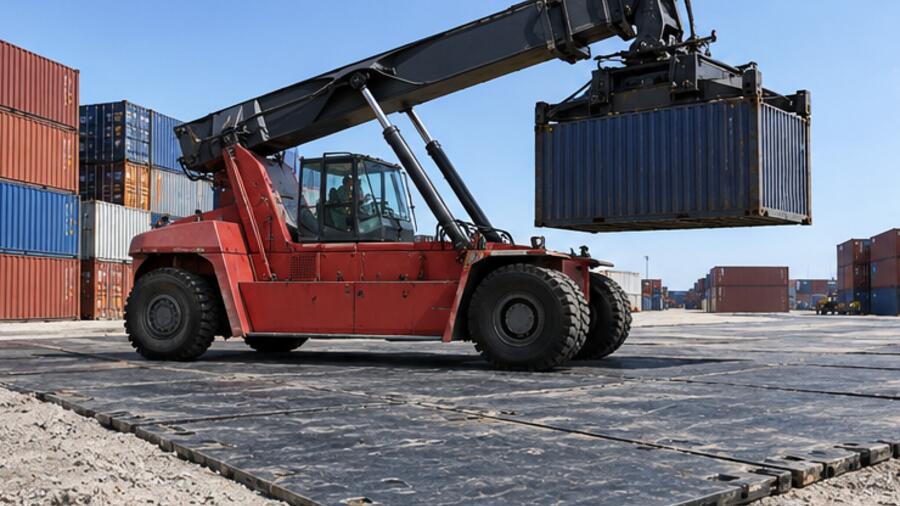
The sequence of laying would allow for the advance from the stable entrance to the area of operations. First, water and high differentials are processed, then the first plate is located; the subsequent plate is consistent in the direction of the texture and check if the seams form the steps. The ramp, turn and brake points shall increase the horizontal constraints or the width of the coverage. For this project, the use of soft-cleaning tools to protect panel-lined circuits can be used as a key action to record completion times and the results of the review.
Temporary roads cannot be paved for long. Vehicle brakes, loading overloading and water stowing can gradually change the support under the plate, and surfaces may appear flat and may have created gaps. The site should be checked before and after peak traffic, after cryogenic freezing and when the route changes. In the event of a sinking, the ground and drainage should be checked before deciding whether to change or replace the panels, so as to avoid covering up the problem by filling the panels.
A reference scenario is an airfield light system maintenance project that was completed with a restricted night window. The project involves short-term trial preparation during the recovery phase of the evacuation site, recording the relocation and deposition of the first vehicle after its adoption, and a gradual extension of the route. The turn areas, parking areas and pick-up points are inspected separately and no result is used to replace the full condition. This is an example of a methodology rather than a statement of performance, and the expected management effect is to incorporate the shoulder of the original repeater into the continuous coverage; after completion, it is also necessary to compare the original ground photographs, cleaning hours and the number of plates that can be continued.
In the integrated site, different problems were solved by the pavement, leg mats and carboards. Vehicle traffic is supported by a continuous focus on the maximum retroactivity of the leg and the friction and adhesion of material from the surface of the vehicle. If MHMWPE skateboards are used, thermal stretches should be set aside and fixed systems checked; if relevant material is not available at the site, they should be removed from the list and the investment targeted.
The procurement list should allow suppliers to see the real situation, with the maximum slope and drainage direction being the data that need to be added to this section. The remaining information includes vehicle and leg loads, ground photographs and sizes, projected number of vehicles, number of days of use, colour trails, destination port and desired period. A comparison of the quotations should be converted to a valid area coverage and complete connection system and not only a single block price; the acceptance and inspection criteria should also be included in the document before the next list.
Need for further evaluation of the actual project?
Applications, sizes, quantities, site photographs or drawings and delivery destinations are sent, on which we can identify more suitable products and processing programmes.







