
When dealing with turn brakes, the words “where to go, what to go, how many times a day” are written as verifiable conditions on the ground. The flow of vehicles in the construction area on the side of the runway, in the taxiway light spot and in the airport freight area often consists of engineering vehicles, light maintenance vehicles, rescue guarantee vehicles, excavators and mobile cranes, with the impact of tyre contact and low-speed turns being ignored only in view of the total tonnage. The more reliable conclusion is that in situ shifts, brakes and ramp start-ups will magnify the horizontal force, and should be broadened, connected and increased in frequency of patrols, followed by a decision on the combination of pavement, leg pads or local grass-roots processes.
In order to determine whether the twisting brakes can be carried out, the spot should be set up, rather than taking only a few photographs. In particular, there is a need to review the surface, which is hard but empty, since the surface is dry and does not represent a continuous carrying of the lower. The project information shall also include the maximum daily traffic, the duration of the vehicle ' s stay, the direction of the loading and unloading and the drainage route during continuous rainfall. For troughs, inspection wells and underground facilities, the prohibited support or need to be reinforced should be indicated in the road map.
Material parameters should serve the field rather than be propaganda figures. Low-maintenance HDPE pavements can quickly form a recyclable route, while suspension operations require the retroactivity of legs. The project allows for a comparison of the 25 mm and the adjacent specifications of the single mass, rigidity, laying efficiency and number of containers, as well as a reconciliation of the links to the surface. 50-80 tonnes are only primary sifts; ground-based and support designs should be completed first when an underground hole, weak shoulder or hanger overload exists.
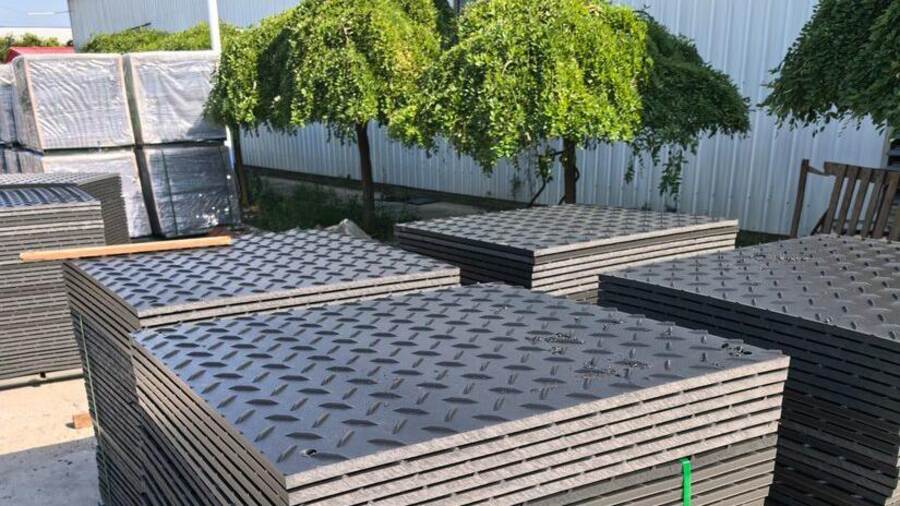
When the plates arrive at the site, the quantity, the connector and the crane are checked and the goods are discharged by route number. Upon completion of the grass-roots level, the vehicle entrance is prepared in sub-sections, and the level and edge support is checked at each stage of completion. The leg area of operation shall be separated from the area of passage. The inclusion in the installation programme of an “adjusting of the route ahead of schedule in accordance with weather forecasts” would allow field personnel to convert abstract requirements into detectable actions.
Operating records include at least open hours, traffic through vehicles, unusual locations and disposal results. The first group of vehicles shall travel at a low speed to observe whether the plates are moving with the tyres; the second class shall then adjust the speed limits and frequency of the inspection to the records. Forklifts with frequent and rapid turnovers should check for surface wear and, if the crane changes the condition, re-check the retroactivity of the leg. Once maintenance is completed, access will be restored to the designated person.
In a simulation plan for the maintenance of the airport light system, which was completed with a restricted night window, the maintenance overhaul phase included the release of a section: the area to be completed for grass-roots processing and plate connection was opened and the unaccepted area remained isolated. Each region designates a person responsible for the inspection and uses a number corresponding to the photograph. This example does not represent a specific project commitment, but allows the team to separate the temporary post from the main traffic route. If the records show repeated maintenance at the same location, they should be re-analysed back to the ground and transport organization.
Auxiliary equipment also affects the overall programme. A leg pad is required to accompany a vehicle, a forklift is required to focus on tyre contact, and a bulk vehicle may require a slab. The suitability of the UHMWPE liner depends on the work temperature, the chemical environment, the material impact and the car structure, and the manufacturer provides the installation requirements. Each product should be matched to specific equipment in the project form to avoid the use of the same parameter across uses.
In order to obtain a comparable offer, the purchaser should harmonize the request for quotations to at least indicate the level of the forklock and the cleanness of the passage, the size of the route, the condition of the vehicle, the condition of the ground and the time of the project. Vendors are required to respond to material plates, sheeting, single weight, connection, packaging, containerization and quantity and quality documents. If the project is purchased on a containerized basis, the capability of the forklift or forklift on site or forklift is also confirmed. All safety-related selections are based on the equipment manual and the approval programme.
Need for further evaluation of the actual project?
Applications, sizes, quantities, site photographs or drawings and delivery destinations are sent, on which we can identify more suitable products and processing programmes.







