
The management of multi-equipment cross-operations for airport construction and maintenance cannot be answered with single-product parameters. Project leaders need to view the flow organization, ground support and maintenance capacity at the same time; forklifts, trucks and cranes should be routed and waiting areas should be made clear who has priority access. When engineering vehicles, light maintenance vehicles, rescue guarantee vehicles, excavators and mobile cranes enter the construction area on the side of the runway, the taxiway lighting site and the airport cargo area, problems with turnovers, ramps, seams and waiting positions on the route may arise earlier than the normal straight-line segment and shall be individually marked on the drawings.
The project team could complete a joint pedestal before the vehicle enters the site, focusing on parking belts, drainage lows, ramps and available vehicle space, where the vehicle has been parked for long periods of time to form a localized sink. The retroactivity of the legs of the vehicle ' s axial load, the exterior dimensions, the minimum convective radius and the equipment for the suspension was then collected. Moist salt mists may change the state of the grass-roots level, so measurements need to be date- and weather-specific. All parameters should be consolidated in the same version of the road map and equipment list.
The selection is based on the calculation of the local pressure and the examination of whether the plate remains continuous at the grass-roots level. Low-maintenance HDPE pavements can quickly form a recyclable route, while suspension operations require the retroactivity of legs. The common thickness ranges from 15 mm to 30 mm, and this option can first assess 20 mm and then adjust it through trial preparation or project accounting. The so-called 160 to 200-ton carrier should have a clear test boundary and cannot be cited separately from the distance, temperature, payload distribution and safety factor.
Pre-installation to remove sharp waste, loose rock and mobile mud, and to purge and level the ground. The plates were set up in the main direction and were sewd to avoid the deep path and to check the wells and legs. The turn and reverse areas are to be slightly wider and the connectors are to be locked as required. The site should also implement “drain and prepare cleaning tools before the rain” and include this requirement at the end of the shift and in the traffic organization chart.
Temporary roads cannot be paved for long. Vehicle brakes, loading overloading and water stowing can gradually change the support under the plate, and surfaces may appear flat and may have created gaps. The site should be inspected before and after peak traffic, after damp salt fog and when the route is changed. In the event of a sinking, the ground and drainage should be checked before deciding whether to change or replace the panels, so as to avoid covering up the problem by filling the panels.
A reference scenario is an airfield light system maintenance project that was completed with a restricted night window. The project involves short-term trial preparation during the start-up phase, recording the relocation and deposition of the first vehicle after its adoption, and a gradual extension of the route. The turn areas, parking areas and pick-up points are inspected separately and no result is used to replace the full condition. This is an example of a method rather than a statement of performance, and the expected management effect is to reduce the amount of time spent on cleaning car stickers; after completion, a comparison between the original ground photographs, cleaning hours and the number of plates that can be continued.
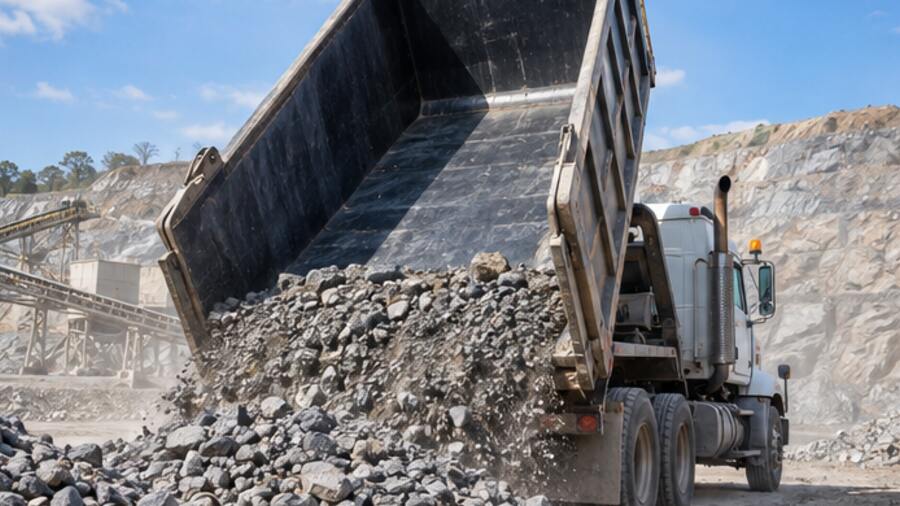
Three products may be used in this category at the same time, but the boundaries of the use are clear: road-painted service vehicle routes, leg-past services are centrally supported, and carboard services are applied to bulk discharges. In particular, UHMWPE skateboards need to check the material particle size, water content rate, temperature, impact and car shape. No product could compensate for the error, and the configuration list should be deleted from the field mission.
In order to obtain a comparable offer, the purchaser should harmonize the request for quotations, at least specifying the needs for a sample or small-scale trial shop, the size of the route, the condition of the vehicle, the condition of the ground and the time of the project. Vendors are required to respond to material plates, sheeting, single weight, connection, packaging, containerization and quantity and quality documents. If the project is purchased on a containerized basis, the capability of the forklift or forklift on site or forklift is also confirmed. All safety-related selections are based on the equipment manual and the approval programme.
Need for further evaluation of the actual project?
Applications, sizes, quantities, site photographs or drawings and delivery destinations are sent, on which we can identify more suitable products and processing programmes.







