
For vendor comparisons, “where to go, what to go, how many times a day” is written as a verifiable on-site condition. The flow of vehicles in the construction area on the side of the runway, in the taxiway light spot and in the airport freight area often consists of engineering vehicles, light maintenance vehicles, rescue guarantee vehicles, excavators and mobile cranes, with the impact of tyre contact and low-speed turns being ignored only in view of the total tonnage. The more reliable conclusion is that the material, structure, connector, effective area coverage, containerization and quality documentation should be covered by comparison, followed by a decision on the combination of pavement, leg pads or local grass-roots treatment.
The project team could complete a joint pedal survey before the vehicle enters the field, focusing on high-water powdered backfills after the rain, drainage lows, ramps and available car space. The retroactivity of the legs of the vehicle ' s axial load, the exterior dimensions, the minimum convective radius and the equipment for the suspension was then collected. Continuous rainfall may change the state of the grass-roots level, so measurements need to be date- and weather-specific. All parameters should be consolidated in the same version of the road map and equipment list.
Product selection should be differentiated by stress. Low-maintenance HDPE pavements can quickly form a recyclable route, while suspension operations require the retroactivity of legs. 15, 20, 25 and 30 mm are in the common thickness range and 15 mm can only serve as a starting point for comparison for the project; if there are holes or sediments at the grass-roots level, the increase in thickness is not a substitute for the search for peace and reinforcement. The 120 to 160 tonnes in the product information should also be understood in conjunction with the test conditions, with the final specifications to be confirmed by the approved programme and field professionals.
The sequence of laying would allow for the advance from the stable entrance to the area of operations. First, water and high differentials are processed, then the first plate is located; the subsequent plate is consistent in the direction of the texture and check if the seams form the steps. The ramp, turn and brake points shall increase the horizontal constraints or the width of the coverage. For this project, the key action could be “Standing a position shift at the lower end of the ramp”, with a dedicated person recording the completion time and the results of the review.
Maintenance staff can divide the straight-line, turn-out, waiting areas and support points into different levels of inspection. The straight-line sections focus on the sutures and the tracks, turn around and look for lateral shifts, wait areas to see long-term static sinking, and support points to check whether the pads and the ground are sunk. Shorter check intervals after rain or when the traffic suddenly increases; any plate-side rise, loose connection or grass-roots plasma should trigger decommissioning.
Assuming an increase in traffic during the maintenance overhaul phase of an airfield light system maintenance project, which was completed with a restricted night window, managers could first freeze the change of route and then divide the problems into four categories: ground, board, vehicle and movement control. Weak positions are reinforced, damage plates are replaced, vehicles are limited in speed, and one-way access is introduced for peak hours. The example does not correspond to real clients, but shows how to focus the inspection on turnovers, ramps and seams, and how to convert the field judgement into a reusable list for the next project.
In the integrated site, different problems were solved by the pavement, leg mats and carboards. Vehicle traffic is supported by a continuous focus on the maximum retroactivity of the leg and the friction and adhesion of material from the surface of the vehicle. If MHMWPE skateboards are used, thermal stretches should be set aside and fixed systems checked; if relevant material is not available at the site, they should be removed from the list and the investment targeted.
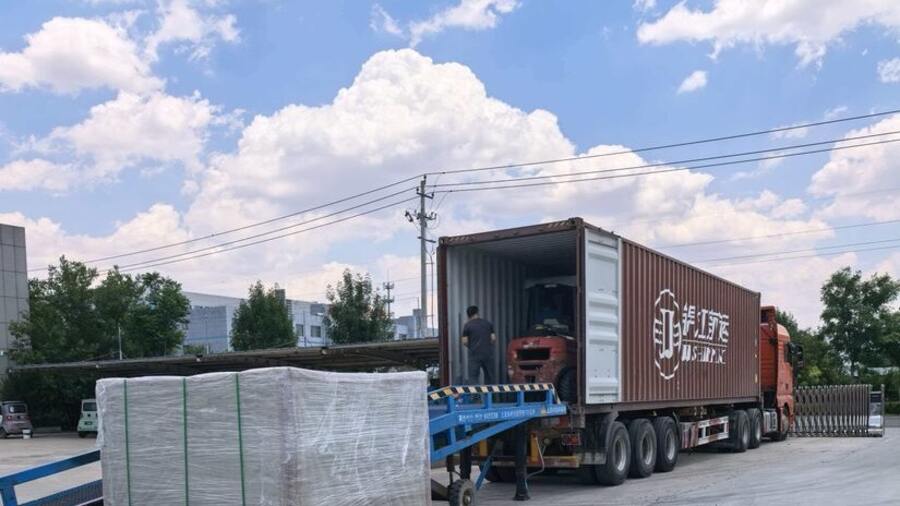
The maximum gross vehicle weight and single axle load must be present in the request for quotations, otherwise it is likely that different vendors will calculate on different assumptions. The procurement staff shall also require the description of the effective size, weight, number of attachments, packing units, container load and delivery cycle of each plate. The evaluation will be based on technical conformity, installation efficiency and turnover. Where key payloads or ground data have not been confirmed, the quotations should be marked as preliminary and the review retained.
Need for further evaluation of the actual project?
Applications, sizes, quantities, site photographs or drawings and delivery destinations are sent, on which we can identify more suitable products and processing programmes.







