
How airport construction and maintenance corridors are established to record usage cannot be answered using single-product parameters. Project leaders need to view the flow organization, ground support and maintenance capacity at the same time; and establish a numbering, location, pass volume, damage and maintenance record for each batch to facilitate turnover management. When engineering vehicles, light maintenance vehicles, rescue guarantee vehicles, excavators and mobile cranes enter the construction area on the side of the runway, the taxiway lighting site and the airport cargo area, problems with turnovers, ramps, seams and waiting positions on the route may arise earlier than the normal straight-line segment and shall be individually marked on the drawings.
On-site measurements cover the boundary between old concrete and new backfills and record weak ranges, slopes, drainage directions and underground pipes. The wet salt fog should be followed by a change in the water-bearing state and the car trail, respectively. Mobile equipment will need to provide the whole vehicle with its own weight, full load weight, a single axle load, tyre size, turn radius and projected duration; the crane will also need to provide the maximum reversibility of the leg and leg extension. Data sources and measurement dates should also be recorded to avoid different versions.
Material parameters should serve the field rather than be propaganda figures. Low-maintenance HDPE pavements can quickly form a recyclable route, while suspension operations require the retroactivity of legs. The project allows for a comparison of the 25 mm and the adjacent specifications of the single mass, rigidity, laying efficiency and number of containers, as well as a reconciliation of the links to the surface. 50-80 tonnes are only primary sifts; ground-based and support designs should be completed first when an underground hole, weak shoulder or hanger overload exists.
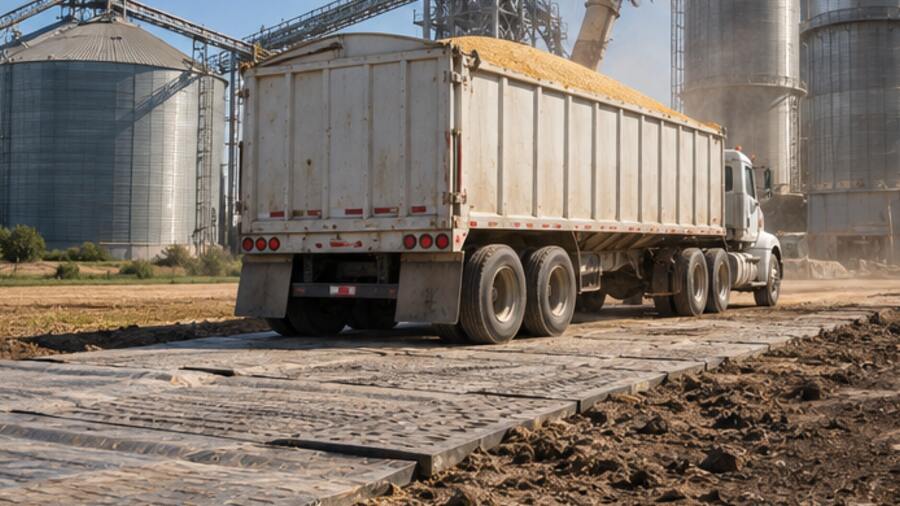
The sequence of laying would allow for the advance from the stable entrance to the area of operations. First, water and high differentials are processed, then the first plate is located; the subsequent plate is consistent in the direction of the texture and check if the seams form the steps. The ramp, turn and brake points shall increase the horizontal constraints or the width of the coverage. For this project, “Settling of portable lighting for night shift teams” could be a key action, with a dedicated person recording the completion time and the results of the review.
Following the opening of access, the focus of the inspection was on the continued support under the plate. The first heavy vehicle passes by to check for high seams, peripheries, mudslides and planks; the shift is repeated after weather changes. The pressure of contact of the forklift ' s solid-heart wheel differs significantly from the concentrated static of the crane ' s legs, and anomalies should be detected first in isolation before being drained, evened or replaced, and the subsequent flow of the vehicle cannot continue to magnify the damage.
For an airport light system maintenance project, which is limited to night windows, the entrance preparation phase can be established as an independent inspection node. On-site identification of vehicle lists and weather is followed by a check of drainage, connections and borders; if any conditions change, release is suspended and the road map updated. This scenario is used only to illustrate how the project is organized and focuses on the accumulation of comparable data for subsequent projects. It should also record the number of inputs, the time of laying, the time of stoppage, the location of maintenance and the condition of the ground after the evacuation site.
In the integrated site, different problems were solved by the pavement, leg mats and carboards. Vehicle traffic is supported by a continuous focus on the maximum retroactivity of the leg and the friction and adhesion of material from the surface of the vehicle. If MHMWPE skateboards are used, thermal stretches should be set aside and fixed systems checked; if relevant material is not available at the site, they should be removed from the list and the investment targeted.
It is best to complete small-scale technical confirmation before the next list. First, the maximum leg reaction and complete field parameters of the crane were submitted to the supplier for specification, quantity and packaging advice; then the sample trails, links, dimensions and material documentation were checked; and finally, the container type, destination port, method of discharge and batch identification were identified. The supplier recommended that it be used only as an input and that the project party remain responsible for the stabilization of the ground load, traffic organization and lifting.
Need for further evaluation of the actual project?
Applications, sizes, quantities, site photographs or drawings and delivery destinations are sent, on which we can identify more suitable products and processing programmes.







