
In the construction of pipelines on marshes, meadows, river banks and high-water-bearing soils, the focus of this topic is on “how to set up temporary parking and stand-by areas for construction of wetlands and meadows”, which does not appear to represent a continuous burden under the plate. Temporary parking and stand-by areas for the construction of wetland and meadow pipelines should be recorded for ground status, weather and the most heavy vehicle condition before entering the site, as the base load decreases after rainfall and the pump mud or wrong table may appear after repeated traffic. The establishment of baseline photographs and measurement points will facilitate follow-up inspections and recovery of acceptances.
The focus of the topic is not on the choice of the thickest or the most heavy products, but on the establishment of a match. (b) Reversely remove and retain emergency routes in the order of exit of the equipment to finalize the coverage, connection and back-up quantity, depending on the wetland water level, topsoil thickness, vegetation protection boundary, vehicle axial loads, route width, drainage permit, cross-danger position and restoration standard identification control conditions. In the case of products requiring cross-project turnaround, the numbering, loss rate, cleaning time and volume of transport should also be included in the total cost. With regard to “how to place temporary parking and stand-by areas for the construction of wetlands and straw pipelines”, the information review should also calculate the area covered by the line, the bend, the meeting and the reverse areas, respectively, and include missing information as a pending item for the quotation and construction programme.
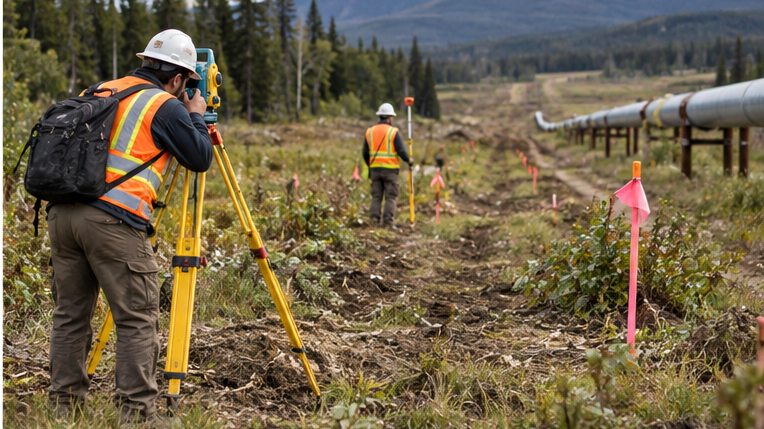
Figure: Construction of pipelines on marshes, meadows, river banks and high-water-bearing soils, with a focus on “how to set up temporary parking and stand-by areas for construction of wetlands and meadows”
The site installation should be located with an approved drawing number, and the level, seam, edge and drainage should be inspected at each stage of completion. The construction of wetlands should prioritize the maintenance of water flow lanes and continuous support to avoid repeated deviations by vehicles to expand the disturbance area. The test operation can first be carried out using a low-risk vehicle with a slow-speed straight-line and then gradually verify the turnover, parking and full-loading; it should be discontinued as soon as it is discovered that it continues to sink under the plate, pump mud or branch position. The trial-pail record of “how to place temporary parking and stand-by areas in the construction of wetlands and the meadows” should indicate the starting-point location, vehicle status and release conclusion to facilitate review following a change in construction conditions.
The inspection should not simply be “normal” and should be identified on a case-by-case basis around the subsurface flow, deposition, pumping mud, peripheries, vegetative pressure, connectors, spill positions and restoration lines, and classify anomalies into three levels of observation, restriction and decommissioning. Fixed photo angles and measurement benchmarks should be set for the reverse removal of the equipment in the order of exit and the retention of the emergency route to the final critical point. A loose connection, a permanent deformation, a breach through or a deviation of a branch shall be immediately isolated. In the area of “how to set up temporary parking and stand-by areas for the construction of wetland and grassland pipelines”, the patrol forms are to be shown as a separate line for the reduction of ground-based loads following rainfall and changes in pumping mud or wrong stage, with an indication of the time of re-inspection and re-entry.
For oil and gas projects that are ongoing or duplicated, a baseline can be established for each square metre of work-hours, vehicle cycle, cleaning time, damage rate and restoration costs. This would make it easier to identify whether the next offer and inventory planning, which is no longer based solely on experience, is repeated in a given season, when ground-based load decreases after rainfall and pump muds or faults occur. It should also answer whether the “how to set up temporary parking and stand-by areas for the construction of wetland and meadow pipelines” is improved by the reverse removal and retention of the emergency route in the order in which the equipment is withdrawn, and at the end of the day, by avoiding a subjective description of the closing item.
Road-painting and foot mats can only function in the approved construction system and cannot be a substitute for unsatisfactory foundations, damaged equipment or irregularities. Any unknown underground facility, unstable edges, legwork beyond the equipment manual or failure to isolate persons should be suspended and upgraded.
With regard to “how to set up temporary parking and stand-by areas for the construction of wetland and grassland pipelines”, special verification should also be carried out in conjunction with the construction of pipelines on marshes, grasslands, riverine beaches and high-water-bearing soils: parking and stand-by areas usually take longer static loads than normal corridors, with the possibility of reverses, shifts and vehicle queues. This should be designed to separate docking positions, access points, fire clearance, personnel passages and possible leakage controls, and to expand overall coverage as necessary.
On-site implementation of the recommendation: the stand-by area should avoid concentrating the maximum payload on a single board for long periods of time. Vehicles can be lined up in a decentralized manner and are prohibited from moving in situ; oil or mud vehicles should also be equipped with approved leak collection and cleaning measures.
Need for further evaluation of the actual project?
Applications, sizes, quantities, site photographs or drawings and delivery destinations are sent, on which we can identify more suitable products and processing programmes.







