
The safe recovery of pavements during the construction evacuation of the wetlands and the meadows begins with the separation of vehicle traffic, stationing of equipment from the support of cranes. In the construction of pipelines on marshes, meadows, river banks and high-water-bearing soils, the topic is concerned with “how to safely recycle pavements when weeds and meadows are being constructed” and usually undergo multiple stages of entry, construction, overhaul and evacuation, with changes in ground water content and traffic. The issue is most easily ignored when the test conditions differ and the nominal tonnage is directly compared to the miscalculated. The problem of grass-roots and drainage may have expanded if only ad hoc slabs were added after a vehicle has been trapped.
Four school-specific topics are available at sites, equipment, products and operations. Sites and equipment columns record wetland water levels, topsoil thickness, vegetation protection boundaries, vehicle axial loads, corridor widths, drainage permits, cross-drive position and restoration standards. The product column lists sizes, thickness, texture, connections and batches. The operating column indicates the description of the work, the basis of the test and the conditions of limitation in the request and acceptance documents. Any one still relies on empirical speculation, which could lead to a re-emergence of miscalculation at the peak of the construction, with different test conditions but a direct comparison of the nominal tonnage. The information review should also adjust the intervals for inspections to take into account traffic, weather and unusual frequency dynamics, and include missing information as an item to be confirmed for quotations and construction programmes.
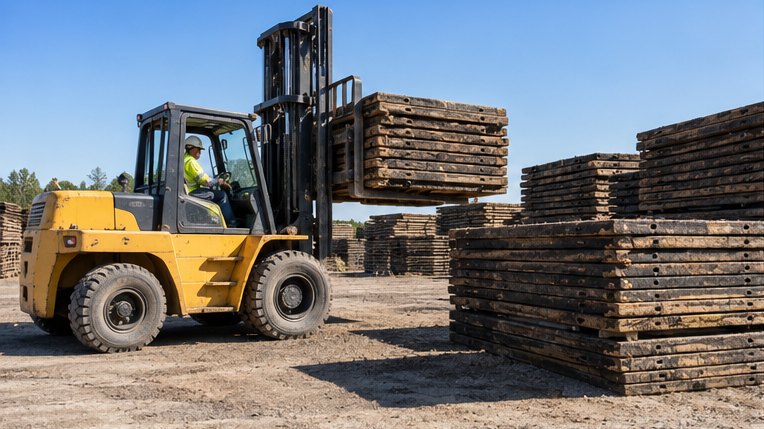
Figure: Construction of pipelines on marshes, meadows, river banks and high-water-bearing soils, with a focus on “Safe recycling of pavements in wetland and meadows when construction exits occur”
The site installation should be located with an approved drawing number, and the level, seam, edge and drainage should be inspected at each stage of completion. The construction of wetlands should prioritize the maintenance of water flow lanes and continuous support to avoid repeated deviations by vehicles to expand the disturbance area. The test operation can first be carried out using a low-risk vehicle with a slow-speed straight-line and then gradually verify the turnover, parking and full-loading; it should be discontinued as soon as it is discovered that it continues to sink under the plate, pump mud or branch position. A test-pail record of “how to safely recycle pavements when wetland and meadow lines are being completed” should indicate the starting and ending location, vehicle status and release conclusions to facilitate review as construction conditions change.
The switchover requires reporting changes in the water flow, deposition, pumping mud, edge wash, vegetation pressure, connectors, spill position and restoration boundary, rather than a description of the appearance. The sutures, shoulders or sub-points repaired in the previous class are reviewed in the next class. If different test conditions are directly compared with the nominal tonnage resulting in an increase in traffic by error, the project should immediately limit the speed, reroute or suspend the equipment until the re-examination passes. The inspection form, which revolves around “how to safely recycle the pavements when wedges are being constructed on the wetland and meadow lines”, is separate but directly compared to tonnage, resulting in a miscalculation and a reference to the inspector and the time of return.
The impact assessment cannot be based solely on the movement of vehicles on the same day. The project compares vehicle waiting, trapping, maintenance hours, cleaning time, loss of connection, site restoration area and evacuation cycle, and records weather and traffic simultaneously. The question of whether this option is suitable for replication at the next hydrocarbon project is determined by the creation of data based on different test conditions, but directly comparing the data with the miscalculated tonnage. It should also answer whether “how to safely recycle the pavements of the construction of the wetland and meadows when they are being evacuated” has been verified as an improvement through the inclusion of a description of the work, the basis of the test and the conditions of the test in the request for and acceptance documents, so as to avoid a subjective description of the closing item.
This paper could serve as a technical discussion list for the hydrocarbon project, but not as a separate construction permit. The project will also require a written programme of transport organization, temporary structures, electrical safety, fire protection, weather emergencies and site restoration systems, and a review of key carrying and stabilization conditions by authorized personnel.
The following special verifications should be carried out in conjunction with the construction of pipelines on marshes, meadows, riverine beaches and high-water-bearing soil on how to safely recycle the roads when the wetlands and the meadows are being evacuated: the recovery pavements should be carried out in reverse in the direction of the last vehicle and the emergency route should be maintained until the personnel and equipment are completely evacuated. Dismantling plates require the removal of soil, the inspection of postpoints and connections, and their separate stacking according to eligible, assessed and end-of-life status.
On-site implementation of recommendations: Recovery operations are to be divided into personnel and mechanical areas, with a match between the slabs and the handling tools. Prior to stacking, the coatings should be removed and kept flat to prevent new arc or post damage during storage.
Need for further evaluation of the actual project?
Applications, sizes, quantities, site photographs or drawings and delivery destinations are sent, on which we can identify more suitable products and processing programmes.







