
A fixed number was given in response to how the construction of the wetland and meadow pipes was sequenced and not removed from the site. The construction of pipelines on marshes, meadows, river banks and high-water-bearing soils, with a focus on how “wetland and meadow line construction is sequenced” is influenced by weather, topography, vehicle and organizational patterns, and the lack of support on the edges of the road leads to the bending of the plates and the crushing of the sides are only visible results. The project should mark the soft spots, slopes, drainage, underground facilities and vehicle tracks on a single map to bring technology, construction, HSE and procurement data into line.
The product configuration cannot be determined by area or thickness alone. The project shall verify wetland water levels, top soil thickness, vegetation protection boundaries, vehicle axial charges, corridor width, drainage permits, cross-drive position and restoration criteria, and then convert the lack of support on the edges of the road to plate bending and crushing to drainage, carrying, stabilization, surface pull and restoration requirements. When dealing with drainage and soft spots, then laying out and piloting the ICP from the stabilization end, consideration will also be given to handling tools, manual weights, spare quantities, cleaning and backfilling. The information review also applied to the "how to sequence the installation of the wetland and meadow pipeline construction " , with a representational vehicle test thickness, connection and grass-roots matching, and included missing information as an item to be confirmed in the quotation and construction programme.
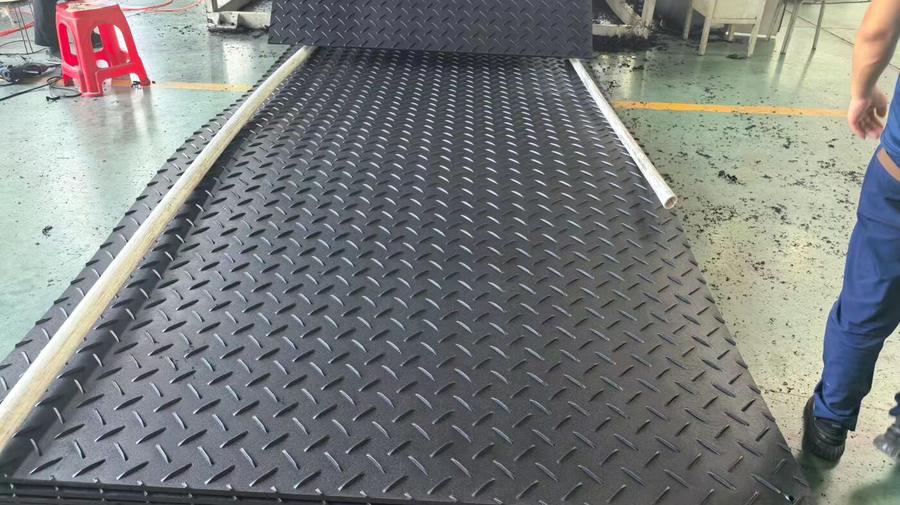
Figure: Pipeline construction on marshes, meadows, river banks and high-water-bearing soils, with a focus on “How to sequence the construction of wetlands and herds” (inventory material for the Creative Plastics Network)
The construction organization is as important as the product specifications. Operators should use means of moving a single load, with the vehicle being directed by a commander, without brakes, in situ wheeling or constant pressure. The construction of wetlands should prioritize the maintenance of water flow lanes and continuous support to avoid repeated deviations by vehicles to expand the disturbance area. Changes in traffic routes, repositioning of equipment or heavy rainfall are followed by a re-examination of the continued applicability of the original programme. The test-pail record of “how wetland and meadow line works are sequenced for installation” should indicate the starting and ending position, vehicle condition and release conclusions to facilitate review as the construction conditions change.
Special inspections should be added after extreme weather, equipment anomalies or route adjustments. The use of position markings and fixed view photographs for the subsurface flow, sedimentation, pumping mud, edge brushing, vegetation pressure, connectors, spill position and restoration boundary to facilitate comparison of deposition and shift. Cleaning the surface of polymers avoids fire, sharp shovels and violent knocks, creating new cracks and stress concentrations. With regard to the “how to sequence the installation of the wetlands and the meadows”, the inspection forms need to show a lack of support on the edges of the separate road, leading to changes in the bending and crushing of the sheet, and to indicate the time of the repeater and the resumption of passage.
A reset is to distinguish between product problems and changes in condition. The original programme may no longer be appropriate if the vehicle is heavy, routed, rainfall increases or cover periods are extended. These changes will be recorded with the results of the implementation, which will first process drainage and soft points and then be laid and tested from the stabilization end, and the next time it is known whether the thickness, width, quantity or construction organization should be adjusted. It should also answer whether “the sequence of installation of the wetland and meadow line works” has been improved by first processing drainage and soft points and then by laying and piloting the stable end, avoiding a subjective description of the closing item.
The ultimate goal is to allow the construction of pipelines on marshes, meadows, river banks and high-water-bearing soils, with a focus on how “wetland and meadow line construction can be sequenced” to operate with clear limits and acceptable risks and to successfully restore the ground after the completion of the work. The lack of support on the edge of the road, which leads to the bending and crushing of the sheet, will not be repeated during the rush phase, provided that the design, product, operation, inspection and evacuation sites are linked.
The following special verification should also be carried out in connection with the construction of pipes on marshes, meadows, river banks and high-water-bearing soils: the sequence of installation should begin at a stable and accessible end, with the main line being laid before the turn, car and surface. The level, connection and drainage are checked at each stage of completion to avoid further entry at the front end of the vehicle while the back end is still being forced to point the hole or adjust the plate.
On-site implementation of the recommendation: The installation team should first check the panel numbers, connectors and handling tools and then proceed by drawing. In the event of a lack of poaching, roasting or violent pull, it should be checked whether the ground level, the direction of the plate and the specifications are mixed.
Need for further evaluation of the actual project?
Applications, sizes, quantities, site photographs or drawings and delivery destinations are sent, on which we can identify more suitable products and processing programmes.







