
In the construction of pipelines on marshes, meadows, river banks and high-water-bearing soils, the focus on this topic is “How thick a pavement is to be chosen for the construction of wetlands and meadows”, which does not appear to mean that there is a continuous burden under the plate. For the construction of the wetland and meadow pipelines, the choice of thick pavements should be recorded for the ground, weather and the most heavy vehicle condition before entering the site, as static, brake and turn-over may result in a significant increase in local pressure after repeated traffic. The establishment of baseline photographs and measurement points will facilitate follow-up inspections and recovery of acceptances.
Four school-specific topics are available at sites, equipment, products and operations. Sites and equipment columns record wetland water levels, topsoil thickness, vegetation protection boundaries, vehicle axial loads, corridor width, drainage permits, cross-drive position and restoration standards. The product column lists sizes, thickness, texture, connections and batches. The operating column states speed limits, bans in situ wheeling and arranges for exclusive command for heavy vehicles. Any one still relies on empirical speculation may allow static, brakes and turns to significantly increase local pressure at the peak of construction. For “wetland and meadow line construction requires the selection of thick pavements”, the information review should also place fixed observation points on the side of the shoulder, slope and turn, and include missing information as a pending item for the quotation and construction programme.
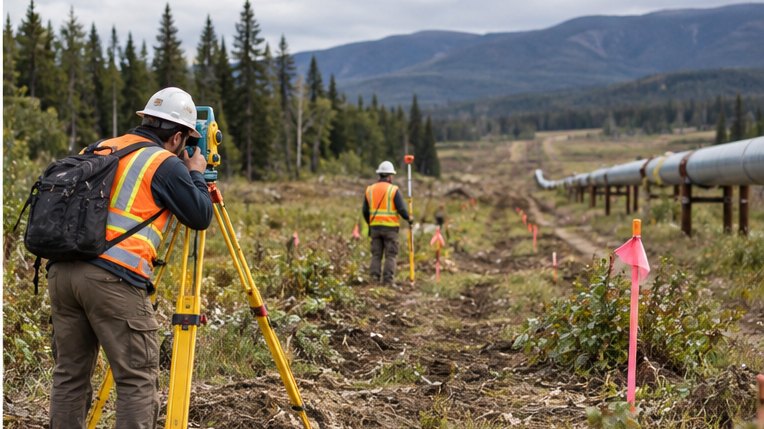
Figure: Construction of pipelines on marshes, meadows, river banks and high-water-bearing soils, with a focus on “How thick a pavement is the choice for construction of wetlands and meadows”.
The installation should leave a photo, location and measurement record. First, ground-level levelling, drainage and underground facilities are identified, and the complete contact, connection, edge and transition of the pavement is checked, or the size, location and centering of the leg pads are checked. The construction of wetlands should prioritize the maintenance of water flow lanes and continuous support to avoid repeated deviations by vehicles to expand the disturbance area. Areas not eligible for acceptance should not be replaced by speed-limit signs alone. The test-pail record of “wetland and meadow line construction requires the selection of thick pavements” should indicate the starting and ending position, vehicle status and release conclusions to facilitate review as the construction conditions change.
The switchover requires reporting changes in the water flow, deposition, pumping mud, edge wash, vegetation pressure, connectors, spill position and restoration boundary, rather than a description of the appearance. The sutures, shoulders or sub-points repaired in the previous class are reviewed in the next class. In the event that static, brake and rotation increase the local pressure significantly as traffic increases, the project shall immediately limit, reroute or suspend the equipment until such time as the re-examination passes. The inspection forms for the construction of “wetland and meadow pipelines requiring the choice of thick pavement boards” require a separate column of changes in static, brakes and turnovers that significantly increase the local pressure and indicate the time of the repeater and the resumption of traffic.
The full life-cycle costs include procurement or leasing, shipping, unloading, laying, inspection, cleaning, maintenance, warehousing and ground restoration. The project should compare the implementation costs of setting speed limits, prohibiting in-situ wheeling and assigning exclusive command to heavy vehicles with the costs of stoppage or repair resulting from a significant increase in local pressure caused by static, brakeing and turnover, and should not be based solely on the price of a single piece of product. It should also answer whether “wetland and meadow line construction requires the choice of thick pavements” can be verified for improvement by setting speed limits, prohibiting in-situ wheeling and arranging for exclusive command of heavy vehicles, and avoiding a subjective description of the conclusion.
This paper could serve as a technical discussion list for the hydrocarbon project, but not as a separate construction permit. The project will also require a written programme of transport organization, temporary structures, electrical safety, fire protection, weather emergencies and site restoration systems, and a review of key carrying and stabilization conditions by authorized personnel.
In response to “the choice of thick pavements for the construction of wetlands and herds,” the following special verifications should be carried out in conjunction with the construction of pipes on marshes, grasslands, river banks and high-water-bearing soils: the selection of thickness should take into account both materials, panel structure, size, continuous support at the grass-roots level, temperature, type of vehicle and means of connection. 15, 20, 25 or 30 mm may be used as an option for quotations, provided that the final recommendation indicates the assumptions, the basis of the test and the circumstances of the work not applicable.
On-site implementation of the recommendation: The same thickness may be different under different dimensions, material formulations, texture and supporting conditions. The sample assessment should measure the actual thickness and weight and require suppliers to explain the test method, allow deformation and product use limits.
Need for further evaluation of the actual project?
Applications, sizes, quantities, site photographs or drawings and delivery destinations are sent, on which we can identify more suitable products and processing programmes.







