
The construction window for the oil, gas and pipeline works is usually tight, but what happens when there is continuous rainfall for the construction of the wetland and meadow lines is still to be analysed from the full operating cycle. In the case of the construction of pipelines on marshes, grasslands, river banks and high-water-bearing soils, the focus of this topic is on “What if there is continuous rainfall in the construction of wetlands and herds” and the conditions of control are not the same when vehicles enter, are loaded out or equipment is put on hold for long periods of time. The site should be located in such a way that it does not match the specifications, quantity and potential areas of the site ' s condition before deciding on the use of pavement panels, leg pads or approved combinations.
The technical communication shall first identify the wetland water level, topsoil thickness, vegetation protection boundary, vehicle axle load, corridor width, drainage permit, cross-grenade position and which of the condition control designs in the restoration criteria. It is proposed that approved road maps, serial numbers and inspection records be used to manage on-site changes and that suppliers be asked to describe the materials for the pavement or leg pads, the grade of the finished product, the test method, the basis for application and the conditions of limitation. Reference data such as nominal 50 to 200 tonnes cannot be directly compared horizontally without the same test basis. In the case of the “continuing rainfall in the construction of the wetlands and the meadows”, the information review should also include the broadest vehicle profile, internal wheel differentials and side safety balances of the core, and include missing information as an item to be confirmed in the quotation and construction programme.
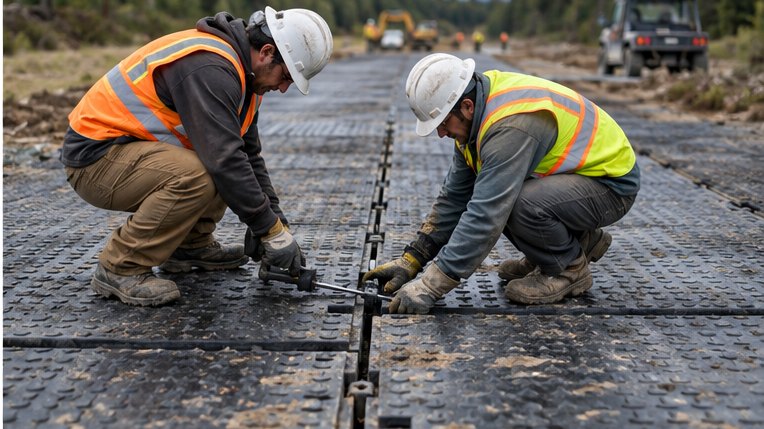
Figure: Construction of pipelines on marshes, meadows, river banks and high-water-bearing soils, with a focus on “What if there is consecutive rainfall on wetlands and meadows”
A smooth transition should be put in place at the different ground crossings to avoid the sudden impact of vehicles on temporary circuits from hard roads. Management of site changes in accordance with approved road maps, serial numbers and inspection records will also review the internal and external wheels and brake locations of the most heavy vehicles once they are completed. The construction of wetlands should prioritize the maintenance of water flow lanes and continuous support to avoid repeated deviations by vehicles to expand the disturbance area. Physical segregation and clear rules for release are required in the vicinity of public areas. The trial-pave record “What to do with consecutive rainfall for the construction of the wetlands and the meadows” should indicate the starting and ending position, vehicle status and release conclusions, to facilitate review following changes in construction conditions.
It is recommended that the pavements and the mats be included in the asset desk account, numbering the relevant specifications, batches, pavements and hours of use. The scope of the inspection included surface currents, depositions, pumping muds, peripheries flushing, vegetation pressure, connectors, spill position and restoration boundary. The removed components are to be cleaned, dried, flattened and placed in subdivisions that are qualified, subject to assessment, to repair and to end-of-life status, to prevent the re-entry of unqualified products. In the case of continuous rainfall around “wetland and meadow pipeline construction”, the inspection forms need to include a separate column of information leading to variations in specifications, quantities that do not match the situation on site, and to indicate the inspector and the time of return.
The offers from different suppliers should be compared under the same size, material, connection, packaging, delivery and test basis. Supplementation should be requested if the maximum load is given without a description of the ground, distance and load. The oil and gas project should also focus on batch consistency, removal efficiency, repairability and container loading. It should also answer the question “What if there is continuous rainfall in the construction of the wetlands and the meadows” and whether the improvement can be verified through the management of on-site changes using approved road maps, numbers and inspection logs, so as to avoid a subjective description of the end of the item.
Road-painting and foot mats can only function in the approved construction system and cannot be a substitute for unsatisfactory foundations, damaged equipment or irregularities. Any unknown underground facility, unstable edges, legwork beyond the equipment manual or failure to isolate persons should be suspended and upgraded.
The following special verifications should be carried out in connection with the construction of a series of rainfalls for the construction of wetland and meadow pipes, in conjunction with the construction of pipes on marshes, meadows, riverine beaches and high-water-bearing soils: consecutive rainfalls change the substrates without necessarily immediately changing the surface. The site needs to have observation points in place before the rain, where traffic is restricted and when the rain is lifted to the representative position; if pump mud, fall down or water is empty, the grass-roots level should be repaired before movement is restored.
On-site implementation of recommendations: Rain-day management can set up three levels of early warning, restriction and decommissioning, with triggers written into pre-class meetings. Once the conditions for decommissioning have been met, no catch-up requirement can be a substitute for a re-examination; prior to the resumption of access, there should be a clear signatory.
Need for further evaluation of the actual project?
Applications, sizes, quantities, site photographs or drawings and delivery destinations are sent, on which we can identify more suitable products and processing programmes.







