
A fixed number of data that should be recorded in the response to the case of the wetland and meadow pipeline construction project that were not removed from the site. The construction of pipelines on marshes, meadows, river banks and high-water-bearing soils focuses on what data should be recorded in the case of the wetland and herdian pipeline construction project, which is influenced by weather, terrain, vehicle and organizational patterns, and the lack of support on the edges of the road, which leads to the bending and crushing of the plates, is only a visible result. The project should mark the soft spots, slopes, drainage, underground facilities and vehicle tracks on a single map to bring technology, construction, HSE and procurement data into line.
The product configuration cannot be determined by area or thickness alone. The project shall verify wetland water levels, top soil thickness, vegetation protection boundaries, vehicle axial charges, corridor width, drainage permits, cross-drive position and restoration criteria, and then convert the lack of support on the edges of the road to plate bending and crushing to drainage, carrying, stabilization, surface pull and restoration requirements. When dealing with drainage and soft spots, then laying out and piloting the ICP from the stabilization end, consideration will also be given to handling tools, manual weights, spare quantities, cleaning and backfilling. For “what data should be recorded in the case of the wetland and meadow pipeline construction project”, the information review should also indicate the purpose, quantity, duration, packaging and port of destination in the request for proposals and include missing information as an item to be confirmed in the quotation and construction programme.
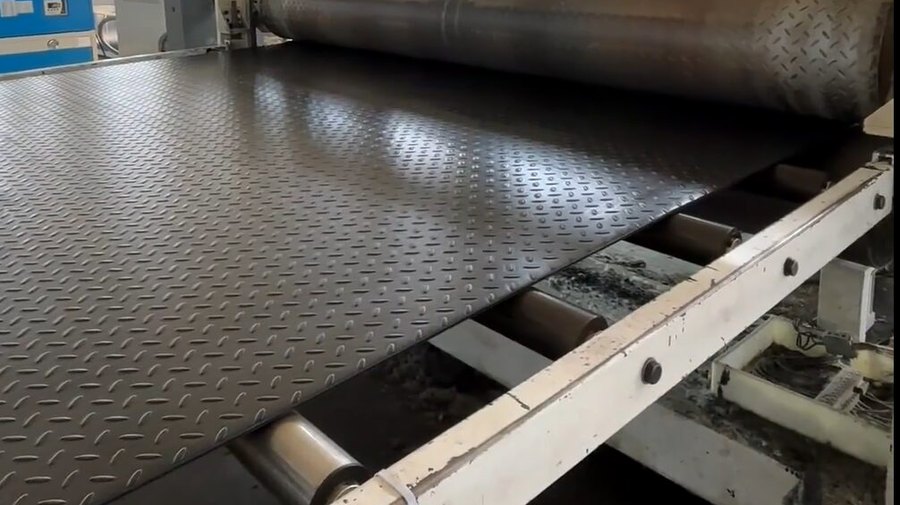
Figure: Pipeline construction on marshes, meadows, river banks and high-water-bearing soils, with a focus on “What data should be recorded in the case of the wetland and meadow pipeline construction project” (inline material for the Creative Plastics Industry Network)
The site installation should be located with an approved drawing number, and the level, seam, edge and drainage should be inspected at each stage of completion. The construction of wetlands should prioritize the maintenance of water flow lanes and continuous support to avoid repeated deviations by vehicles to expand the disturbance area. The test operation can first be carried out using a low-risk vehicle with a slow-speed straight-line and then gradually verify the turnover, parking and full-loading; it should be discontinued as soon as it is discovered that it continues to sink under the plate, pump mud or branch position. The trial-pave record of “what data should be recorded in the case of the wetland and meadow pipeline construction project” should indicate the starting and ending location, vehicle status and release conclusion, to facilitate review following a change in construction conditions.
The operation period shall be before class, after peak traffic and after rainfall, during which the water flow, sedimentation, pumping mud, edge wash, vegetation pressure, connectors, spill position and restoration of boundary. Each record shall contain the date, location, vehicle, weather, unusual photographs and processing results. If the lack of support at the edge of the road in the same area leads to the bending and crushing of the sheet, it should return to the grass-roots, drainage, transport organization and specification re-analysing, rather than replacing only surface components. The inspection forms, which revolve around what data should be recorded in the case of the wetland and meadow pipeline construction project, require that the lack of support on the edges of the separate road leads to changes in the bending and crushing of the sheet, and indicates the time taken by the inspector and his/her return.
The receiving and inspection information shall be maintained in the form of maps, product numbers, photographs of entry and exit sites, initial ground conditions, abnormal worksheets and demolition records. In the event of a ground or equipment dispute, this information can distinguish between the original soft spot, the use of changes and the removal site damage, and can also quantify the impact on the cost of the project of the lack of support on the edges of the road, resulting in the bending and crushing of the sheet. It should also answer whether “what data should be recorded in the case of the wetland and meadow pipeline construction project” has been improved by first processing drainage and soft spots, and then from the stabilization of the end of the line and its trial operation, so as to avoid a subjective description of the ending.
Road-painting and foot mats can only function in the approved construction system and cannot be a substitute for unsatisfactory foundations, damaged equipment or irregularities. Any unknown underground facility, unstable edges, legwork beyond the equipment manual or failure to isolate persons should be suspended and upgraded.
“What data should be recorded in the case of the wetland and meadow pipeline construction project” and the following special verification should be carried out in conjunction with the construction of pipelines on marshes, meadows, riverine beaches and high-water-bearing soils: case records should cover pre-entry conditions, product batches, pavements, vehicle cycle, weather, anomalies, maintenance, demolition and restoration results. The next option could not be supported by a record of smooth traffic, and restrictions and the missing link must be retained.
On-site implementation of recommendations: Case findings should identify both success and failure conditions, such as ground improvement, speed limit, traffic and weather windows. Only if these borders are retained will the next project not misperceive a specific site result as a universal undertaking.
Need for further evaluation of the actual project?
Applications, sizes, quantities, site photographs or drawings and delivery destinations are sent, on which we can identify more suitable products and processing programmes.







