
The oil and gas projects often place transport, parking and cranes in adjacent areas, so that the safe recovery of road pavements during the temporary road evacuation of pipelines requires a clear design boundary for each category. Transport, welding, ditching and backfilling of long-range pipeline corridors, this topic is concerned with “how to safely recover the pavements of temporary road exits for the construction of pipelines” if quoted only in terms of the total area, which can easily be omitted from the convection, leg landing points and recovery routes. An overloading or uneven deposition of the nodes to change the level of the equipment would also render the already sufficient direct segment ineffective at peak.
The input information can be organized by the four columns of equipment, ground, route and time, with a focus on the route by which the pipe is routed, the total weight and axle load of the most heavy vehicle, the length and width of the channel, the slope, the position of the gutter, the water content of the soil, the direction of drainage and the construction window. It is proposed to change the level of equipment with regard to the overloading or uneven deposition of the nodes, to set speed limits, to prohibit in-situ wheeling and to arrange for the exclusive command of heavy vehicles. In the case of leg pads, the maximum repulsive force of the leg provided by the plant must be obtained, and in the case of passage roads, the total weight of the vehicle, the axle, the tyre and the complete turn track should be used. The information review should also adjust the frequency of inspections to the traffic, weather and unusual frequency dynamics and include missing information as items to be confirmed for quotations and construction programme.
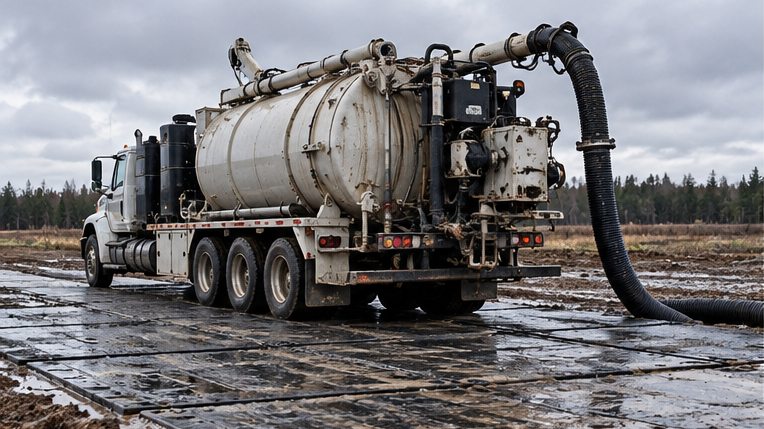
Figure: Transport, welding, ditches and backfilling operations in long-range pipeline corridors, with a focus on “Safe recycling of pavements in the construction of temporary road exits for pipelines”
A smooth transition should be put in place at the different ground crossings to avoid the sudden impact of vehicles on temporary circuits from hard roads. The internal and external wheels and brake positions of the most heavy vehicles will also be reviewed after the installation of a speed limit, a ban on in-situ wheeling and a exclusive command for heavy vehicles has been completed. First, a continuous channel is formed by a complete transport trajectory, then the edge of the ditch, the welding area, the lower point and the car section are expanded to cover them separately. Physical segregation and clear rules for release are required in the vicinity of public areas. A test-pail record of “how to safely recover the paved road when the temporary road exit is being completed” should indicate the starting and closing position, vehicle status and release conclusion to facilitate review as construction conditions change.
The period of operation shall be before class, after peak traffic and after rainfall, sews, connectors, edges of trenches, shoulders, tracks, drainage exits, vehicle tracks and alert borders. Each record shall contain the date, location, vehicle, weather, unusual photographs and processing results. In the event of repeated feed-point overload or uneven deposition changes in the level of the equipment in the same area, it should be re-analysed back to the grass-roots, drainage, transport organization and specification instead of replacing only surface components. The inspection forms for the safe recovery of pavements around the “departure of temporary roads for the construction of pipelines” are to vary the level of the equipment by overloading or uneven deposition at a single branch point, and to indicate the repeater and the time of return.
It is recommended that a key route or a feeder of equipment be selected for controlled validation, with observation cycles and exit conditions. The records are to cover normal and most unfavourable conditions, with particular attention to overloading or uneven deposition of the branch points to change the level of equipment. A further expansion after the trial could reduce one-time procurement or full-line errors, while providing the same basis for vendor comparison. This retrodiscussion should also answer whether the “how to safely recycle the pavement when the temporary road is evacuated through the construction of pipelines” has been certified for improvement by setting speed limits, prohibiting in situ cycling and arranging for exclusive command of heavy vehicles, avoiding a subjective description of the end of the item.
This paper could serve as a technical discussion list for the hydrocarbon project, but not as a separate construction permit. The project will also require a written programme of transport organization, temporary structures, electrical safety, fire protection, weather emergencies and site restoration systems, and a review of key carrying and stabilization conditions by authorized personnel.
The following special verification should be carried out in connection with the transport, welding, ditching and backfilling operations of the long-range pipeline corridor for the safe recovery of the pavement when the temporary road exit is being completed: the recovery pavement should be carried out in reverse in the direction of the last vehicle, and the emergency route should be maintained until the complete evacuation of personnel and equipment. Dismantling plates require the removal of soil, the inspection of postpoints and connections, and their separate stacking according to eligible, assessed and end-of-life status.
On-site implementation of recommendations: Recovery operations are to be divided into personnel and mechanical areas, with a match between the slabs and the handling tools. Prior to stacking, the coatings should be removed and kept flat to prevent new arc or post damage during storage.
Need for further evaluation of the actual project?
Applications, sizes, quantities, site photographs or drawings and delivery destinations are sent, on which we can identify more suitable products and processing programmes.







