
The purpose of how the temporary road for the construction of the pipeline should be planned is to allow for the movement of the construction vehicles within the controlled route, while avoiding turning ground protection issues into equipment stabilization problems. Transportation, welding, ditches and backfilling operations around long-range pipeline corridors focus on “how to plan for the construction of temporary roads for pipelines” and, in particular, cross-traffic vehicles should be checked to form deep roads and damage the grass-roots level. Where there is a gutter, backfilling area, slope or unknown underground facility on the route, the treatment must first be confirmed by the responsible party of the project.
If the project needs to be accompanied by a pavement and a mat, an optional table should be established. The former are dominated by continuous support on the route, axle and the grass-roots level, while the latter are dominated by maximum reversibility of the legs and allowing for ground bearing. A combination of the total weight and axle load of the most heavy vehicle, the length and width of the route, the slope, the location of the gutter, the water content of the soil, the direction of drainage and the construction window, which are planned on a continuous basis for the most disadvantaged vehicles, the complete wheel and weather changes, avoids the use of the two products as alternative components. The information review should also check the endpoints of the main route, the softest sections and the location of the emergency rerouting, and include missing information as an item for confirmation of the quotation and the construction programme.
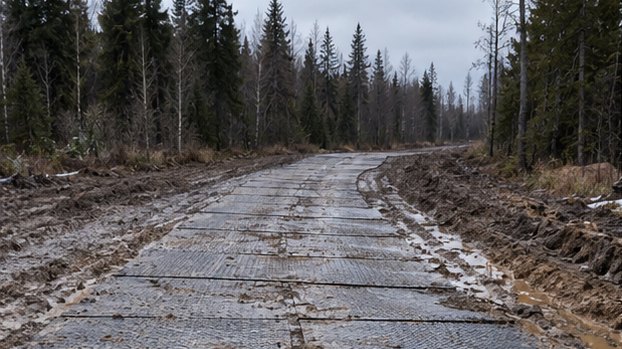
Figure: Transport, welding, ditches and backfilling operations in long-range pipeline corridors with a focus on “how to plan for the construction of temporary roads for pipelines”
The installation should leave a photo, location and measurement record. First, ground-level levelling, drainage and underground facilities are identified, and the complete contact, connection, edge and transition of the pavement is checked, or the size, location and centering of the leg pads are checked. First, a continuous channel is formed by a complete transport trajectory, then the edge of the ditch, the welding area, the lower point and the car section are expanded to cover them separately. Areas not eligible for acceptance should not be replaced by speed-limit signs alone. The test-pail record of “how the temporary road for the construction of the pipeline should be planned” should indicate the starting and ending position, vehicle status and release conclusion, to facilitate review as the construction conditions change.
Special inspections should be added after extreme weather, equipment anomalies or route adjustments. The use of position markings and fixed view photographs for sutures, connectors, edges of trenches, shoulders, tracks, drainage exits, vehicle wheels and guard borders facilitates comparison of deposition and shift. Cleaning the surface of polymers avoids fire, sharp shovels and violent knocks, creating new cracks and stress concentrations. The “how to plan for the construction of temporary roads around pipelines”, the patrol forms require that the repeated traffic of separate vehicles form a deep path and disrupt changes at the grass-roots level, with a reference to the inspectors and the time of return.
Construction, logistics, HSE, equipment, site and procurement could be jointly evaluated before the planned expansion. The parties confirm the conditions of movement, suspension, inspection, restoration and delivery to verify whether the continuous coverage according to the most disadvantaged vehicle, complete wheel and weather change planning is truly enforceable. The results of the review should be included in the programme rather than in oral communication. It should also answer whether the “how to plan for the construction of the temporary road along the pipeline” has been demonstrated improvement through continuous coverage according to the most unfavourable vehicle, complete wheel and weather change planning, avoiding a subjective description of the closure.
This paper could serve as a technical discussion list for the hydrocarbon project, but not as a separate construction permit. The project will also require a written programme of transport organization, temporary structures, electrical safety, fire protection, weather emergencies and site restoration systems, and a review of key carrying and stabilization conditions by authorized personnel.
With regard to “how to plan for the construction of temporary roads for pipelines”, the following special verification should be carried out in conjunction with transport, welding, ditches and backfilling operations in long-range pipeline corridors: at the planning stage, the main corridor, the car area, the equipment stand-by, the emergency exit and the final exit route should be presented on the same map, and the widest vehicles should be identified in proportion. Once the route has changed, the soft spots, drainage and coverage should be re-examined and the old version should not be used.
On-site implementation of the recommendation: The route can be subject to a hard transition, ordinary soft ground, extremely soft points, turnovers and operational segments, each with different release and maintenance requirements. This would allow for accurate containment and repair, even if partial failure, without the need to disable the entire passage.
Need for further evaluation of the actual project?
Applications, sizes, quantities, site photographs or drawings and delivery destinations are sent, on which we can identify more suitable products and processing programmes.







