
The determination of the width and turn-off of the mudholes of the oil and gas fields is to allow the construction vehicles to move within the controlled routes, while avoiding turning ground protection issues into equipment stabilization problems. With regard to the muddy area between oil wells, gas wells, distribution stations and service vehicles, the topic is concerned with “how the width and turn-off of the mudholes of oil fields and gas fields are determined”, and the temporary change in the construction route should be checked in particular to bring vehicles into the unprotected area. Where there is a gutter, backfilling area, slope or unknown underground facility on the route, the treatment must first be confirmed by the responsible party of the project.
Four school-specific topics are available at sites, equipment, products and operations. Sites and equipment columns record the location of oil or gas wells, the type of service vehicle, full axle charge, road soft points, rainfall, traffic frequency, operating shifts, pollution control and emergency response routes, the product column lists sizes, thickness, texture, connection and batches, and the operating column indicates sews, ground floors and vehicle operating space through representative trial workshops. Any one still relies on empirical speculation and may result in temporary changes in the construction route leading to the re-emergence of vehicles entering unprotected areas at the peak of construction. The information review should also identify the protection and restoration of the boundary of topsoil, ploughing or grassland and include missing information as an item to be confirmed in the quotation and construction programme.
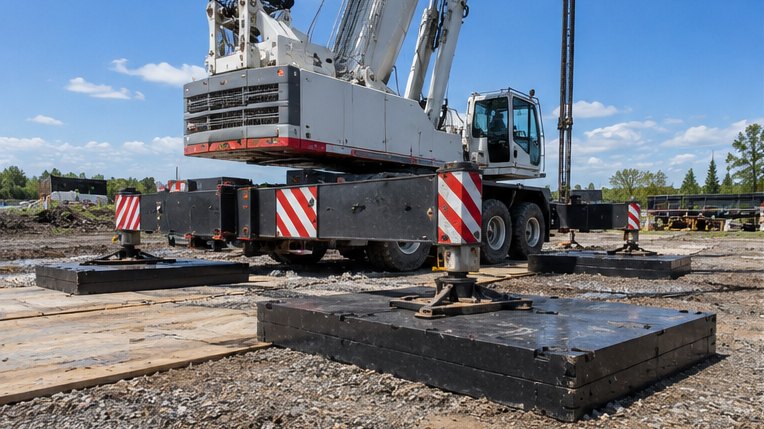
Figure: Mud areas between oil wells, gas wells, distribution stations and service vehicles, with a focus on “how to determine the width and turn of the mud lanes of oil fields and gas fields”
A smooth transition should be put in place at the different ground crossings to avoid the sudden impact of vehicles on temporary circuits from hard roads. The internal and external wheels and brake positions of the most heavy vehicles will also be reviewed in accordance with the completion of the laying of sews, floors and vehicle operating spaces through representative trial workshops. The muddy oil and gas field road should first cut the drain and repair the deep-drive tracks, and then use the continuous laying of dispersed wheels, so that the plates cannot be thrown directly into the flow of thin mud. Physical segregation and clear rules for release are required in the vicinity of public areas. The trial-pave record of “how the width and turn-off of the mudslides of the oil and gas fields are determined” should indicate the starting-point, vehicle state and release conclusions, so as to facilitate review after the construction conditions have changed.
Multi-shift or leasing projects can record pump mud, water stubs, sideways, slides, loose connections, pollutants, shoulder depositions and vehicle congestion, and link road maps and product numbers. Continuous anomalies should trigger a review of the project, rather than a mere surface. Visible permanent deformation, deep mouth or postpoint damage to the leg cushions shall be judged by standard manufacturer ' s isolation. The inspection forms, which revolved around the “how the width and turn-off of the mudholes of the oil and gas fields is determined”, set out in a separate list of the temporary changes in the construction route that caused the vehicle to enter the unprotected area and indicated the time of re-examination and re-entry.
Construction, logistics, HSE, equipment, site and procurement could be jointly evaluated before the planned expansion. The parties identified conditions for passage, suspension, inspection, restoration and delivery, respectively, to verify whether the sutures, ground floors and vehicle operating space were truly enforceable through representative trial workshops. The results of the review should be included in the programme rather than in oral communication. It should also answer “how the width and turn-off of the mudholes of oil and gas fields is determined” and whether it has been demonstrated that improvements have been made by means of representative trial workshops to verify the seams, floors and vehicle operating space and to avoid a subjective description of the final item.
Progress pressure cannot reduce the security floor. When a temporary change in the construction route results in a vehicle entering an unprotected area, it should first isolate and identify the reasons before deciding on the repair, rerouting or replacement of the product. Any measures should avoid introducing new risks of slide, overloading, tripping, electric area intrusion or human-car conflict.
The following special verification should be carried out in relation to the “how to determine the width and turning areas of the mudholes of the oil and gas fields”, in conjunction with the muddy areas between the wells, gas wells, distribution stations and service vehicles: the width of the road should cover the full wheel of the vehicle and not just the exterior. The turn zone should be expanded on the basis of internal vehicle differentials, trailer swings, face-to-face vehicular and command positions; it should also retain an observed and sustainable safety residual at the edge to avoid long-term pressure on the side.
On-site implementation of the recommendation: it would be useful to use vehicle trajectories to verify the difference between internal and external wheels and to retain a positive distance at the exit. For long-barrel transport vehicles, account is also taken of trailer swings and road ramps and, where necessary, one-way discharges are used to reduce exposure risks.
Need for further evaluation of the actual project?
Applications, sizes, quantities, site photographs or drawings and delivery destinations are sent, on which we can identify more suitable products and processing programmes.







