
The oil and gas projects often place transport, parking and suspension in adjacent areas, so how oil fields and gas fields mud lanes respond to low-temperature ice freezes requires a clear design boundary for each category. In the muddy area between oil wells, gas wells, distribution stations and service vehicles, the topic is concerned with “How the mudholes of oilfields and gas fields respond to low-temperature ice” which, if quoted in terms of the total area, can easily be left out of the curves, legs landing points and recovery routes. A loose connection, drainage congestion or pollution that reduces the actual use will also render the already sufficient direct segment ineffective at peak.
The technical communication shall first identify the location of the oil or gas wells, the type of service vehicle, the full axle charge, the soft point of the road, the rainfall, the frequency of traffic, the work shift, the pollution control and the design of the control of the emergency route. It is proposed that continuous coverage be planned on the basis of the most disadvantaged vehicles, complete wheels and weather changes, and that suppliers be requested to describe the materials for the pavement or leg pads, the grade of finished products, the method of testing, the basis of application and the conditions of limitation. Reference data such as nominal 50 to 200 tonnes cannot be directly compared horizontally without the same test basis. The information review should also limit long-term static, in situ wheeling and unplanned vehicle queuing and include missing information as items to be confirmed for quotations and construction programmes.
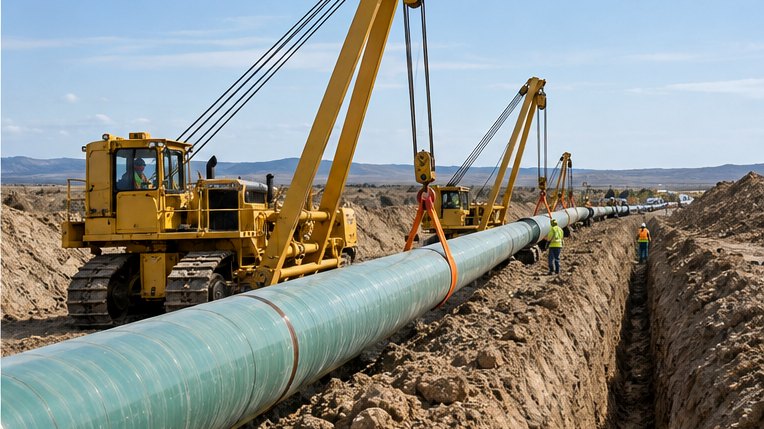
Figure: Mud areas between oil wells, gas wells, distribution stations and service vehicles, with a focus on “How oil fields and gas fields mud lanes respond to cryogenic ice”
Pre-implementation should be preceded by the containment of routes, the removal of sharp stones, stakes and miscellaneous items that may form a spot load, the repair of deep-pit tracks and the removal of horizontal drainage. The muddy oil and gas field road should first cut the drain and repair the deep-drive tracks, and then use the continuous laying of dispersed wheels, so that the plates cannot be thrown directly into the flow of thin mud. The plates should be prepared continuously at the stabilization end, with the bends, reverses and parking areas being expanded as appropriate; the leg mats should be flat, intermediated and in full contact, and it should not be allowed to be filled with random stacking. The trial-pail record of the “how the oil field and air field mud lanes respond to cryogenic ice” should indicate the starting and ending position, vehicle status and release conclusions to facilitate review following changes in construction conditions.
The shift involves reporting changes in pumping mud, water accumulation, pressure edges, slides, loose connections, pollutants, shoulder deposition and vehicle congestion, rather than just describing the appearance. The sutures, shoulders or sub-points repaired in the previous class are reviewed in the next class. In the event that the connection is loose, drainage congestion or pollution reduces the actual operational condition as traffic increases, the project shall immediately limit, reroute or suspend the equipment until the re-examination passes. The inspection form, which revolves around “how the oil field and gas field mud lanes respond to cold-temperature ice,” requires a separate column linking loose, drainage congestion or pollution to reduce the change in the actual state of use, with an indication of the repeater and the time of return.
The impact assessment cannot be based solely on the movement of vehicles on the same day. The project compares vehicle waiting, trapping, maintenance hours, cleaning time, loss of connection, site restoration area and evacuation cycle, and records weather and traffic simultaneously. Once data have been created around loose connections, drainage congestion or pollution to reduce actual use, it will be possible to determine whether this option is suitable for replication in the next hydrocarbon project. It should also answer whether the “how the oilfields and gas fields mudholes respond to the cryogenic ice freezes” have been certified for improvement through continuous coverage according to the most adverse vehicle, complete wheel and weather change, avoiding a subjective description of the final item.
This paper provides a selection and management approach and does not replace the equipment instructions, the suspension programme, ground-based evaluation or local regulations. Work involving lifting support, underground facilities, electrical areas, the edges of trenches and the entry of persons into dangerous areas shall be reviewed by persons with appropriate qualifications. The above parameters may be provided in the request for quotations to obtain recommendations for size, thickness, quantity, packaging and shipment.
The following special verifications should be carried out in relation to the “how the oil and gas fields mud lanes respond to low-temperature ice freezes”, in conjunction with the mud-crossing areas between oil wells, gas wells, distribution stations and service vehicles: At the same time, cryogenic management should check the surface ice, snow pressure, the state of the connectors, tyre conditions and changes at the grass-roots level after freezing. Ice should be cleared in such a way as to avoid fire and sharp shocks, and in the event of an increase in water content after melting, the speed limit and decommissioning thresholds should be reassessed.
On-site implementation of the recommendations: The winter road must not only look for snow, but also identify transparent thin ice and freeze at night after daytime melting. The applicability of salts or melters should be determined in conjunction with material compatibility, environmental requirements and on-site approval procedures.
Need for further evaluation of the actual project?
Applications, sizes, quantities, site photographs or drawings and delivery destinations are sent, on which we can identify more suitable products and processing programmes.







