In the context of the chronic humid area around the sand-washing equipment, the soft ground of the sand-washing area at the quarry cannot be answered only by experience. A common area of error is the increase in thickness immediately after the sight of mud, wear or viscos, without the retrospect of fine sand migration and continuous water seepage to weaken conditions at the grass-roots level. The correct approach would be to define the true course of use, the most unfavourable weather, vehicles or equipment before deciding whether to use a pavement, leg pad or car skateboard.
In order to avoid repeated requests for quotations, the project should provide, on a one-time basis, the profile of the equipment, the length of the round, the local pressure, the mode of diversion, the size of the gravel particles and the frequency of operations, as well as a description of the frequency and consequences of the movement of fine sands and continuous water seepage at the grass-roots level. Vendors may be required to submit recommendations, product drawings, individual weights, volume of packaging and restrictions around first-cut sedimentation and then to cover the high-frequency route with detachable layers. All descriptions of “carrying” or “drying” are traced back to the basis of the test and are not directly considered as field permitted values.

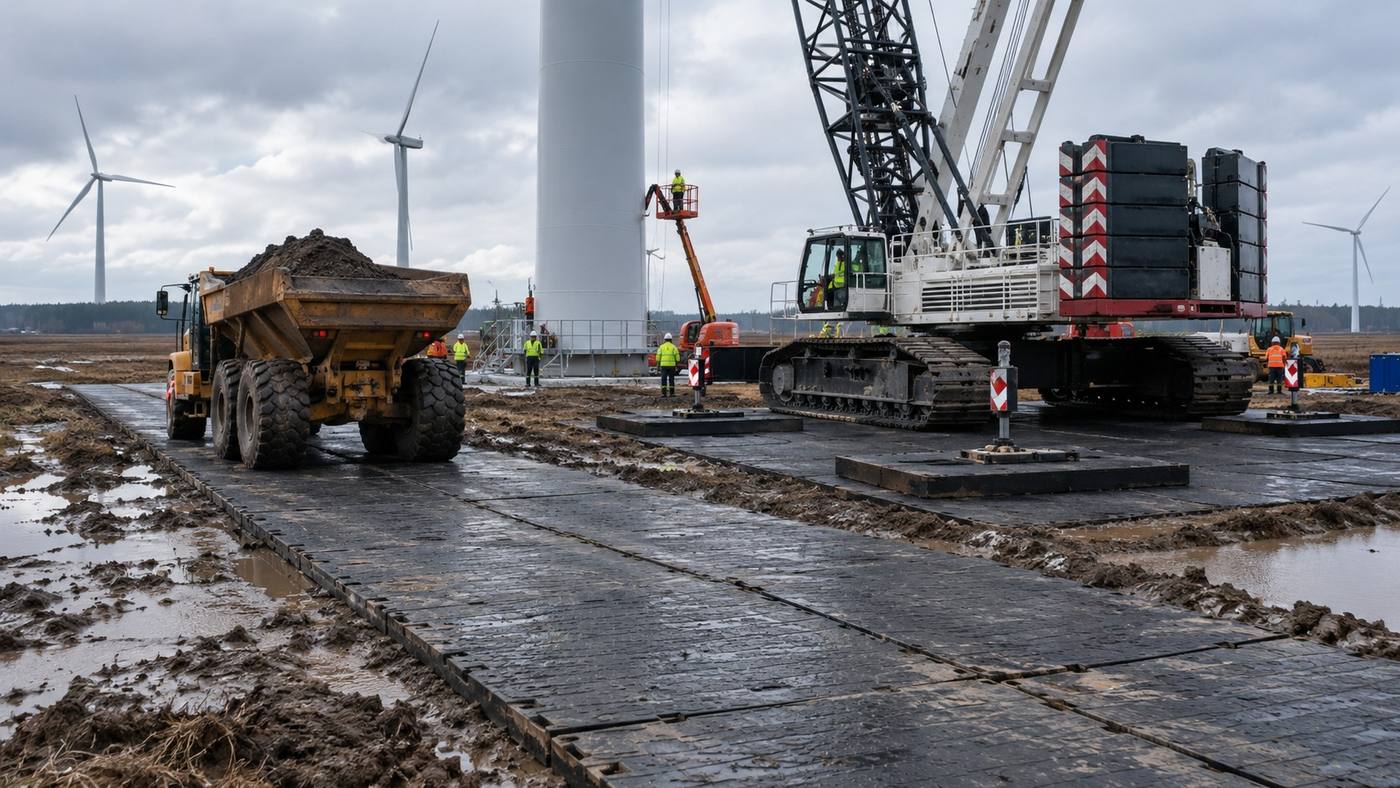
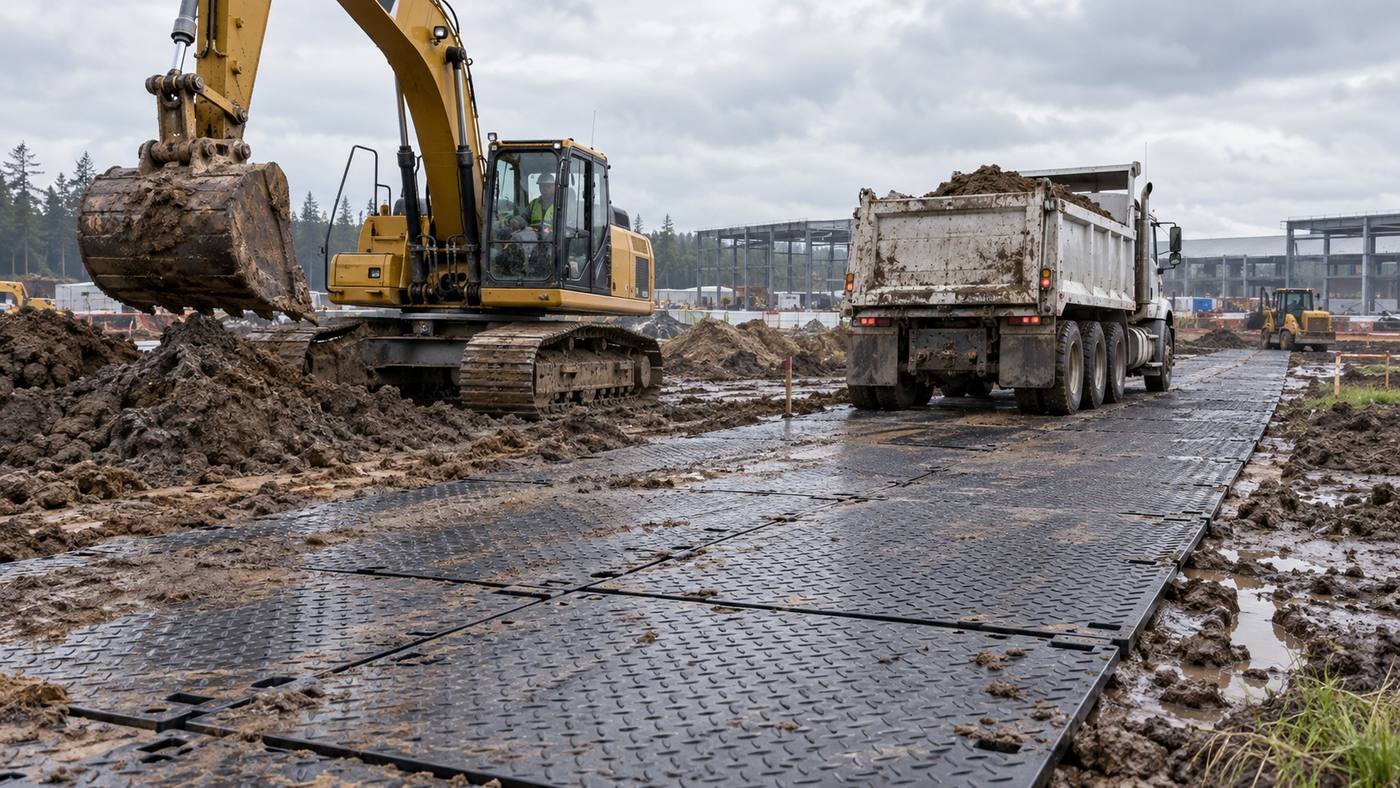
Figure: Long-term humid areas around sand-washing equipment (contribution material for the plastic network)
The quality of the installation should be reviewed through photographs and measurements, not just oral confirmation. First, it treats drainage, cedars or deform steel plates, then lays them on approved drawings; and separates the route of passage from the areas of handling, fragmentation and personnel. Any need for temporary blocks of wood, random cutting of angles, forced porosity or stacking should be returned to the technicians for re-evaluation.
It is recommended that the pavement boards be used as retroactive asset management. The date, location, batch, time of use and maintenance records associated with the installation by number, with a focus on sharp stones, stone powder, connectors and reverse areas. Minor contamination can be cleaned and re-examined; damage affecting geometry, connection reliability or remaining thickness is determined by authorized personnel and cannot be left to the driver or casual worker to decide on its continued use.
A distinction is to be drawn between product problems and changes in the use of borders. If the payload increases, the route shifts, the water content of the material changes or the temperature exceeds the original range, even if the pavement is not defective. These changes are recorded with the first water deposition and the implementation of the detached layer over the HF route before a decision can be made to adjust specifications, extend coverage or change operations.
The ultimate goal is not simply to install a product, but to allow long-term humid areas around sand washing equipment to operate at acceptable risk. Approval of the programme should be accompanied by the use of restrictions, inspection responsibilities, decommissioning criteria and evacuation methods. Thus, even when there are changes in personnel or shifts, the lack of information does not lead to a rekindling of fine sands and continuous water infiltrations that weaken the grass roots.
Need for further evaluation of the actual project?
Applications, sizes, quantities, site photographs or drawings and delivery destinations are sent, on which we can identify more suitable products and processing programmes.