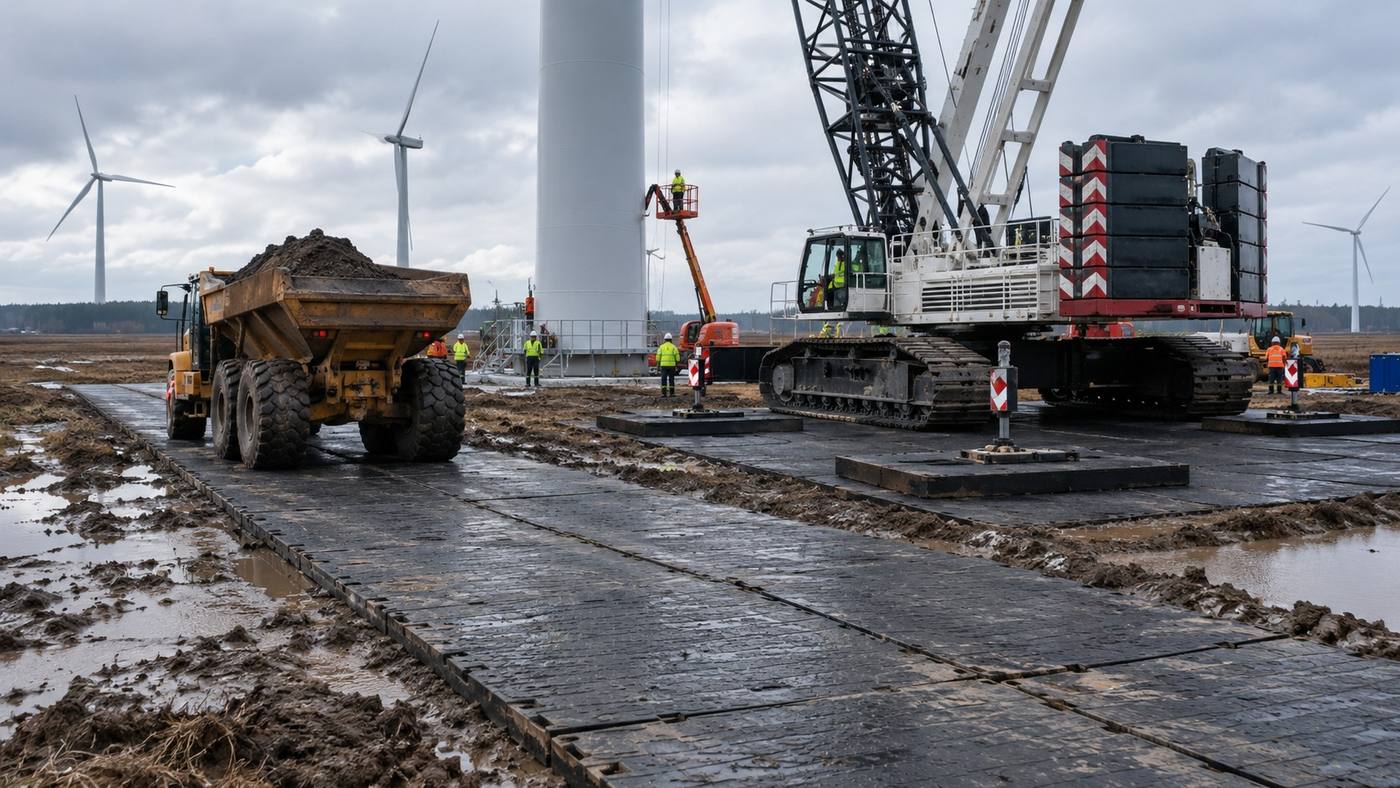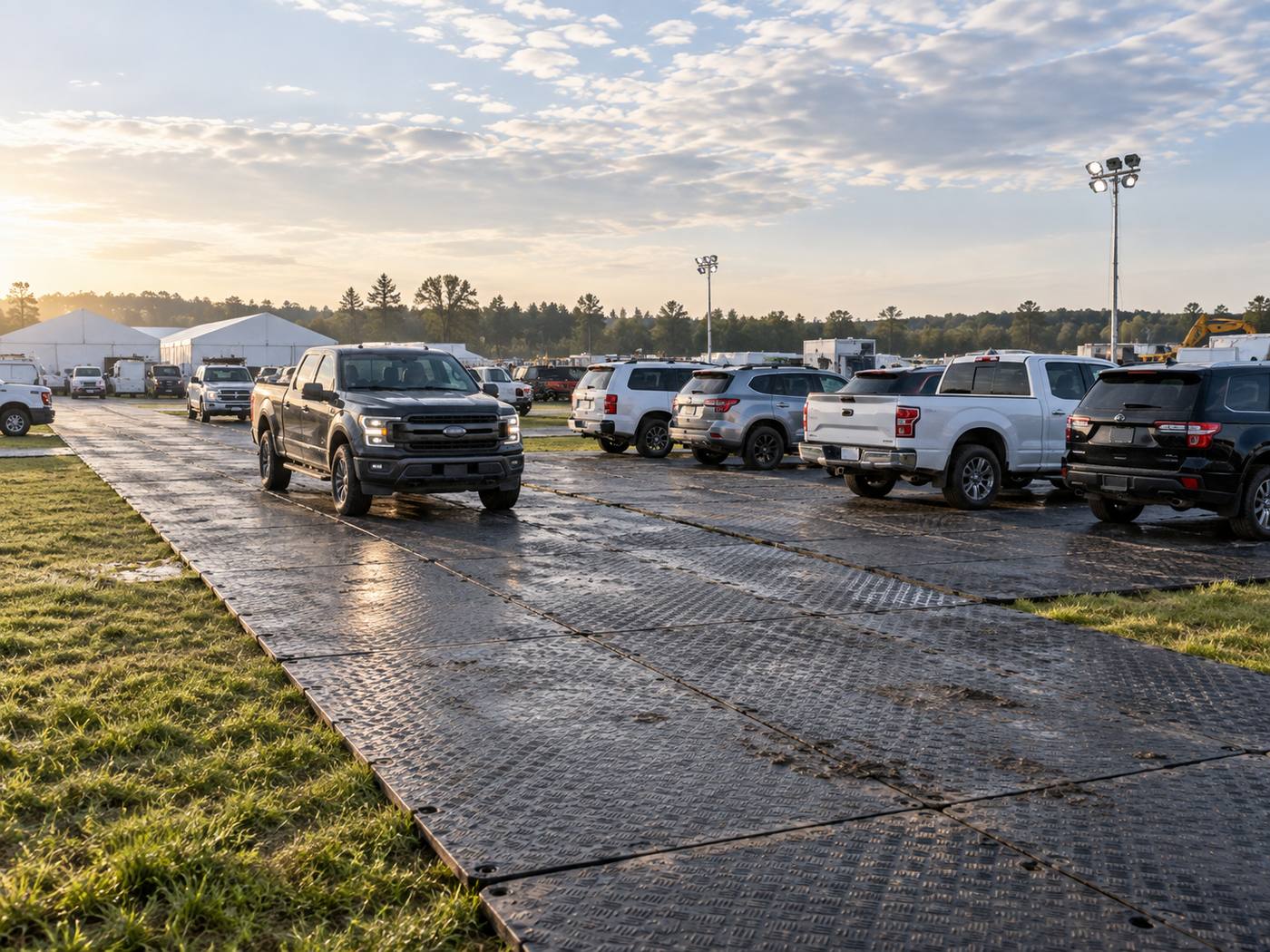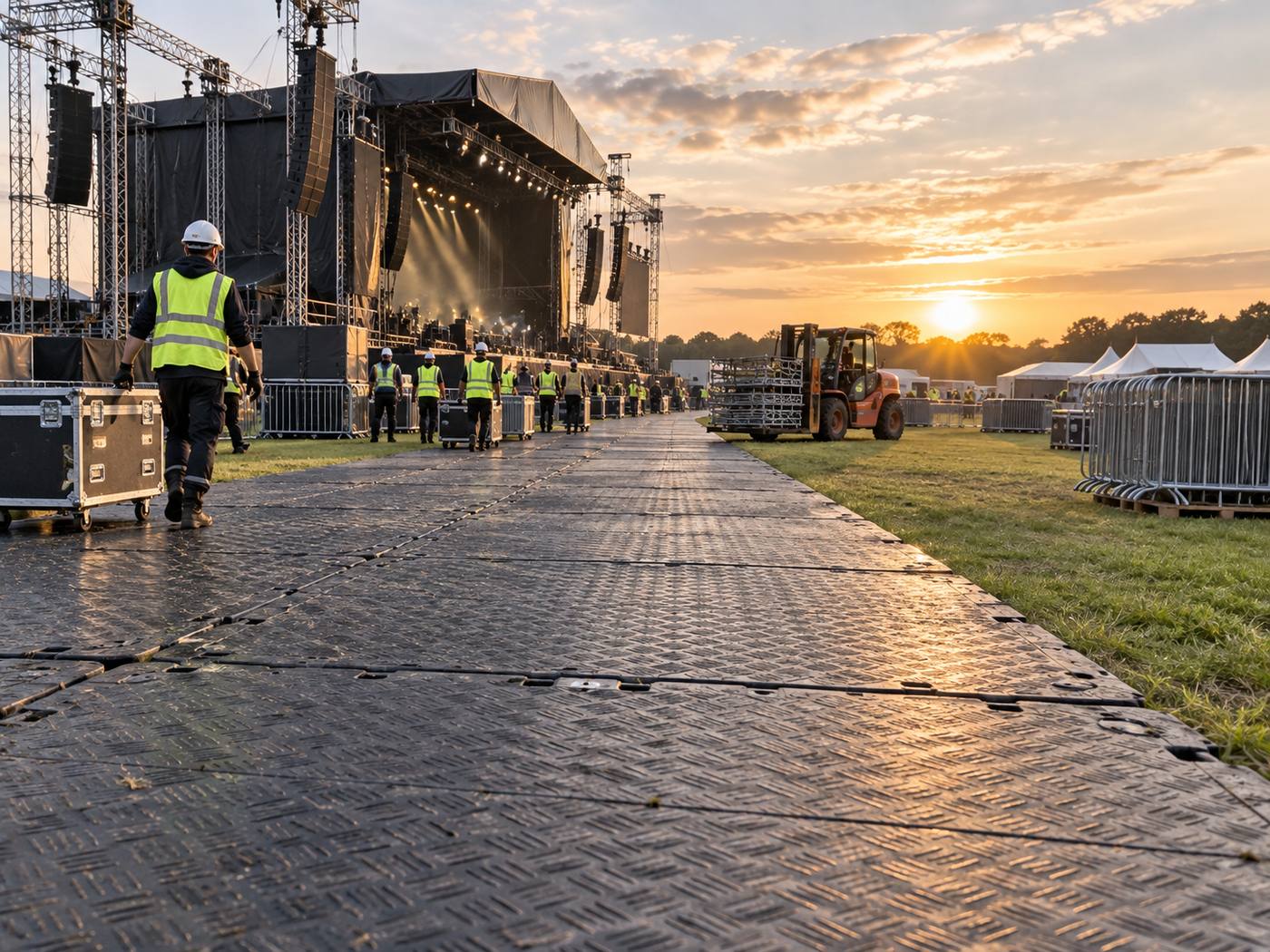
The narrow route shared by stage trucks, forklifts and service vehicles appears to require only one road, which is actually related to drainage, vehicle movement, site protection and evacuation plans. The response to the concert ' s temporary road needs to be wide enough to meet the vehicle, and a lack of a vehicle ' s exterior and turn-wielding capacity should be pressured to locate and photograph the site and confirm the frequency of occurrence, the impact on the object and the permitted recovery time.
In order to reduce temporary changes, the project should submit, on a one-time basis, the maximum vehicle axle load, tyres, convection radius, handling beats, lawn water coverage and night lighting, with an indication of the schedule of activities and exit windows. Vendors are required to provide product maps, individual weights, packaging and assumptions around the determination of net width based on the maximum vehicle type, side-to-side residual and location of the meeting point; the projecter is responsible for confirming the route, base level and use permit.
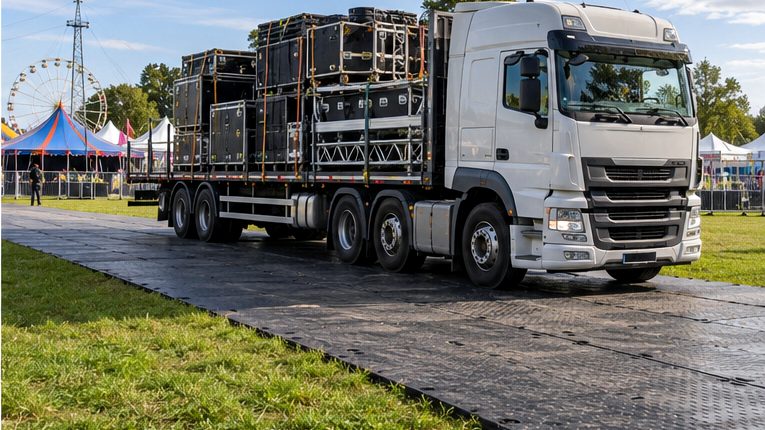
Figure: A narrow route shared by stage trucks, forklifts and service vehicles
The construction organization is as important as the product specifications. Operators shall use means of transport suitable for a single mass, and the vehicle shall be directed by a commander and shall not be braked, wheeled or pressed. The concert's roads must be accompanied by heavy transport, isolation and emergency passage. Prior to the opening of public areas, access transitions, trip risks and fence segregation are also checked.
During the operation period, pre-class, post-traffic and post-rainfall focus is on sutures, edges, turn areas, loading points and viewer junctions. It is recommended that key plates and leg pads be numbered to record dates, locations, vehicles, unusual photographs and disposal results. The use of tools that do not cut the surface of polymers in cleaning should be isolated and treated according to the manufacturer ' s standards when permanent deformations, cracks, holes torn or unreliable fixes are found.
A distinction is to be drawn between product problems and changes in the condition of work. If vehicles are heavier, routed, rainfall increases or cover periods are extended, the original option may no longer be appropriate. The change is recorded together with the implementation of the net width based on the maximum vehicle type, the side-to-side residual and the location of the meeting point in order to determine the thickness, quantity or organization of the next adjustment.
This section could serve as a list of activities, but not as a separate construction permit. Projects should form a written programme that combines temporary structures, transport, fire protection, site protection and a weather emergency system, with authorized personnel reviewing key carrying and stabilization conditions.
Need for further evaluation of the actual project?
Applications, sizes, quantities, site photographs or drawings and delivery destinations are sent, on which we can identify more suitable products and processing programmes.