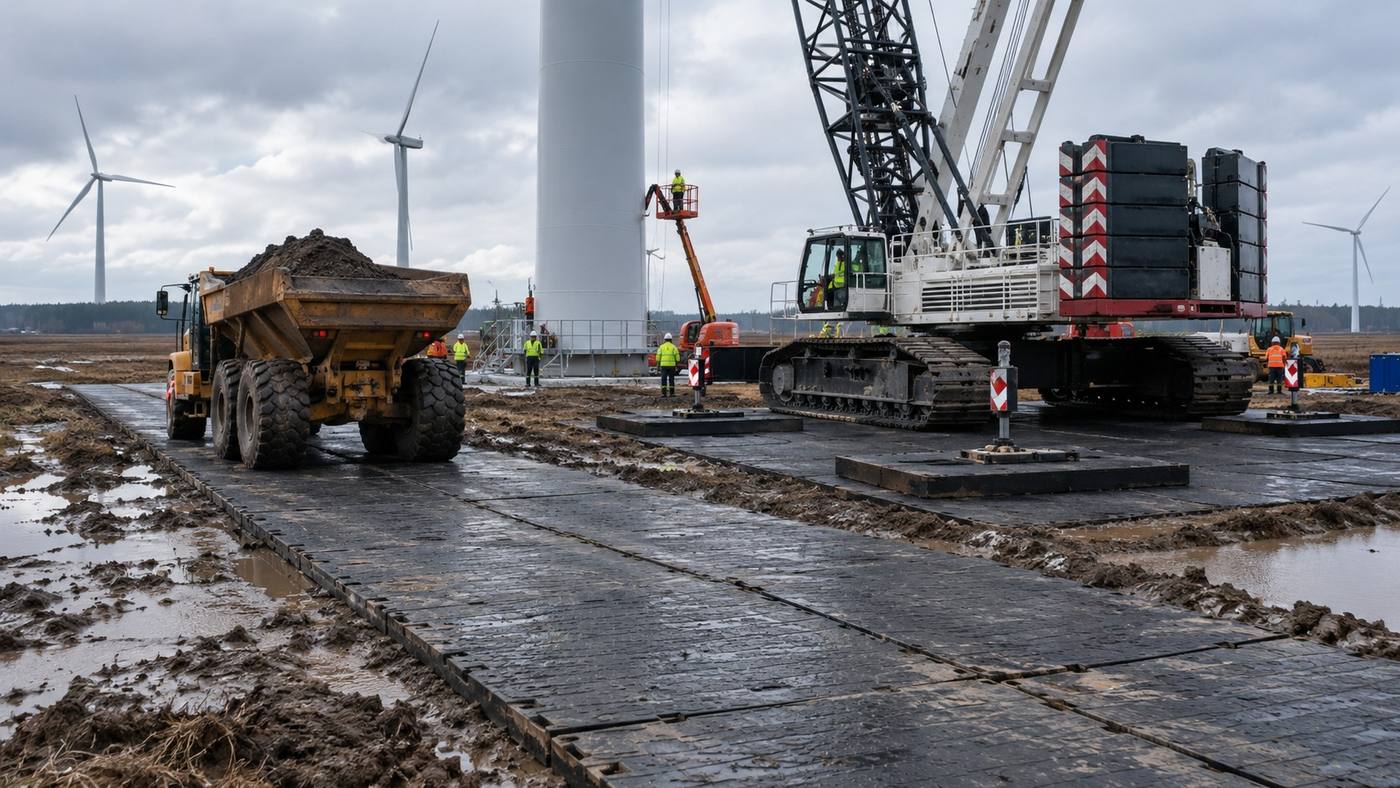
How do you deal with fixed answers that did not leave the site when the edge of the pavement fell? Repeatedly, the vehicle was pushed to the edge of the road and taken with it by weather, type of car, length of use and human organization, and the fall of the edge increased the bending of the plate and the crushing of the edge was only a surface phenomenon. The correct approach is to identify a combination of payloads and ground conditions before identifying temporary ground systems and management measures.
The selection can be divided into three steps: first to verify rainfall, drainage direction, water content of the soil, soft point depth, vehicle load and recovery time limits, then to expand the plate bending and crushing edges into carrying, stabilization, smoothing or site restoration requirements, and finally to implement sealing to restore the shoulder of the road, restore the entire bearing and optimize vehicle guidance. Common 15, 20, 25 or 30 mm specifications can only serve as the starting point for the request for quotations, and the final option is to be confirmed in conjunction with the location of the vehicle and the base support.
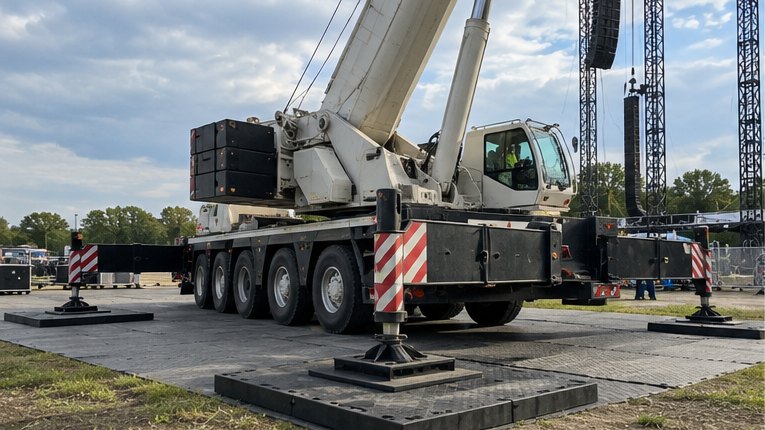
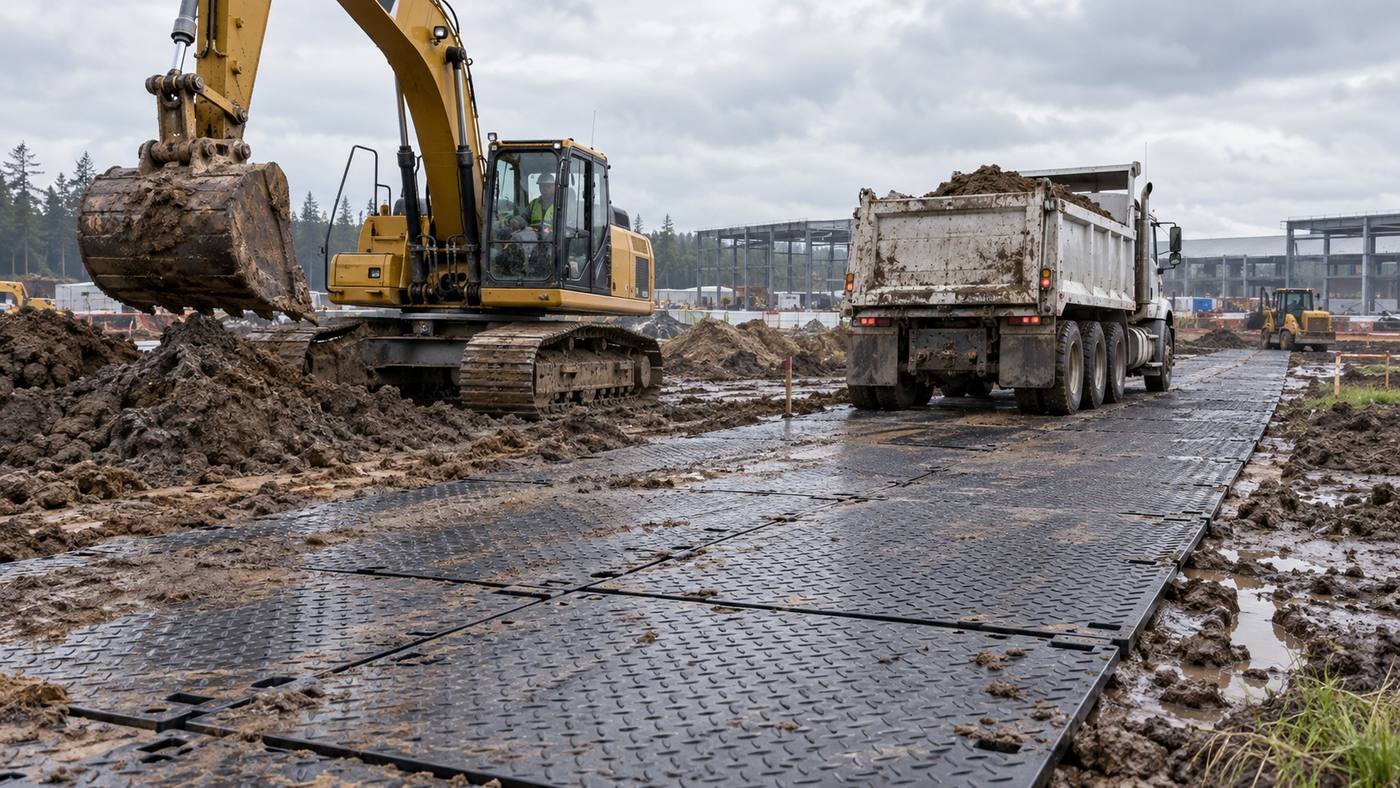
Figure: Vehicles repeatedly pressed to the edge of the road and taken with them the soft soil
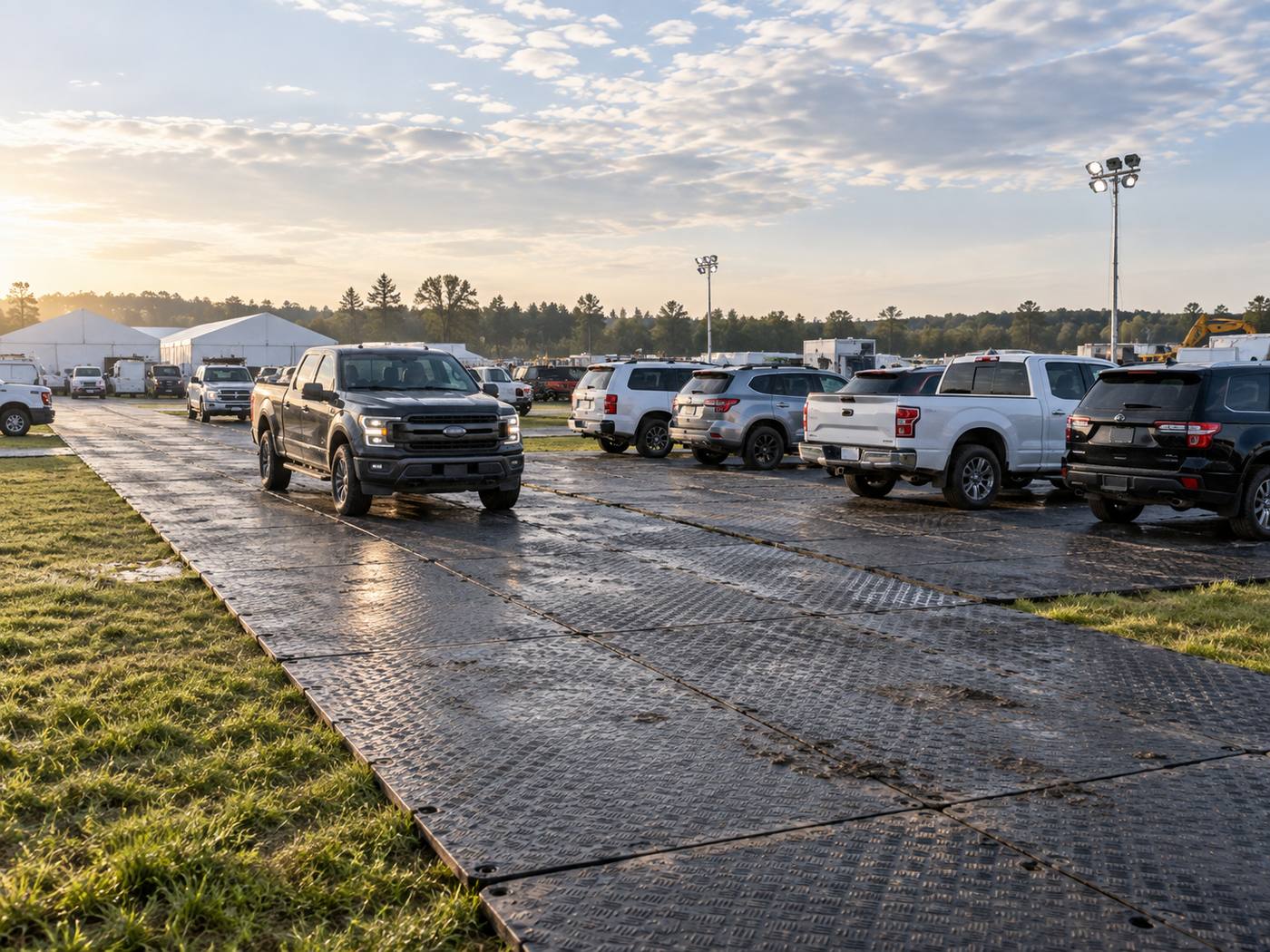
Prior to implementation, the area of operations should be sealed to remove sharp stones, wooden stakes and miscellaneous items that would cause spot loads, repair deep-pit tracks and remove drainage. The pavement is a temporary layer and cannot be a substitute for drainage and substandard grass-roots treatment. The planks are to be aligned to the main traffic, with an appropriate extension of coverage at the bend and docking points; and the leg mats must be fully exposed and inert, and should not be filled with random stacking or field cutting.
Interlocking involves reporting changes in water accumulation, pumping mud, sinking, edge, connector and shoulder, rather than just describing the appearance. The sutures, shoulders or sub-points repaired in the previous class must be reviewed in the next class. If the fall of the edge increases the bending and crushing of the plate as traffic increases, the speed limit, re-routing or suspension of operations should be immediate.
The impact assessment cannot be based solely on the success of the day. A comparison can be made between the number of incoming waits, the number of crashes, the amount of lawn repairs, the hours of cleaning, the loss of connections and the time of evacuation, and the differences between weather and traffic are recorded simultaneously. Only if the data are stable and the maintenance burden is acceptable will the programme be suitable for replication in the follow-up activities.
The ultimate goal is not simply to lay a layer of sheeting, but to allow vehicles to press over and over again to the edge of the road and to take the soil with them for sustainable operation at acceptable risk and to restore the site successfully. It is only by connecting the design, operation, inspection and exit sites that the fall of the edge will widen the bending and crushing of the plate so that it does not recur under time pressure.
Need for further evaluation of the actual project?
Applications, sizes, quantities, site photographs or drawings and delivery destinations are sent, on which we can identify more suitable products and processing programmes.