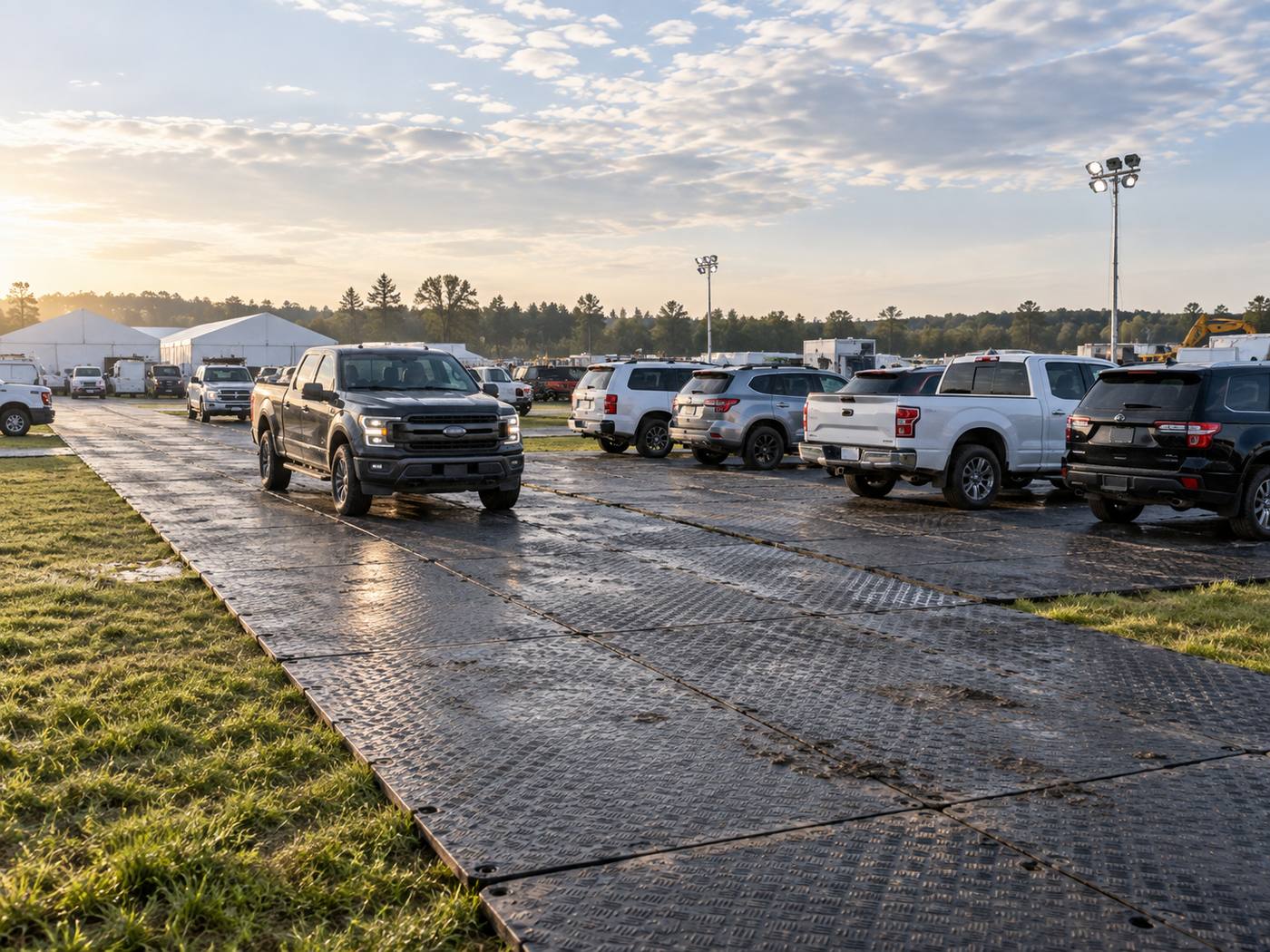
In the case of the continuous presence of several semi-mounted vehicles at low night levels, how the night-time approach of the tour convoy ensures that the road is clearly judged by the full operating cycle. The effects of vehicle entry, low-speed rotation, parking, loading and unloading and departure are different, while sutures, edges and routing changes are not easily identifiable at one point or another. It would be more reliable to record the timing and movements of anomalies before choosing the pavement or leg pads, as opposed to a space-only offer.
In order to reduce temporary changes, the project should submit, on a one-time basis, the maximum vehicle axle load, tyres, convection radius, handling beats, lawn water coverage and night lighting, with an indication of the schedule of activities and exit windows. Vendors are required to provide product maps, individual weights, packaging and assumptions around the installation of no-soft lighting, reflective boundaries and one-way movement and the retention of emergency exports; the projector is responsible for the identification of routes, grass-roots and use permits.
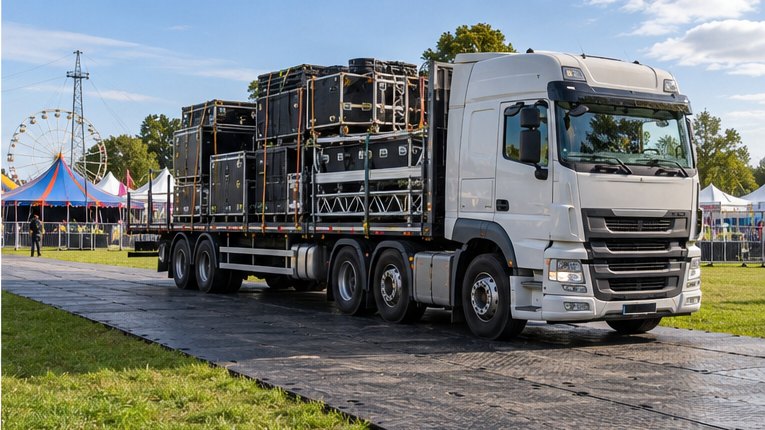
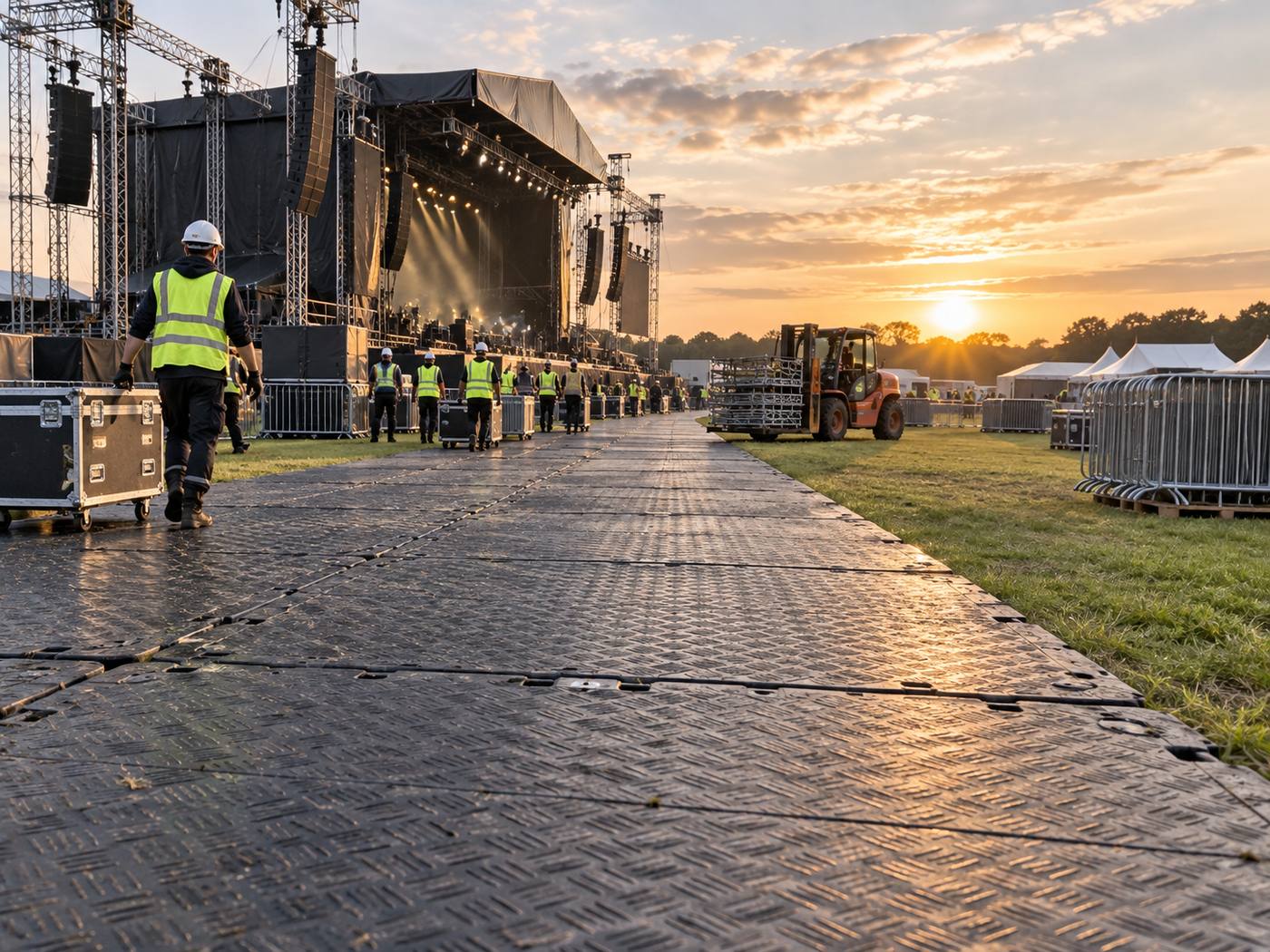
Figure: Multiple semi-mounted vehicles at low night exposure
The installation should leave measurement and photographic evidence. First, ground leveling and drainage are identified, and then full contact, connection, edge and transition of the pavement with the leg mat is checked. The concert's roads must be accompanied by heavy transport, isolation and emergency passage. Any situation requiring forced re-evaluation of holes, temporary advances or piles should be returned to the head of the technology.
Inspections cannot be “normal” only. They should be identified on a case-by-case basis around the seams, edges, bends, loading points and viewer junctions, and the anomalies should be classified into three levels of observation, restriction and decommissioning. Repeated sutures, edges and routing changes in the same area are not easily identifiable and require a return to drainage, grass-roots, transport or re-analysing of specifications rather than the constant replacement of surface components.
The quotations for the different products should be compared under the same size, material, connection, packaging, delivery and test basis. Supplementary information should be requested if the supplier gives the maximum carrying figures without indicating ground and test conditions. The event scene requires more attention to reuse, removal and quick evacuation than to single laboratory indicators.
If the conditions on the ground are different from the assumptions in this paper, the application of the conclusions should be suspended and reassessed. Stations for suspension, temporary parking, viewer access and rainy operations are subject to local rules, equipment manuals and statutory requirements. The supplier can assist in matching the product, but the final placement and release is approved by the responsible party for the project.
Need for further evaluation of the actual project?
Applications, sizes, quantities, site photographs or drawings and delivery destinations are sent, on which we can identify more suitable products and processing programmes.