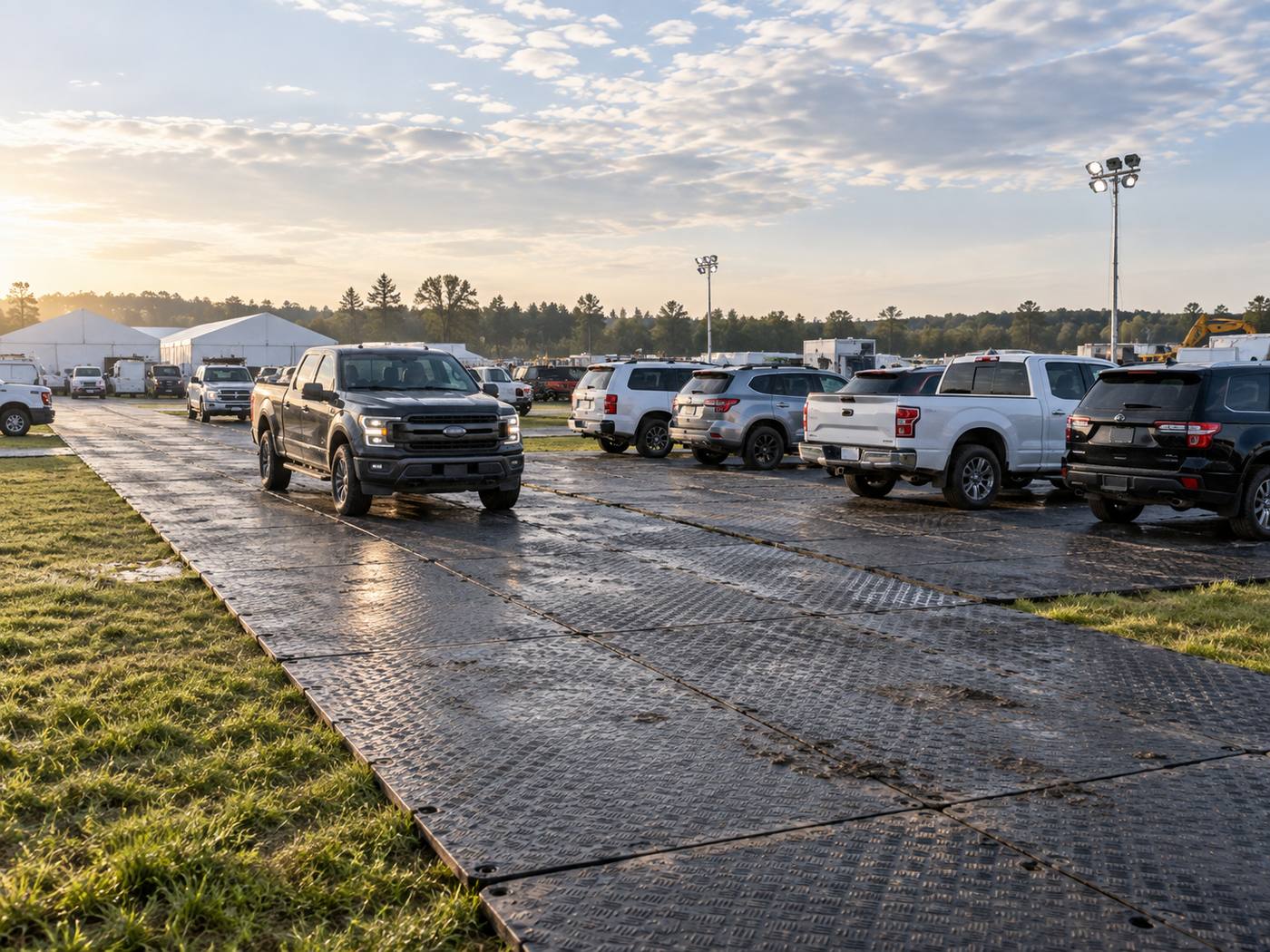
When discussing what ground protection is required for food trucks to park on grassland, a distinction should be made between surfaces, equipment support and personnel access. Food trucks are concentrated and continue to operate with three requirements at the same time, and local pressure from self-esteem, foot and customer queuing can be amplified when traffic overlaps. The division of the site into different functional areas is the first step in determining the product, thickness, width and quantity.
The input information can be organized by vehicle, ground, time and space column, with emphasis on full load, stop time, frequency of supply, revolving space, liquid contamination and human traffic diversion. Local pressure was caused by the queuing of vehicles, foot and customer, in a more appropriate direction to design coverage of access lines, parking spaces and personnel waiting areas, respectively. The selection of the product cannot be based solely on thickness or price, but should also confirm connection design, edge transition, reuse, cleaning and transport requirements.
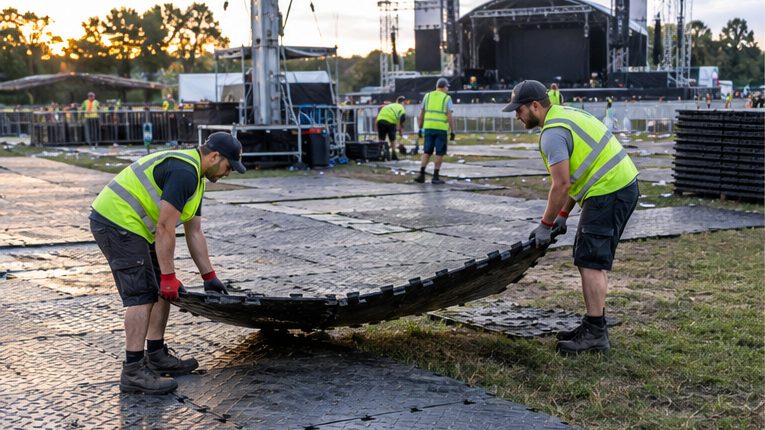
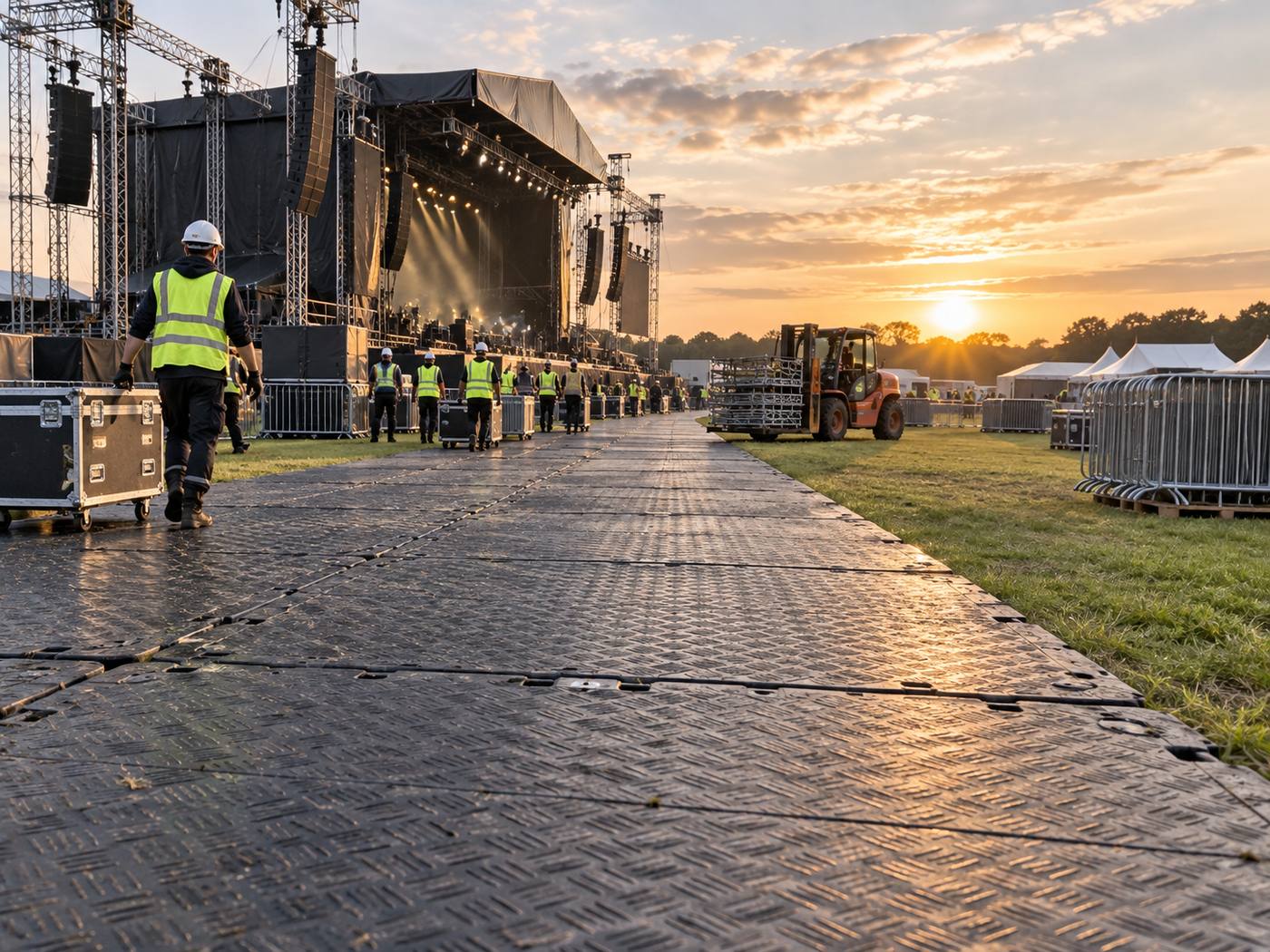
Figure: Food trucks concentrated and operated on a continuous basis
A small, representative-routing of the road, covering the softest floor and the most heavy vehicles, could be selected prior to formal entry. Service roads must be continuously available and clean during the opening of activities. A test observation of seams, grass-roots, tyre tracks and operating space will then determine whether to expand width, increase drainage or reorient traffic.
Lease or multi-shift projects can record stopovers, reverse areas, hoses, cables, stains and sews, and link road maps. The system should provide a reminder for the review of the project when a continuous pattern of self-heaviness, foot and customer queuing results in local pressure in real time. Backup panels and connectors will also be synchronized to avoid a lack of matching specifications at the site.
For repeated events, annual baselines could be used for each square metre of construction hours, vehicle cycle, cleaning time and damage rate. As a result, the next offer and inventory planning will no longer rely on experience and will also make it easier to identify the trend of self-heaviness of vehicles, foot and customer queuing, which has resulted in localized pressure.
This paper provides a selection and management approach that does not replace equipment specifications, interim structural programmes, ground-based evaluations and local regulations. Work involving lifting support, underground facilities, vehicular roll-backs, public traffic or access to dangerous areas shall be reviewed and quarantine and emergency procedures implemented by persons with appropriate qualifications. The above data can be provided in the request for quotations to obtain recommendations for size, thickness, quantity, packaging and shipment.
Need for further evaluation of the actual project?
Applications, sizes, quantities, site photographs or drawings and delivery destinations are sent, on which we can identify more suitable products and processing programmes.