The temporary site rental company would need to reserve as much pavement as possible, not just for the day of the activity. Lease companies often perform multiple entry, build, open, resupply and evacuation phases at the same time, and ground water coverage and traffic levels continue to change. The first to be controlled is the fact that insufficient stocks will miss the order, and excessive amounts will take over funds and warehousing, otherwise temporary roads, if paved, may again fail because of route, grass-roots or operational problems.
Prior to design, it was proposed to collect project area, vehicle data, inventory specifications, swing-cycle, loss rate, transport and port of destination. When communicating with suppliers, site maps, route lengths, critical dimensions and the most unfavourable conditions should be provided, rather than only the name of the activity. It is proposed that a secure inventory be established based on peak combined area, turnaround time and maintenance rate. The test conditions for materials, dimensions, thickness differentials, single weights, texture, connection or handling, temperature ranges and performance data are also checked when it comes to paving boards and leg pads.
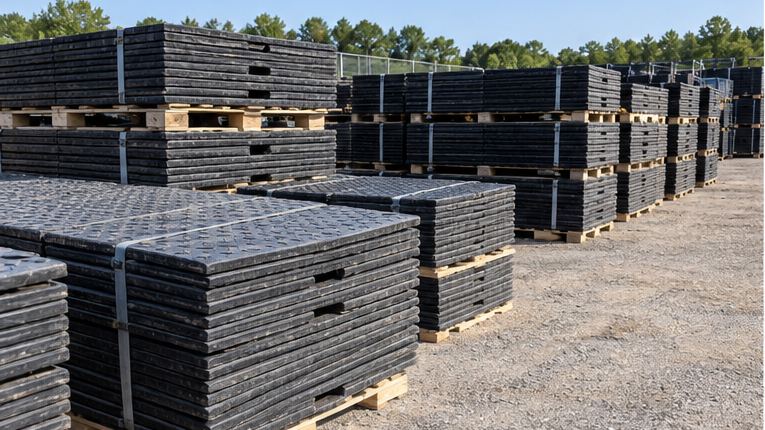
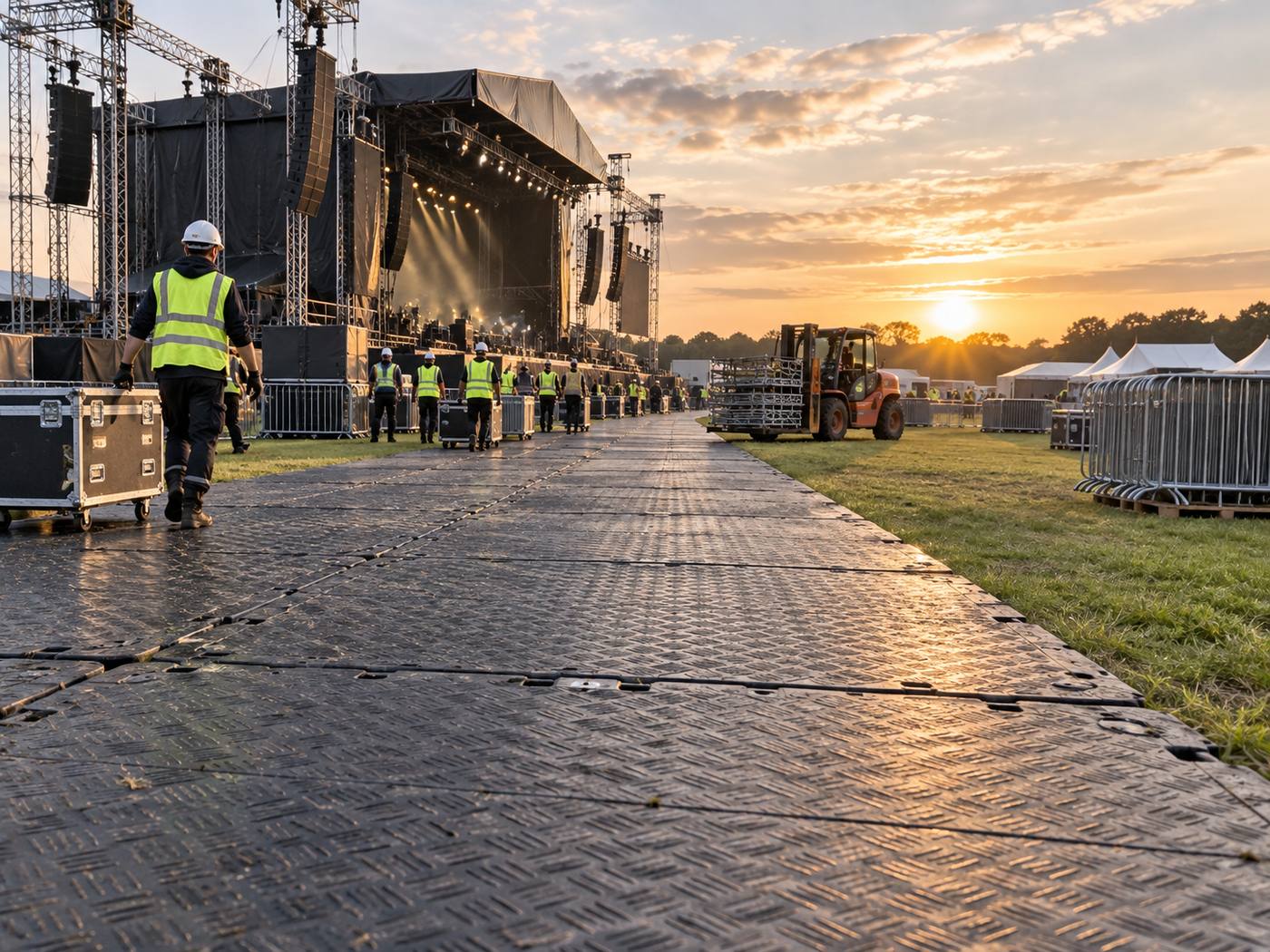
Figure: Lease companies serve multiple activities simultaneously
Prior to implementation, the area of operations should be sealed to remove sharp stones, wooden stakes and miscellaneous items that would cause spot loads, repair deep-pit tracks and remove drainage. Leases and procurement offers must be based on the same working conditions and full cost boundary. The planks are to be aligned to the main traffic, with an appropriate extension of coverage at the bend and docking points; and the leg mats must be fully exposed and inert, and should not be filled with random stacking or field cutting.
Inspections should not only be “normal”, but should be identified on a case-by-case basis around utilization, maintenance, missing, container loads, packaging and arrival, with anomalies classified as observation, restriction and decommissioning. Repeated stock shortages in the same region lead to the loss of orders and excessive use of funds and warehousing, requiring a return to drainage, grass-roots, transportation or re-analysis of specifications rather than the constant replacement of surface components.
The impact assessment cannot be based solely on the success of the day. A comparison can be made between the number of incoming waits, the number of crashes, the amount of lawn repairs, the hours of cleaning, the loss of connections and the time of evacuation, and the differences between weather and traffic are recorded simultaneously. Only if the data are stable and the maintenance burden is acceptable will the programme be suitable for replication in the follow-up activities.
If the conditions on the ground are different from the assumptions in this paper, the application of the conclusions should be suspended and reassessed. Stations for suspension, temporary parking, viewer access and rainy operations are subject to local rules, equipment manuals and statutory requirements. The supplier can assist in matching the product, but the final placement and release is approved by the responsible party for the project.
Need for further evaluation of the actual project?
Applications, sizes, quantities, site photographs or drawings and delivery destinations are sent, on which we can identify more suitable products and processing programmes.