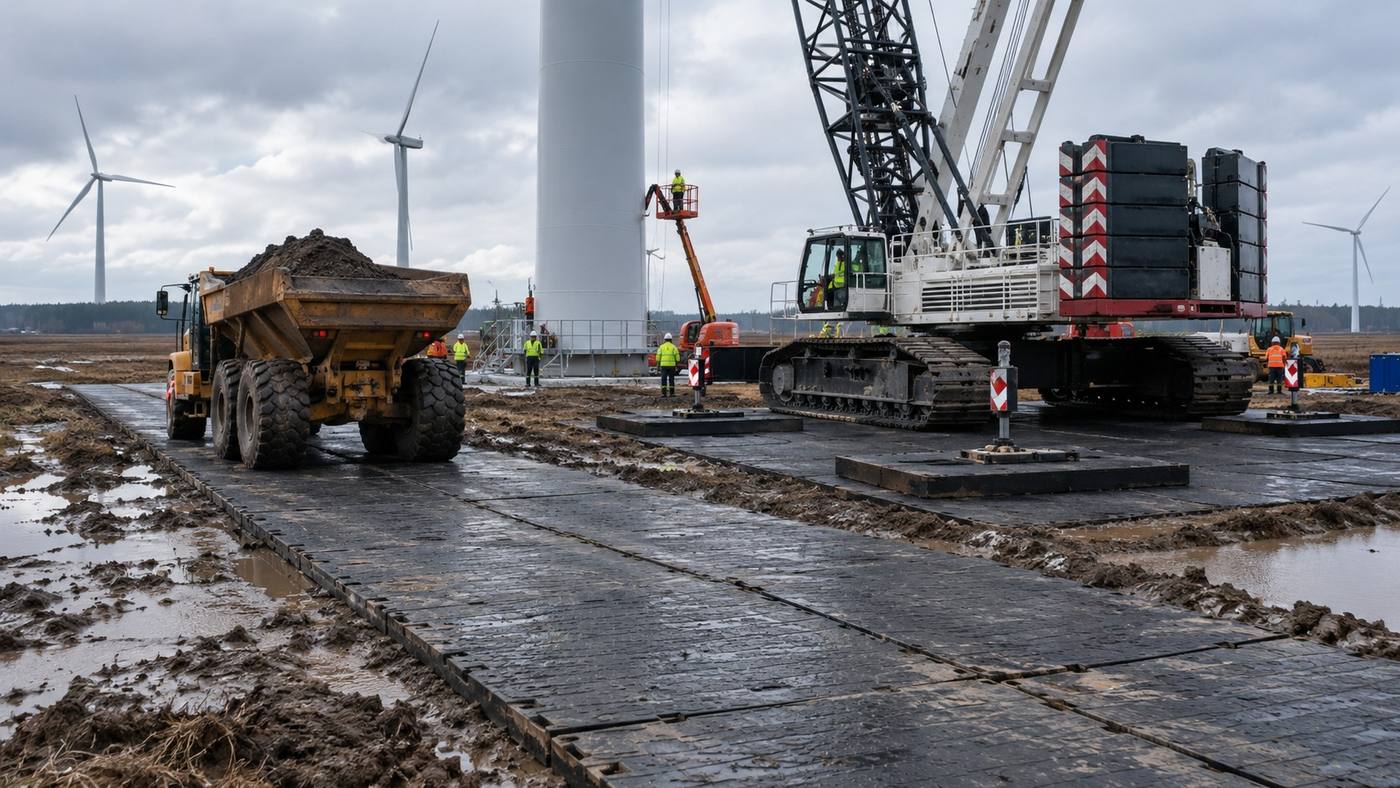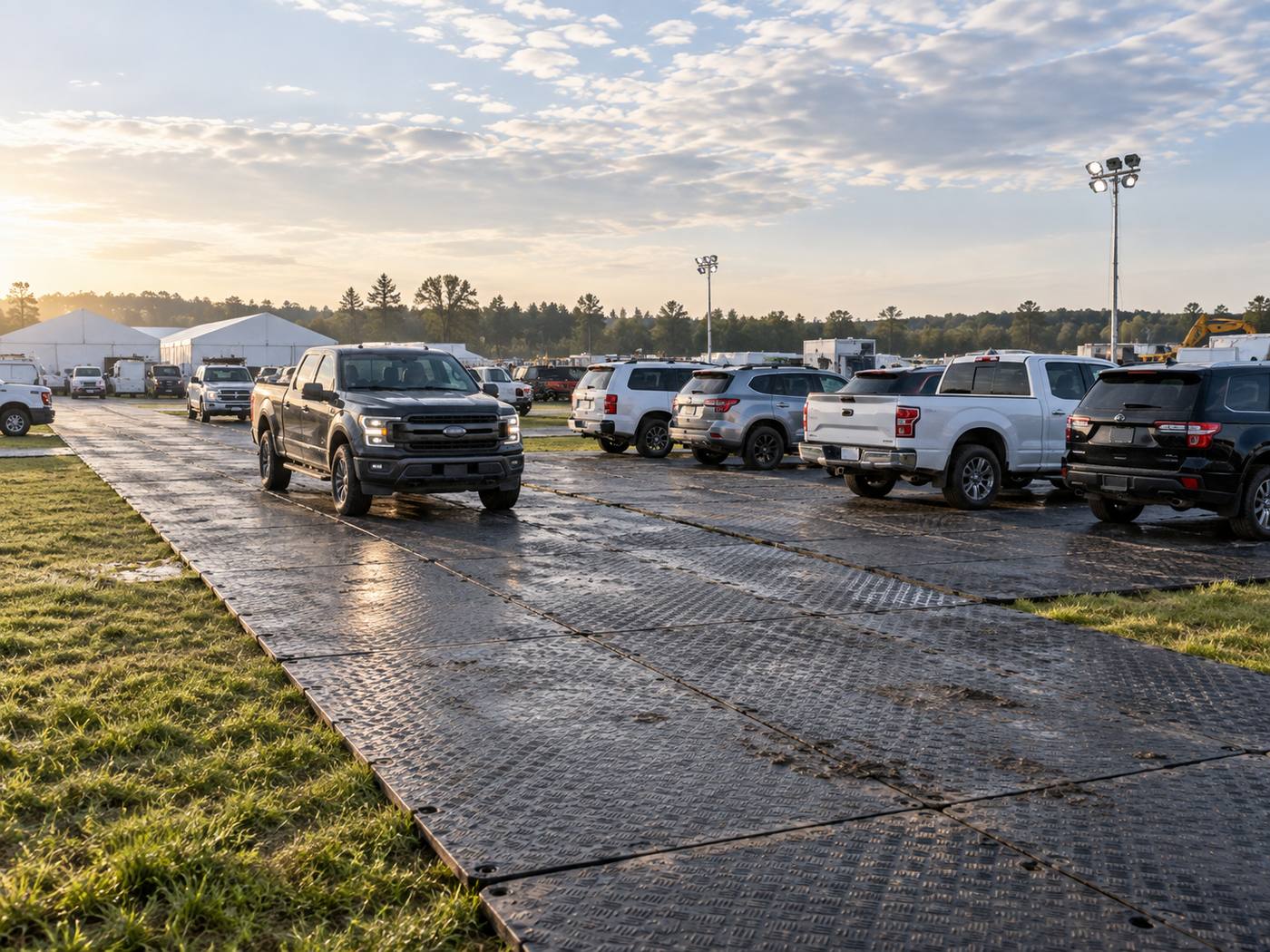
The site was of short duration, but the ground programme could not be temporarily boarded. The project should indicate the target for the use of water and saturated soft soil in the grassland following heavy rains, the most unfavourable weather and the routes that must be maintained. If direct coverage is ignored, water is trapped below the board and formed into pump suction, followed by vehicle waiting, equipment stoppage, lawn claims or audience safety issues.
The key to this topic is not to choose the thickest, but to establish a match. (c) Identification of control conditions based on rainfall, drainage direction, water content of the soil, depth of soft points, vehicle loads and recovery time limits, followed by the laying of configuration pavements from the stable end by draining and treatment soft points. If products need to be moved more frequently, manual weights, posts, stacking and cleaning should also be added to the total cost.

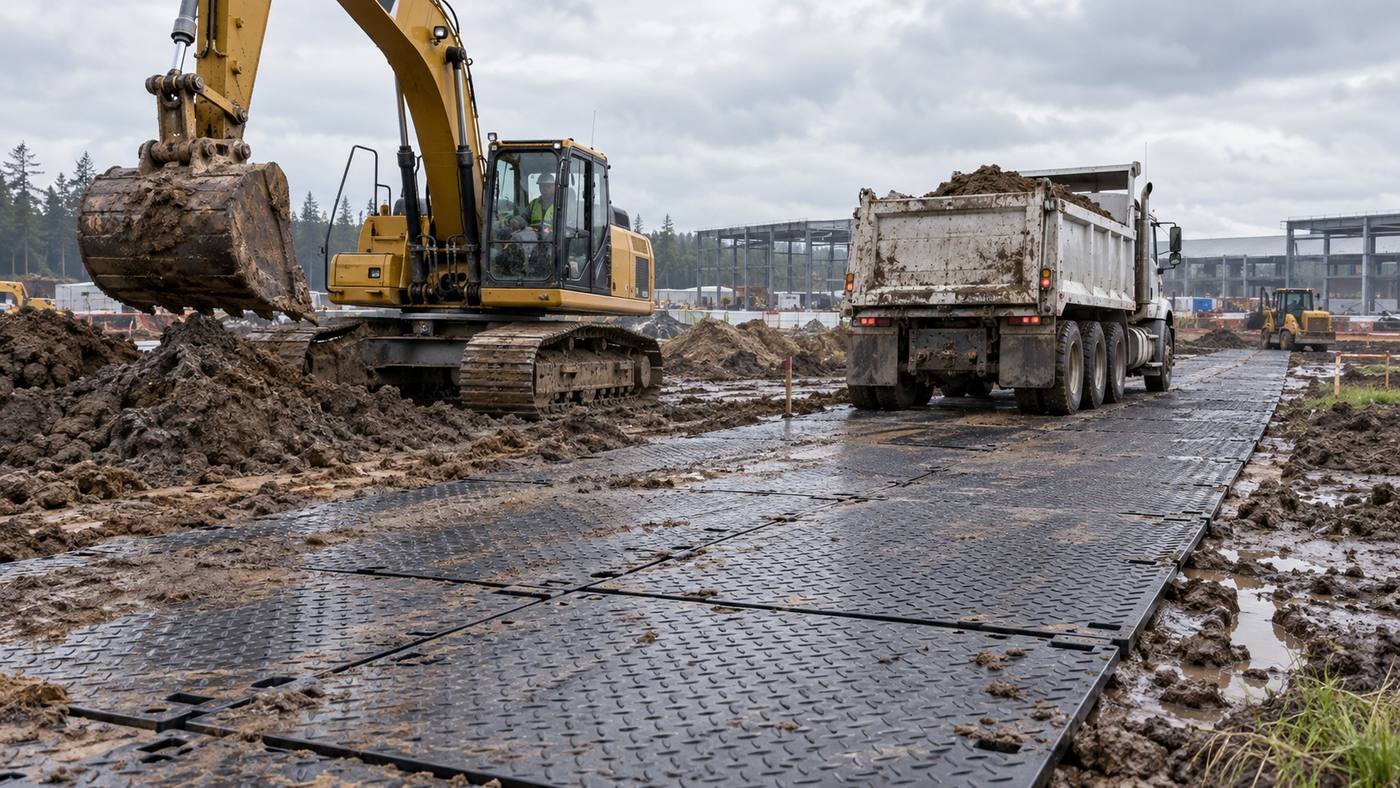
Figure: Water and saturated soft soil in grasslands following heavy rains
The installation should leave measurement and photographic evidence. First, ground leveling and drainage are identified, and then full access, connections, edges and transitions on the pavement are checked. The pavement is a temporary layer and cannot be a substitute for drainage and substandard grass-roots treatment. Any situation requiring forced re-evaluation of holes, temporary advances or piles should be returned to the head of the technology.
Inspections should not only be “normal”, but should be identified on a case-by-case basis around water accumulation, pumping mud, sinking, edges, connectors and shoulders, and the anomalies should be classified into three levels of observation, restriction and decommissioning. Repeated direct coverage of the same area would trap water under the plate and form pumping, requiring a return to drainage, grass-roots, transport or re-analysing of specifications rather than constantly replacing surface components.
The quotations for the different products should be compared under the same size, material, connection, packaging, delivery and test basis. Supplementary information should be requested if the supplier gives the maximum carrying figures without indicating ground and test conditions. The event scene requires more attention to reuse, removal and quick evacuation than to single laboratory indicators.
The conclusions can be summarized as the first confirmation of the boundary, then the layout of the pavement, followed by the inspection and validation of the project data. Formal programmes should also identify the use of restrictions, duty-bearers, decommissioning criteria and evacuation methods to avoid the loss of information as a result of shifts or changes in contractors.
Need for further evaluation of the actual project?
Applications, sizes, quantities, site photographs or drawings and delivery destinations are sent, on which we can identify more suitable products and processing programmes.