In order to resolve the issue of whether or not muddy sites can be addressed on a plate, it is not necessary to use “tons of weight” as the only criterion. Extremely soft grass-roots but time-consuming tyres requiring immediate openings change the outcome, especially if the increase in thickness does not eliminate drainage and load deficiencies, which may well exceed average local loads.
In order to reduce temporary changes, the project should submit rainfall, drainage direction, soil water content, soft point depth, vehicle load and recovery time frames at one time, with an activity schedule and exit window. Vendors are required to provide product maps, individual weights, packaging and assumptions around ground-based treatment, drainage, coverage and product specifications as part of a system programme; the projecter is responsible for confirming route, base and use permits.
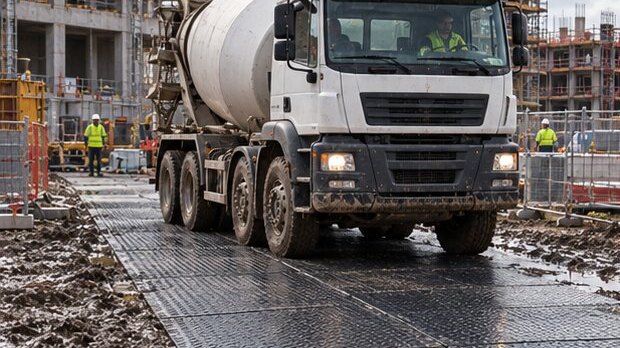
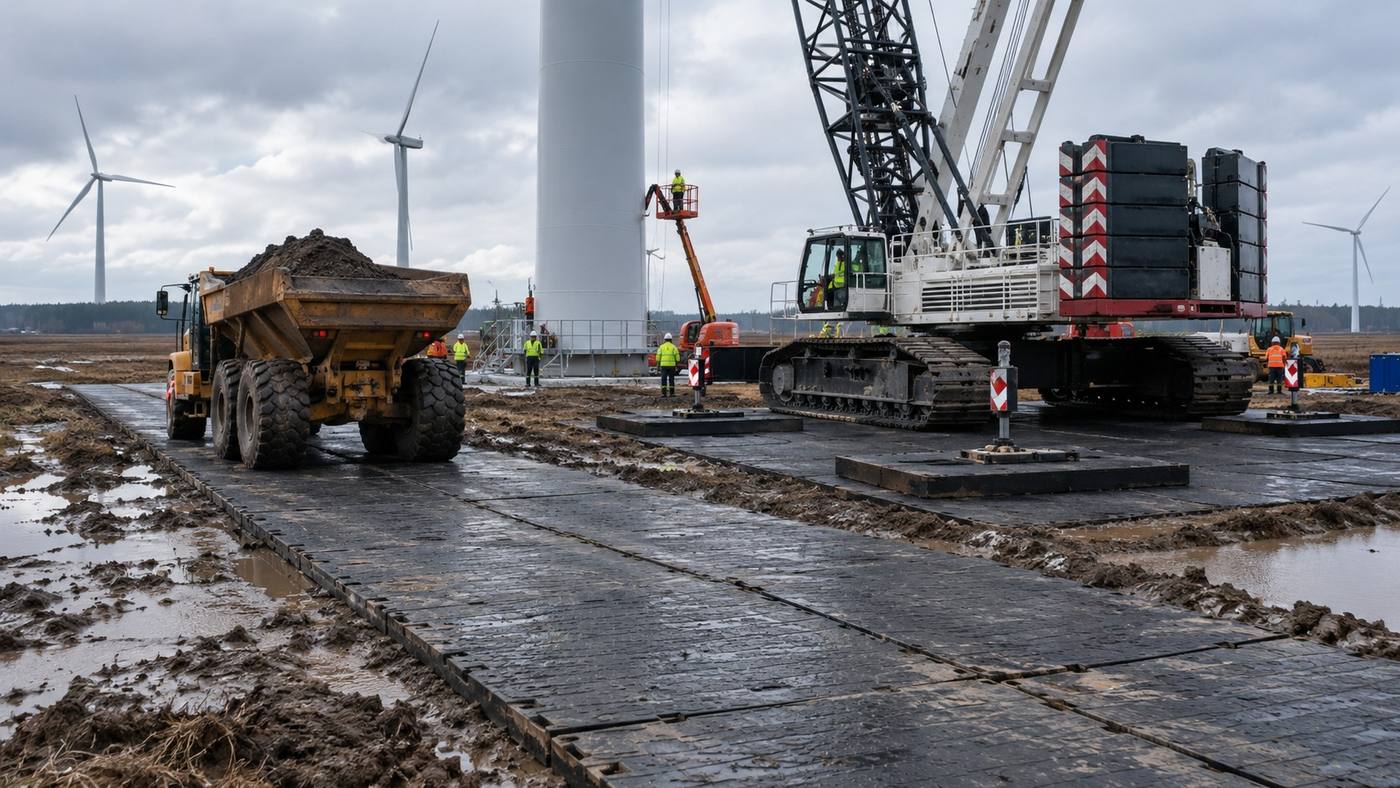
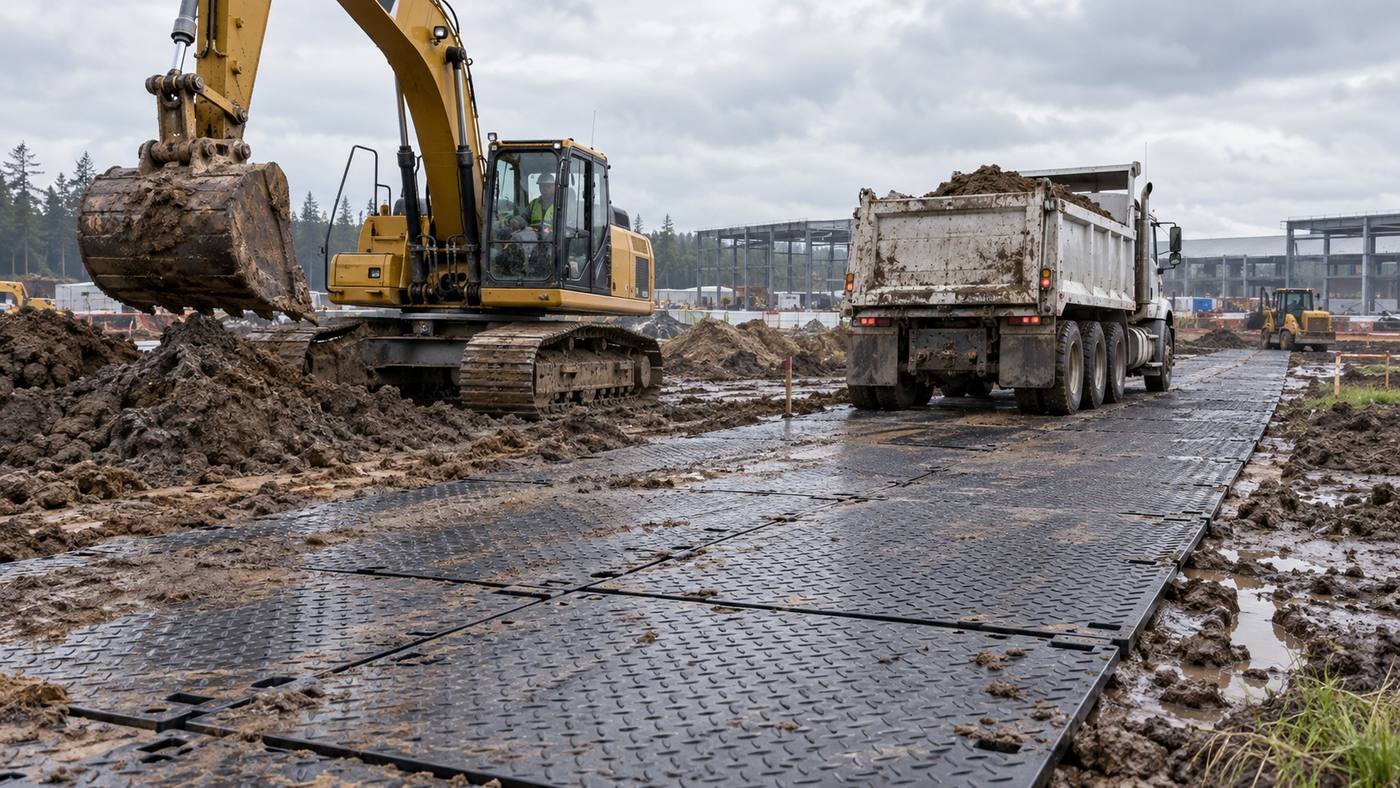
Figure: Very soft at the grass-roots level, but the schedule requires immediate opening.
A small, representative-routing of the road, covering the softest floor and the most heavy vehicles, could be selected prior to formal entry. The pavement is a temporary layer and cannot be a substitute for drainage and substandard grass-roots treatment. A test observation of seams, grass-roots, tyre tracks and operating space will then determine whether to expand width, increase drainage or reorient traffic.
Lease or multi-shift projects can record water accumulation, pump mud, sunk, edged, connector and shoulder, and link road maps. The system should provide a reminder of the project review in cases where a continuous increase in thickness does not eliminate drainage and load deficiencies. Backup panels and connectors will also be synchronized to avoid a lack of matching specifications at the site.
A distinction is to be drawn between product problems and changes in the condition of work. If vehicles are heavier, routed, rainfall increases or cover periods are extended, the original option may no longer be appropriate. Recording changes with ground-based treatment, drainage, coverage and product specifications as the implementation of the system programme will determine the thickness, quantity or organization of the next adjustment.
The conclusions can be summarized as the first confirmation of the boundary, then the layout of the pavement, followed by the inspection and validation of the project data. Formal programmes should also identify the use of restrictions, duty-bearers, decommissioning criteria and evacuation methods to avoid the loss of information as a result of shifts or changes in contractors.
Need for further evaluation of the actual project?
Applications, sizes, quantities, site photographs or drawings and delivery destinations are sent, on which we can identify more suitable products and processing programmes.