At the site of the emergency repair of electrical circuits following heavy rains, typhoons or floods, the focus of the topic is on “Why can a mud-blocking tunnel not be covered by a thin sheet”, which does not appear to be flat on the surface as a continuous burden under the plate. The ground conditions, the weather and the most heavy vehicle condition should be recorded before entering the site, as the base load dropped after rainfall and the pump mud or the wrong table could appear after repeated traffic. The establishment of baseline photographs and measurement points will facilitate follow-up inspections and recovery of acceptances.
The product configuration cannot be determined by area or thickness alone. The project should verify the disaster route, water depth, soft-point range, recovery model, arrival sequence, emergency time frame, public isolation and back-up materials, and then reduce the base load after rainfall and convert the pump mud or wrong table into drainage, carrying, stabilization, surface pull and recovery requirements. Moving tools, manual weights, back-up quantities, cleaning and back-to-back stacking should also be considered in the context of the reverse removal and retention of emergency routes in the order of exit of equipment until the final ICP. In the case of “why not just a thin sheet should be laid on a mud-blocked passage”, the information review should also calculate the area covered by the line, the bend, the meeting and the reverse area, respectively, and include missing information as items to be confirmed in the quotation and construction programme.
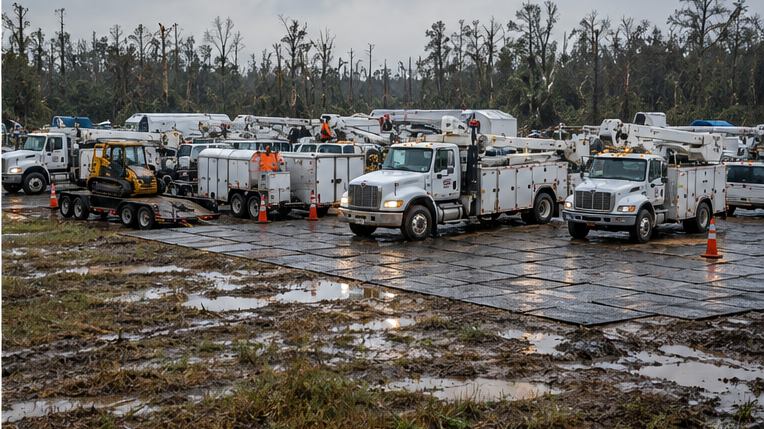
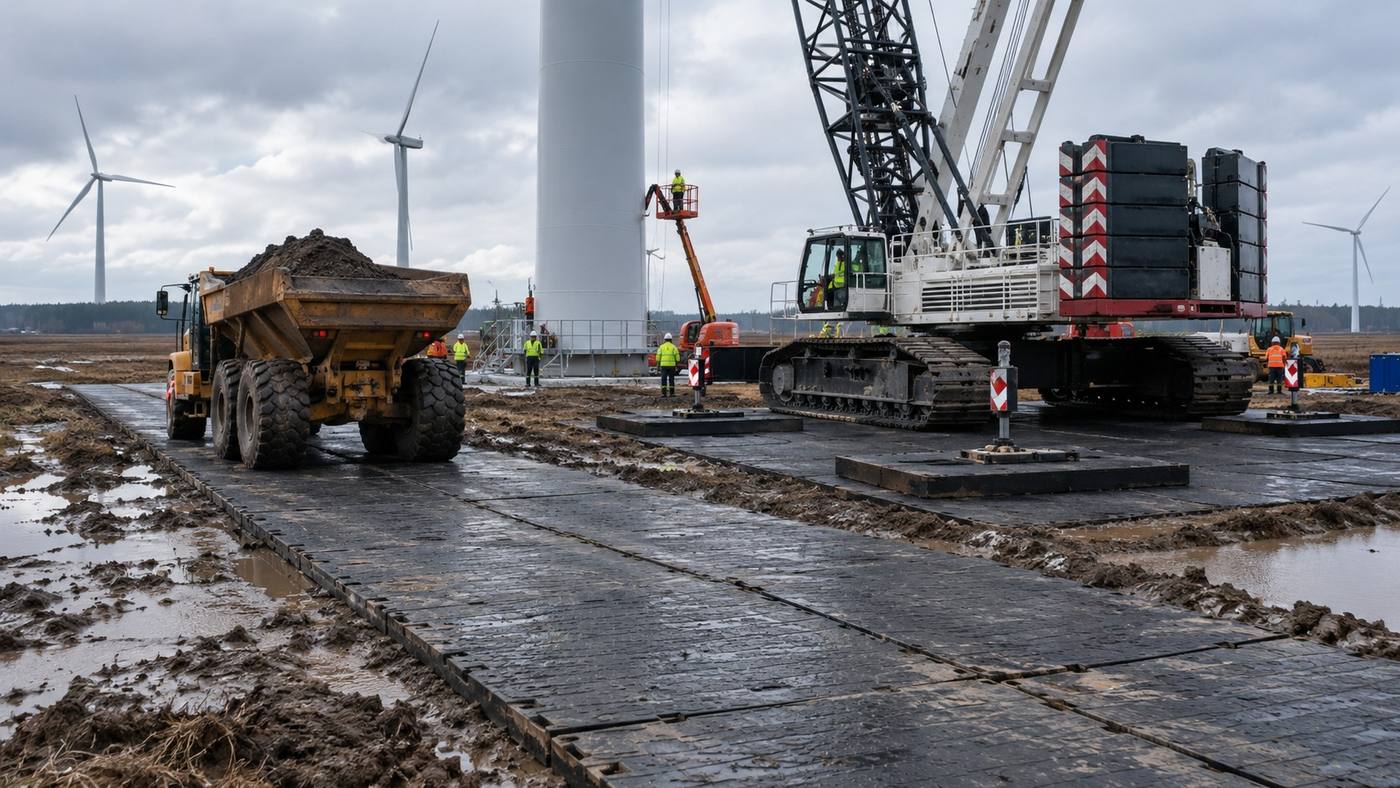
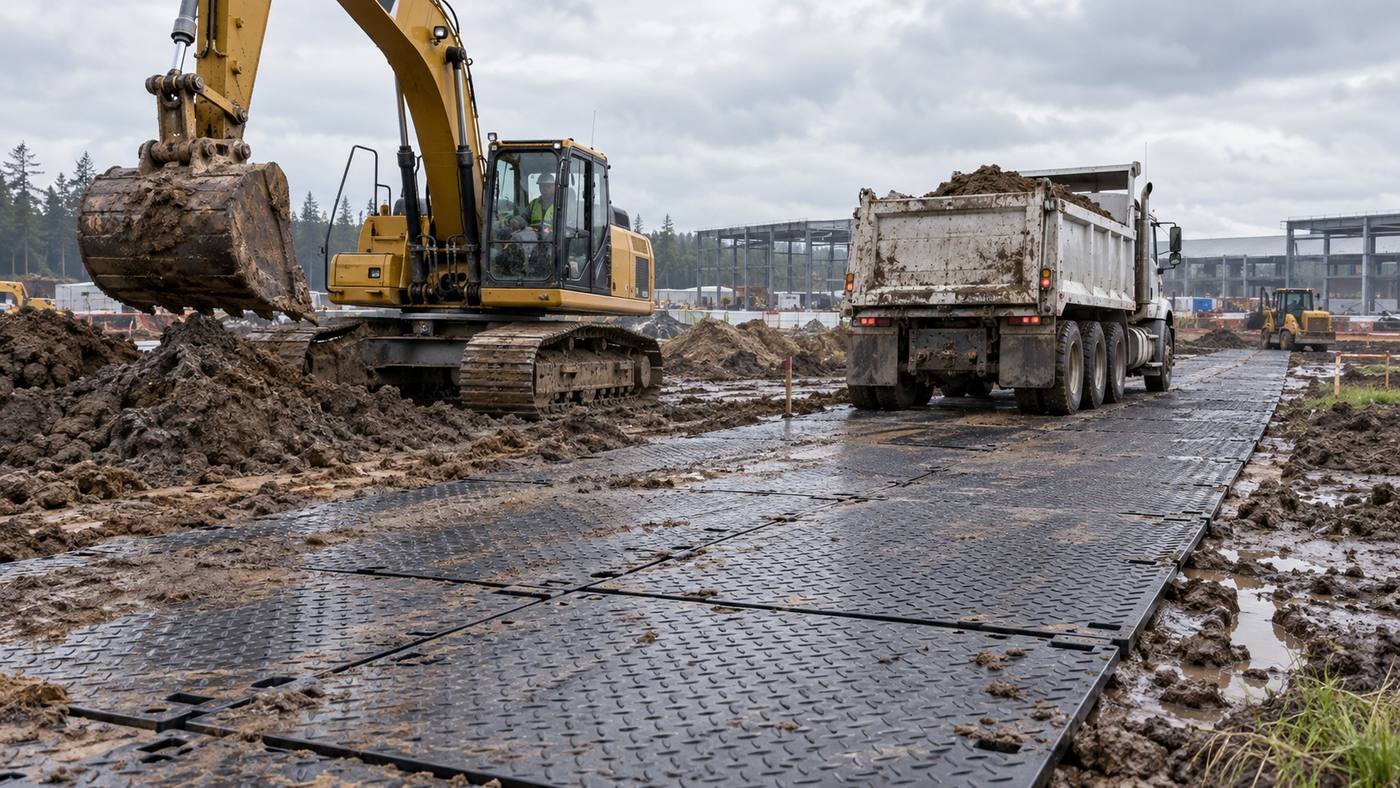
Figure: Emergency recovery site for electrical circuits following heavy rains, typhoons or floods, with a focus on “Why not just a thin sheet of mudslides”
The drainage direction, soft spots and support under the plate should be compared before and after the rainfall, and the water should not be enclosed under the plate. The speed of repairs cannot be a substitute for ground-based and traffic safety judgements, and the most critical rescue and equipment routes should be restored before heavy vehicles are opened on a segment basis. If the ground-based load drops after the rainfall and the pump mud or the wrong table is already present, the area should be sealed, the lifting plate should be treated for drainage and re-connected; the reason cannot normally be eliminated by cleaning the surface or adding a single sheet. The test-pail record of “why can't the mudslides be covered by a thin sheet” should indicate the starting and ending position, vehicle status and release conclusions, so as to facilitate review as construction conditions change.
The shift involves reporting changes in water accumulation, pumping mud, edges, vehicle congestion, leg deposition, lighting, public isolation and connectors, rather than just describing the appearance. The sutures, shoulders or sub-points repaired in the previous class are reviewed in the next class. In the event that the ground-based load drops after the rainfall and the pumping mud or the wrong station increases with traffic, the project shall immediately limit, reroute or suspend the equipment until the re-examination passes. The inspection forms around “Why can't the mud-blocking passages be covered on a thin sheet” are to be shown as a separate line of sublime base loads and changes in pump mud or wrong table, with an indication of the inspector and the time of return.
A reset is to distinguish between product problems and changes in condition. The original programme may no longer be appropriate if the vehicle is heavy, routed, rainfall increases or cover periods are extended. These changes are recorded with the reverse removal of the equipment in the order of withdrawal and the retention of the emergency route until the final results of the implementation, and the next time it is known whether the thickness, width, quantity or construction organization should be adjusted. It should also answer whether “why can't the mudslides be replaced by a thin sheet” by reverse dismantling and retaining the emergency route in the order in which the equipment was withdrawn to a final and verifiable improvement, so as to avoid a subjective description of the end of the item.
This topic can be summarized as first confirming the boundary of the work, then configure the appropriate product, and then validate it with test run, inspection and project data. The formal programme should identify those responsible, the restrictions, the criteria for decommissioning, the means of recovery and the emergency route, so as to avoid the loss of critical information following changes in the class or contractor.
Need for further evaluation of the actual project?
Applications, sizes, quantities, site photographs or drawings and delivery destinations are sent, on which we can identify more suitable products and processing programmes.