
The paving board sign states that the carrying data should not be directly compared with the most unfavourable rather than the average. The process of procurement of pavements and leg mats by energy contractors, leasers and distributors is concerned that “why is the paved board labels not directly comparable” may be affected by heavy vehicle cycles, rainfall and time compression, and that lack of support on the edge of the road leads to increased slab bending and pressure on the edges of the board as traffic increases. It would be clearer for on-site execution to first determine the conditions for allowing deposition, decommissioning and those responsible, and then select product specifications.
A one-time collection of vehicle and equipment data, ground conditions, route size, quantity, life cycle, product specifications, test basis, packaging, trade terms and destination port is recommended before design and request for quotations. The topic could start with a formula “Putting drainage and soft spots first, then laying down and piloting at a stable end”. The standard 15, 20, 25 and 30 mm specifications for paving boards can only be used as the starting point for communication, with the actual selection being combined with materials, size, thickness, single weight, texture, connection, grass-roots support and supplier testing conditions. In the case of “why is it not directly comparable to the carrying data on the paved board labels”, the information review should also confirm the operational equipment stoppage time, the location of the feeder and the area of separation of personnel, and include missing information as an item to be confirmed in the quotation and construction programme.
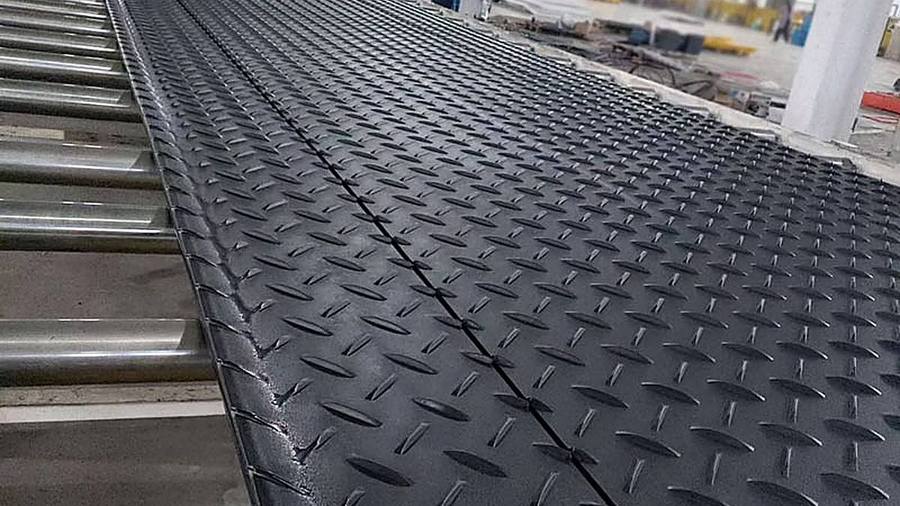
Figure: Processes for the procurement of pavements and leg mats by energy contractors, leasers and distributors, with a focus on “Why is it not directly comparable to the carry data” (inline material for the plastic network)
The installation should leave a photo, location and measurement record. First, ground-level levelling, drainage and underground facilities are identified, and the complete contact, connection, edge and transition of the pavement is checked, or the size, location and centering of the leg pads are checked. The procurement comparison must use the same size, material, test conditions and delivery boundary, and the reference values of 50 to 200 tons cannot be understood in isolation from the support conditions. Areas not eligible for acceptance should not be replaced by speed-limit signs alone. The test-pail record, “Why is the carrying data not directly comparable”, should indicate the starting and ending position, vehicle condition and release conclusions to facilitate review as construction conditions change.
It is recommended that the pavements and the mats be included in the asset desk account, numbering the relevant specifications, batches, pavements and hours of use. The scope of the inspection includes size differences, thickness, weight, texture, connection holes, appearance, packaging, cabinet lists, batch information and arrival and inspection. The removed components are to be cleaned, dried, flattened and placed in subdivisions that are qualified, subject to assessment, to repair and to end-of-life status, to prevent the re-entry of unqualified products. The inspection forms around the "pail board label " why the carrying data cannot be directly compared " , need to be accompanied by a lack of support on the edge of the separate road, leading to changes in the bending and crushing of the sheet, and indicate the time of the repeater and the resumption of traffic.
The full life-cycle costs include procurement or leasing, shipping, unloading, laying, inspection, cleaning, maintenance, warehousing and ground restoration. The project should compare the implementation cost of first treatment of drainage with the soft point, then the cost of laying out and piloting from the stable end, with the cost of stopping or repairing because of the lack of support at the edge of the road, which resulted in the bending and crushing of the sheet, and not only on the basis of the price of a single block of products. This retrodiscussion should also answer the question as to why the "pailboard labels say that the data cannot be directly compared" or whether the improvement can be verified by first processing the drainage and soft points, then by laying out the stable end and running the test, so as to avoid ending the item with a subjective description.
If the conditions on the ground are different from the assumptions in this paper, the application of the conclusions should be suspended and reassessed. Energy transport, suspension, refurbishment and overhaul are subject to project programmes, equipment manuals and statutory requirements. The supplier may assist in matching the product, but the final placement, commissioning and release shall be approved by the responsible party for the project.
Need for further evaluation of the actual project?
Applications, sizes, quantities, site photographs or drawings and delivery destinations are sent, on which we can identify more suitable products and processing programmes.







