
In the process of procurement of pavements and leg mats by energy contractors, leasers and distributors, the topic is concerned with “how to verify the performance of the pavement in the snow and snow environment”. In order to verify the performance of the pavement in the snow and snow environment, the ground condition, weather and the most heavy vehicle condition should be recorded before entering the site, as temporary changes in the construction route may result in vehicle entering the unprotected area after repeated traffic. The establishment of baseline photographs and measurement points will facilitate follow-up inspections and recovery of acceptances.
Procurement staff should submit site maps, vehicle schedules and vehicle and equipment data, ground conditions, route sizes, quantity, life cycle, product specifications, test basis, packaging, trade terms and destination port to follow the request for quotations, and indicate where a temporary change in the construction route may result in a vehicle entering an unprotected area. The programme could be based on a continuous zonal configuration based on planning for the most disadvantaged vehicles, complete wheels and weather changes. For the whole container procurement, the quantity of the container, the pallet or bundle, the offloading equipment, the destination port and the conditions of storage at the site should also be confirmed in advance. For “how to verify the performance of the pavement in the rain and snow environment”, the information review should also be carried out in the reverse order of removal and loading along the exit route of the last item of equipment and include missing information as an item pending confirmation of the offer and the construction programme.
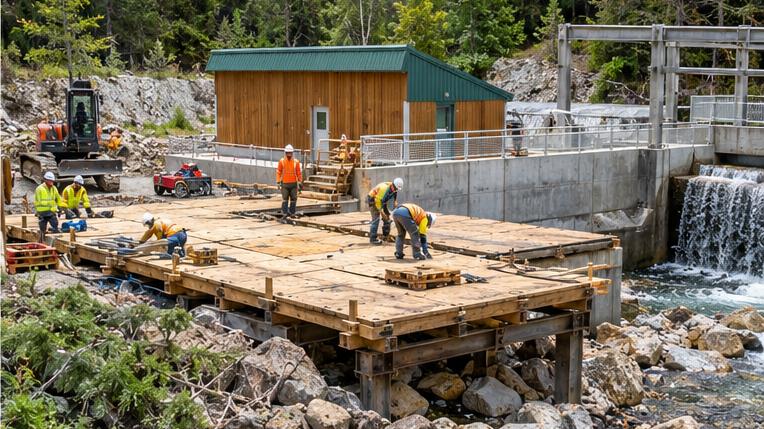
Figure: Processes for the procurement of pavements and leg mats by energy contractors, leasers and distributors, with a focus on “how to verify the performance of the board in the snow and snow environment”
In the absence of space on the ground, work cannot be undertaken by reducing the necessary cover or moving legs to the shoulder of the road. Vehicle stationing and construction should be reordered to provide sufficient space for “continuing coverage according to the most unfavourable vehicle, complete wheel and weather change”. The procurement comparison must use the same size, material, test conditions and delivery boundary, and the reference values of 50 to 200 tons cannot be understood in isolation from the support conditions. Any forced overlays of holes, temporary mats or uncounted should be returned to the technical manager for evaluation. Test-painted records of “how to verify the performance of the pavement in the snow and snow environment” should indicate the starting and ending position, vehicle status and release conclusions to facilitate review as construction conditions change.
Inspections should not only be “normal” and should be identified around sizes, thickness, weight, texture, connection holes, appearance, packaging, container manifests, batch information and arrival and acceptance items, and be divided into three levels of observation, restriction and decommissioning. For key points that are planned for continuous coverage by the most disadvantaged vehicles, complete wheels and weather changes, fixed photo angles and measurement benchmarks should be set. A loose connection, a permanent deformation, a breach through or a deviation of a branch shall be immediately isolated. In the context of “how to verify the performance of the pavement in the rain and snow environment”, the inspection forms need to list, on a separate basis, temporary changes in the construction route, changes in the vehicle's access to the unprotected area, as well as a reference to the repeater and the time of return.
Construction, logistics, HSE, equipment, site and procurement could be jointly evaluated before the planned expansion. The parties confirm the conditions of movement, suspension, inspection, restoration and delivery to verify whether the continuous coverage according to the most disadvantaged vehicle, complete wheel and weather change planning is truly enforceable. The results of the review should be included in the programme rather than in oral communication. It should also answer whether the “how to verify the performance of the pavement in the rain and snow environment” is improved by a continuous coverage according to the most adverse vehicle, complete wheel and weather change, avoiding a subjective description only.
The ultimate objective is to allow the process of procurement of pavements and stubble mats by energy contractors, leasers and distributors, with a focus on “how to validate the performance of the pavement in the rain and snow environment” to continue to operate with clear limits and acceptable risks and to successfully restore the ground after completion of the work. A temporary change in the construction route that would allow the vehicle to enter the unprotected area would not be repeated during the rush phase, provided that the design, product, operation, inspection and evacuation sites were linked.
Need for further evaluation of the actual project?
Applications, sizes, quantities, site photographs or drawings and delivery destinations are sent, on which we can identify more suitable products and processing programmes.







