
The first test of the temporary road for heavy transport should be based on the most unfavourable rather than average conditions. Heavy cranes and transport sites for transformers, wind and large power plants are concerned that “why do temporary roads for heavy transport have to be run on a trial basis” may be affected by heavy vehicle cycles, rainfall and run-time compression at the same time, and that secondary crushing and recovery costs will increase as traffic flows increase as a result of a chronology error. It would be clearer for on-site execution to first determine the conditions for allowing deposition, decommissioning and those responsible, and then select product specifications.
The technical communication shall first confirm which of the conditions controlled design of the plant ' s maximum retroactivity of the leg, the position of the leg, the ground-based allowance for pressure, the distance of the gutter from the edge, the suspension radius, the transport axle and rainfall changes. It is proposed that continuous coverage be planned on the basis of the most disadvantaged vehicles, complete wheels and weather changes, and that suppliers be requested to describe the materials for the pavement or leg pads, the grade of finished products, the method of testing, the basis of application and the conditions of limitation. Reference data such as nominal 50 to 200 tonnes cannot be directly compared horizontally without the same test basis. The information review should also verify the continuity of lighting, reflective boundaries and night-time transfer records and include missing information as items to be confirmed for quotations and construction programmes.
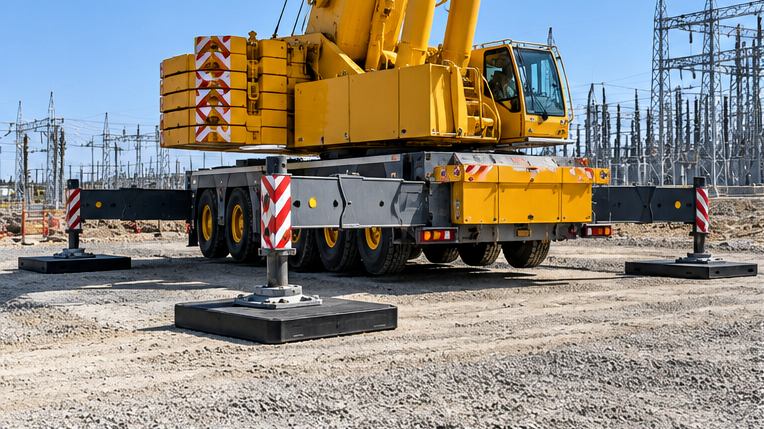
Figure: Heavy cranes and transport sites for transformers, wind and large power plants, with a focus on “Why do temporary roads for heavy transport have to be tested first”
The site installation should be located with an approved drawing number, and the level, seam, edge and drainage should be inspected at each stage of completion. The area of the leg pad shall be determined by the maximum retroactivity in conjunction with the confirmed ground-based load, and the pavement shall not automatically replace the accounted hanger operating platform. The test operation can first be carried out using a low-risk vehicle with a slow-speed straight-line and then gradually verify the turnover, parking and full-loading; it should be discontinued as soon as it is discovered that it continues to sink under the plate, pump mud or branch position. Test-painted records of “why do temporary roads for heavy transport first have to be tested” should indicate starting and ending locations, vehicle status and release conclusions to facilitate review as construction conditions change.
The maintenance plan should include responsibility for key sections and feeder points, frequency checks, decommissioning thresholds and spare parts locations. The continuous coverage of the inspections around the most disadvantaged vehicles, the complete wheel and weather change planning allows for the timely detection of secondary crushing and recovery costs due to a chronology error. Backup panels, connectors and handling tools are also synchronized to avoid mismatches in specifications on site. The inspection form, which revolves around “why should the temporary road for heavy transport be tested first”, contains a separate ceremonial error in the order of the evacuation field, resulting in a change in secondary crushing and recovery costs, and an indication of the inspector and the time of return.
The offers from different suppliers should be compared under the same size, material, connection, packaging, delivery and test basis. Supplementation should be requested if the maximum load is given without a description of the ground, distance and load. Energy projects should also focus on batch consistency, port efficiency, repairability and container loading. It should also answer whether the “why is the temporary road for heavy transport first tested” has been certified as improved through continuous coverage according to the most unfavourable vehicle, complete wheel and weather change planning, avoiding a subjective description of the closure.
This paper provides a selection and management approach and does not replace the equipment instructions, the suspension programme, ground-based evaluation or local regulations. Work involving lifting support, underground facilities, electrical areas, the edges of trenches and the entry of persons into dangerous areas shall be reviewed by persons with appropriate qualifications. The above parameters may be provided in the request for quotations to obtain recommendations for size, thickness, quantity, packaging and shipment.
Need for further evaluation of the actual project?
Applications, sizes, quantities, site photographs or drawings and delivery destinations are sent, on which we can identify more suitable products and processing programmes.







