The aim of the temporary roads to be paved near the underground pipeline is to allow construction vehicles to move within the controlled route, while avoiding turning ground protection problems into equipment stabilization problems. With regard to the use of telecommunications, discharges and repairs along the power lines, the issue is concerned with “the possibility of laying temporary roads in the vicinity of underground pipelines”, which should be checked, inter alia, for loose connection, drainage congestion or pollution to reduce actual use. Where there is a gutter, backfilling area, slope or unknown underground facility on the route, the treatment must first be confirmed by the responsible party of the project.
The design and proposal for a one-time collection of the most heavy vehicle total weight and axle load, pavilion distance, route width, slope, soil water content rate, underground facilities and the rainy season window. This topic can begin to form a formula “calculating the line segments, turn areas, docking slots and operating surfaces, respectively”. The standard 15, 20, 25 and 30 mm specifications for paving boards can only be used as the starting point for communication, with the actual selection being combined with materials, size, thickness, single weight, texture, connection, grass-roots support and supplier testing conditions. For “the possibility of laying temporary roads in the vicinity of the underground pipeline”, the information review should also approve the passage of vehicles after the map of the underground facility is consistent with the on-site markings and include missing information as an item pending confirmation of the quotation and the construction programme.
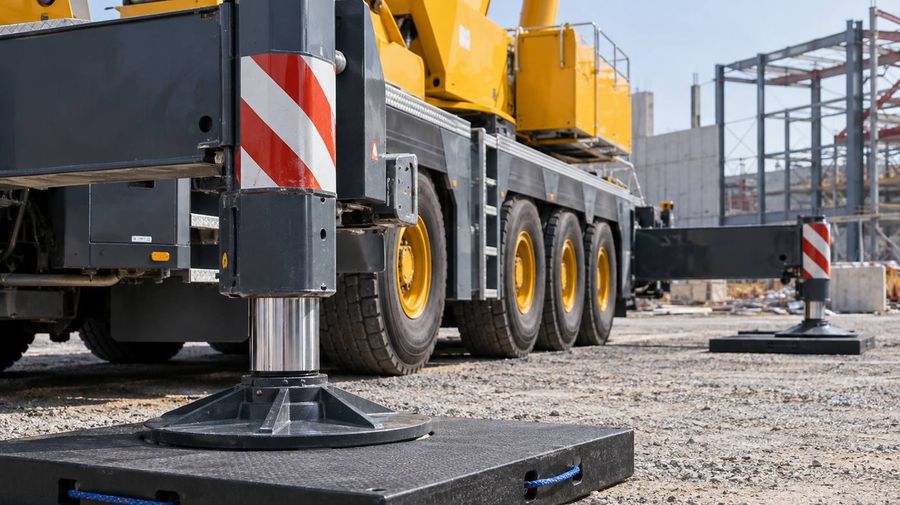
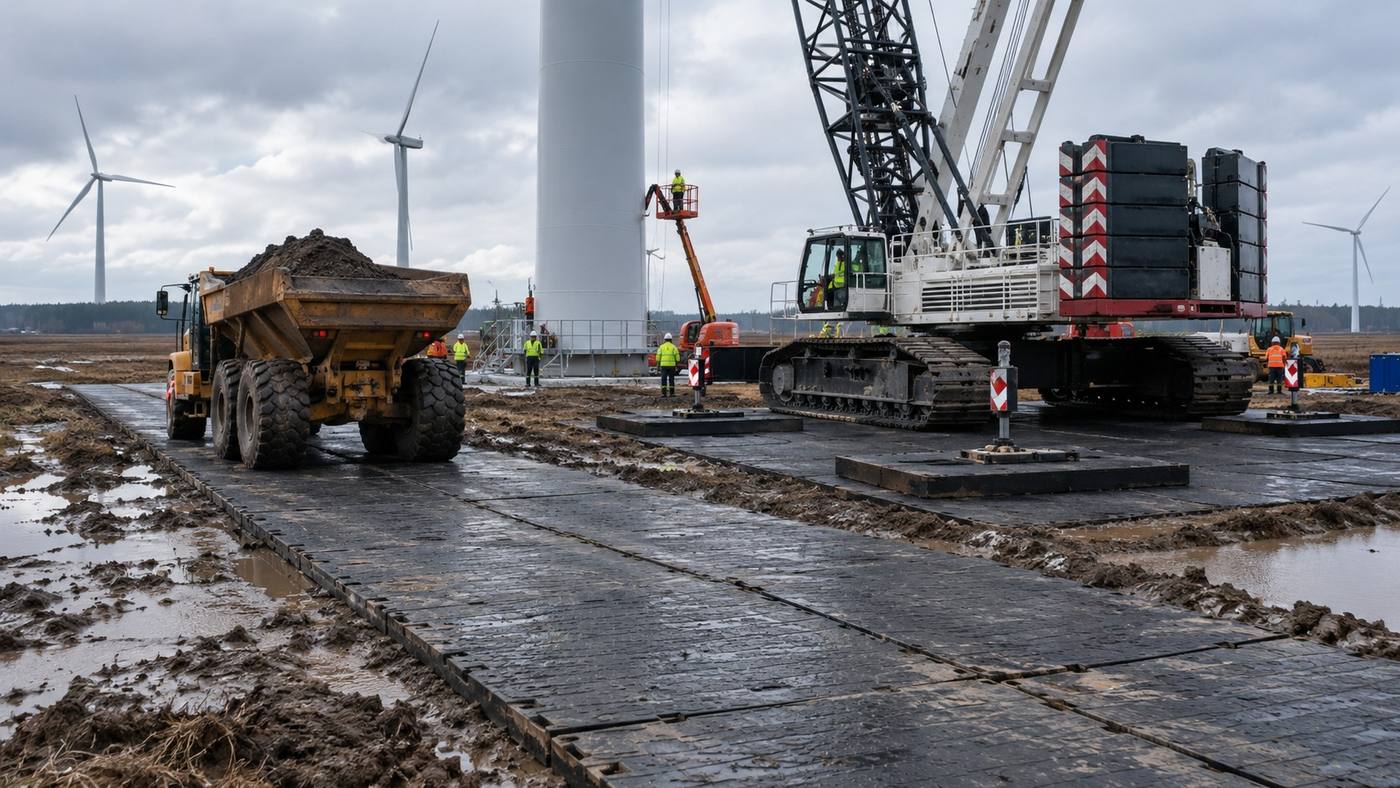
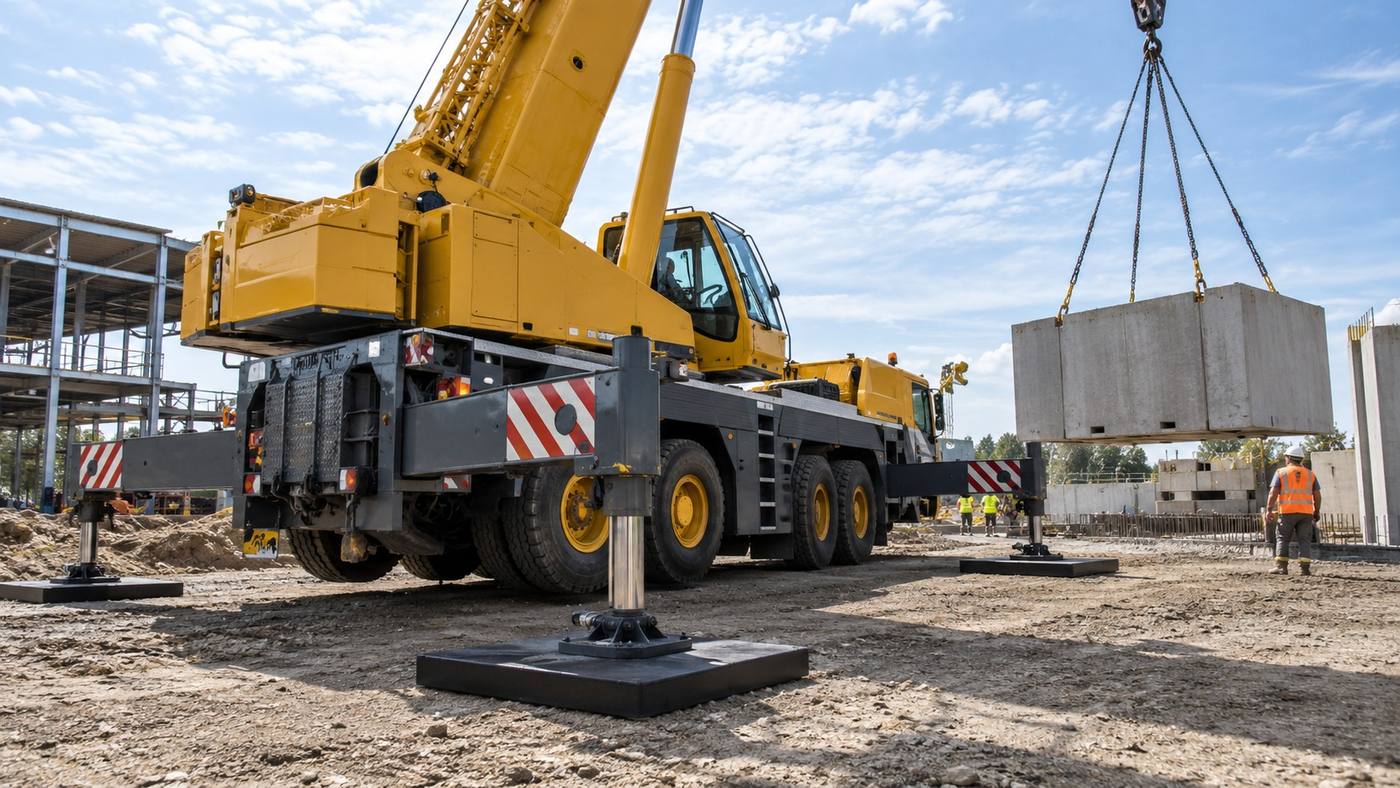
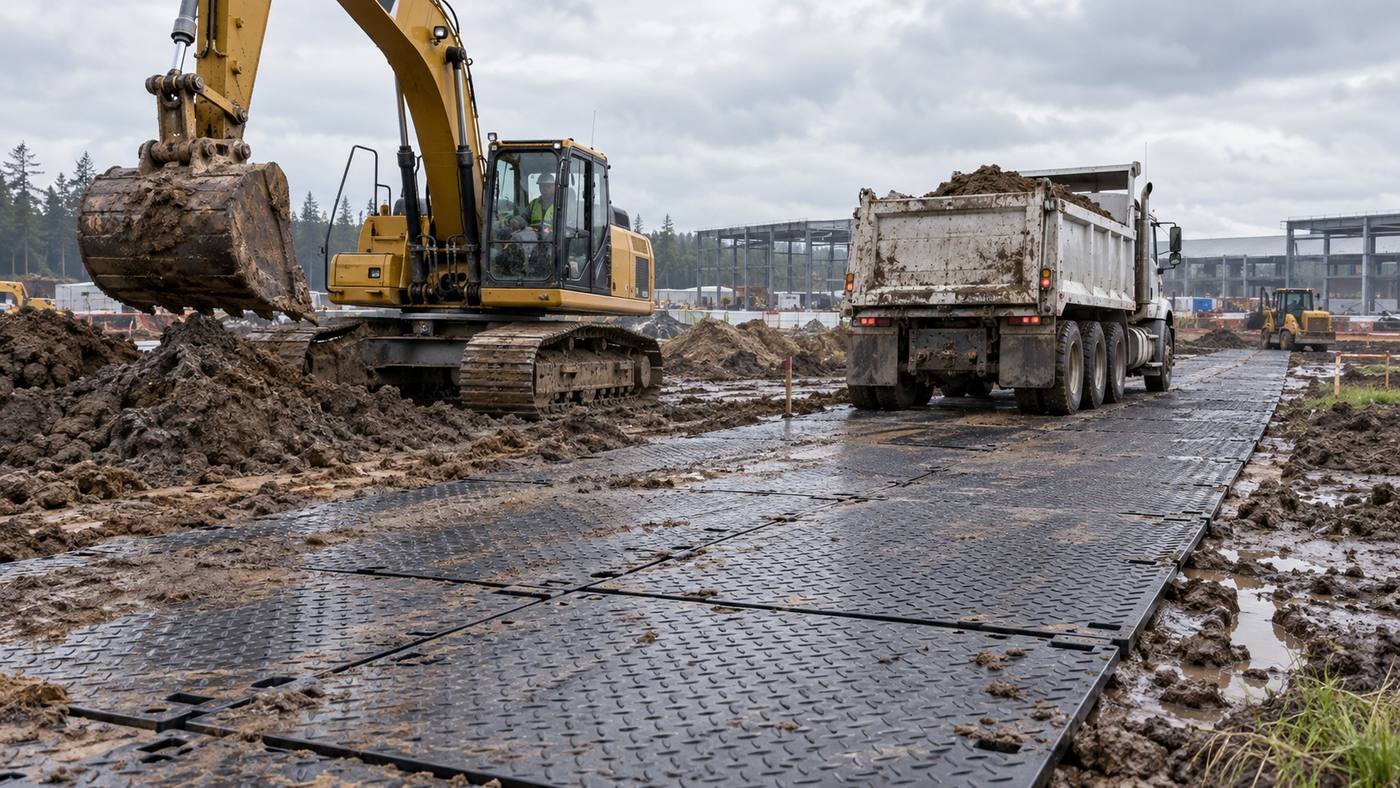
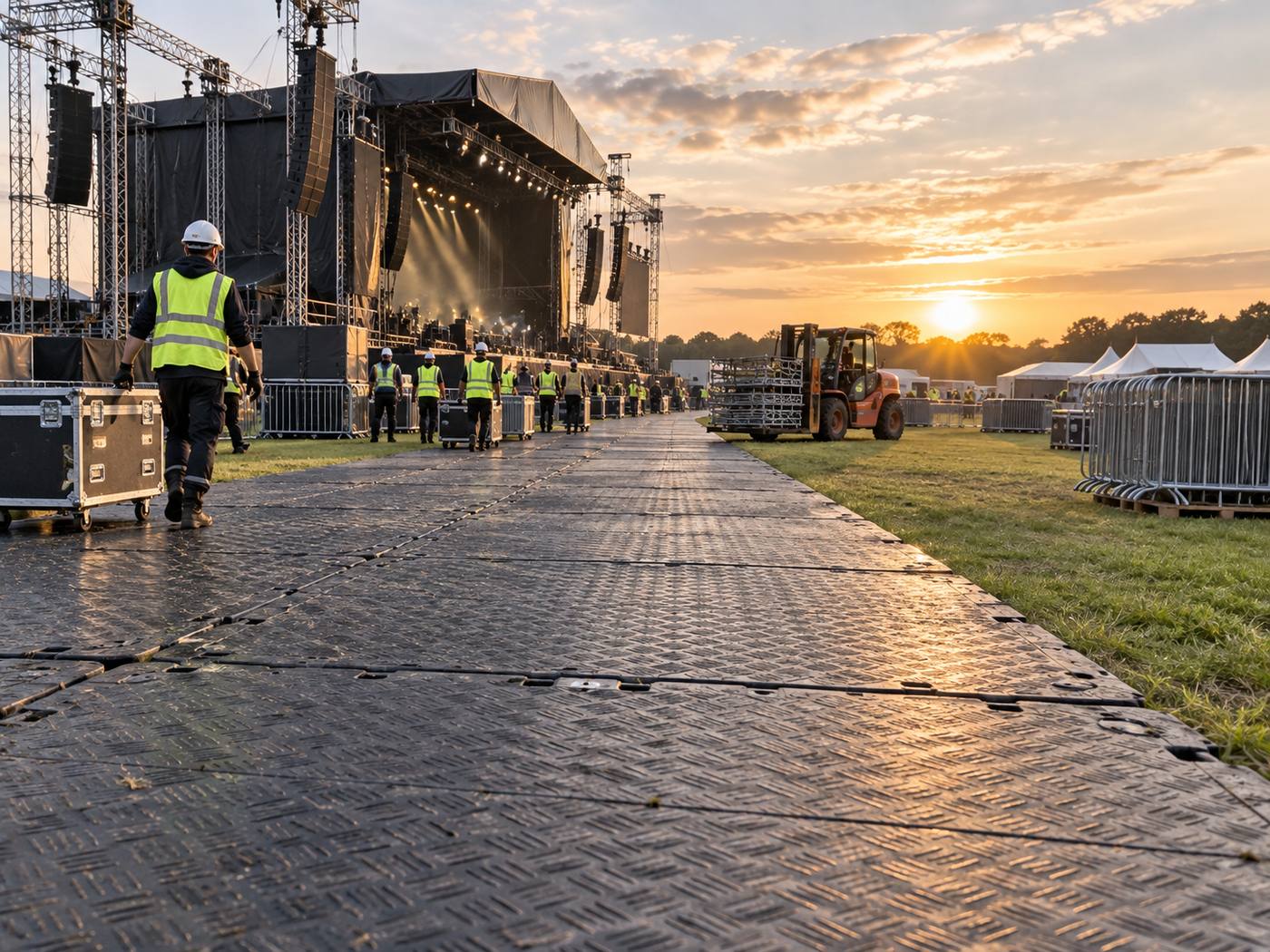
Figure: Taki, wiring and overhauling along the transmission line, with a focus on “the possibility of laying temporary roads near the underground pipe” (inventory material for the Creative Plastics Executive Network)
The site installation should be located with an approved drawing number, and the level, seam, edge and drainage should be inspected at each stage of completion. Consistency routes are accounted for separately from the work surfaces of the Taki, and the sheeting is used to spread the wheel, while the slinging points use the appropriate leg pads in accordance with the equipment manual. The test operation can first be carried out using a low-risk vehicle with a slow-speed straight-line and then gradually verify the turnover, parking and full-loading; it should be discontinued as soon as it is discovered that it continues to sink under the plate, pump mud or branch position. Test-painted records of “the possibility of laying temporary roads near the underground pipeline” should indicate the starting point, vehicle status and release conclusions to facilitate review as construction conditions change.
The inspection cannot be “normal” only. It should be identified on a case-by-case basis around drainage, sutures, shoulders, tracks, connectors, subsurface facility markings and whether the vehicle is pressurized and divided into three levels of observation, restriction and decommissioning. For each of the key points to be calculated for the straight-line segment, turn-off area, docking position and surface, a fixed photo angle and a measurement benchmark should be set. A loose connection, a permanent deformation, a breach through or a deviation of a branch shall be immediately isolated. The inspection form, around whether temporary roads can be paved in the vicinity of the underground pipeline, is to be shown in a separate column linking to changes in the actual operational status of loose, drainage congestion or pollution, with an indication of the inspector and the time taken to restore traffic.
The impact assessment cannot be based solely on the movement of vehicles on the same day. The project compares vehicle waiting, trapping, maintenance hours, cleaning time, loss of connection, site restoration area and evacuation cycle, and records weather and traffic simultaneously. Once data have been created around loose connections, drainage congestion or pollution to reduce actual use, it will be possible to determine whether the programme is suitable for replication in the next energy project. It should also answer whether “the possibility of laying temporary roads near the underground pipeline” has been demonstrated to be improved by calculating the direct sections, turn areas, docking slots and operating surfaces separately, avoiding a subjective description of the closing item.
The ultimate goal is to allow for the use of the Taqui, line-laying and overhauling operations along the power lines, with a focus on the continued operation of “temporary roads near the underground pipeline” with clear limits and acceptable risks and the successful restoration of the ground after the completion of the work. It is only when the design, product, operation, inspection and evacuation sites are connected and the connection is loosed, drainage blocked or contaminated to reduce the actual operational status that will not be repeated during the rush phase.
Need for further evaluation of the actual project?
Applications, sizes, quantities, site photographs or drawings and delivery destinations are sent, on which we can identify more suitable products and processing programmes.