The objective of the temporary parking area for emergency power vehicles is to allow construction vehicles to move within controlled routes, while avoiding turning ground protection into equipment stabilization. The topic of “How to lay temporary parking areas for emergency electric power vehicles”, around the site of emergency repairs of electrical circuits following heavy rains, typhoons or floods, should be checked, inter alia, for errors of judgement caused by different test conditions, but directly comparing the nominal tonnage. Where there is a gutter, backfilling area, slope or unknown underground facility on the route, the treatment must first be confirmed by the responsible party of the project.
The focus of the topic is not on the choice of the thickest or the most heavy products, but on the establishment of a match. The coverage, connection and back-up quantities are determined by the identification of the condition, test basis and conditions in the request for and acceptance documents, based on the route, water depth, soft-point range, car recovery type, arrival sequence, emergency time frame, public isolation and standby identification controls. In the case of products requiring cross-project turnaround, the numbering, loss rate, cleaning time and volume of transport should also be included in the total cost. For “how to lay temporary parking areas for emergency electric power vehicles”, the information review should also draw out the protection and restoration of the boundary on top of topsoil, tillage or grassland and include missing information as an item to be confirmed in the quotation and construction programme.
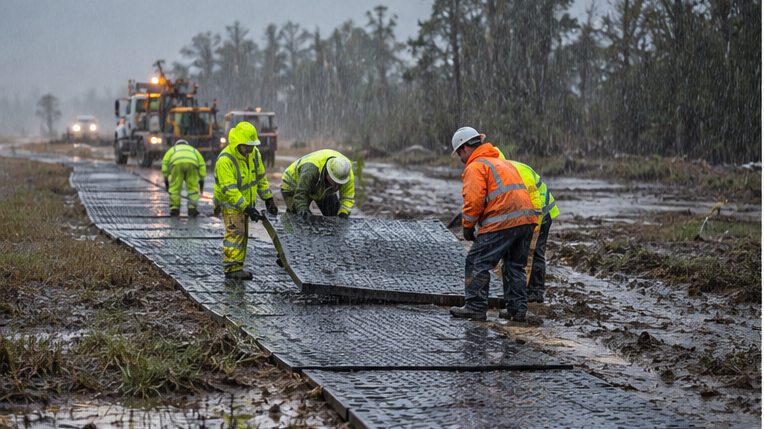
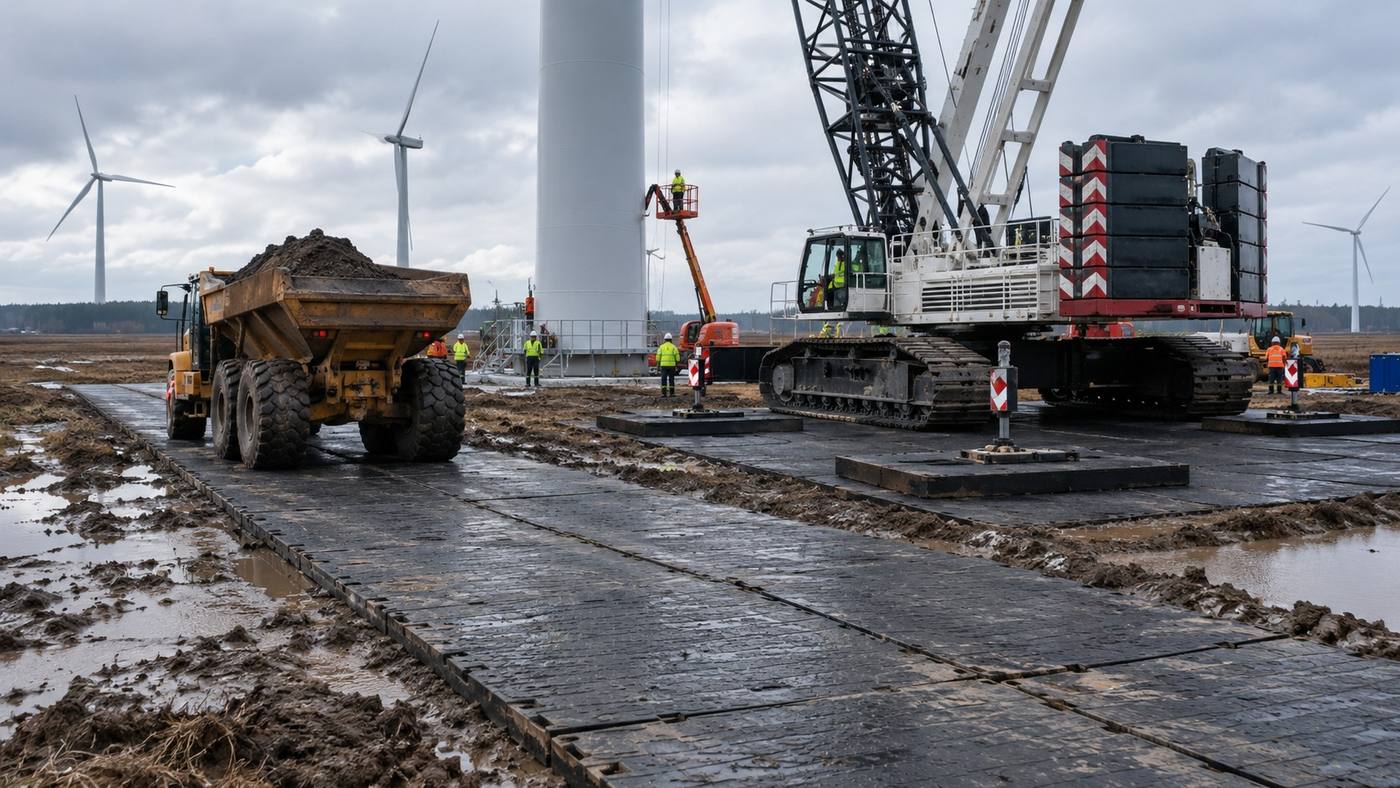
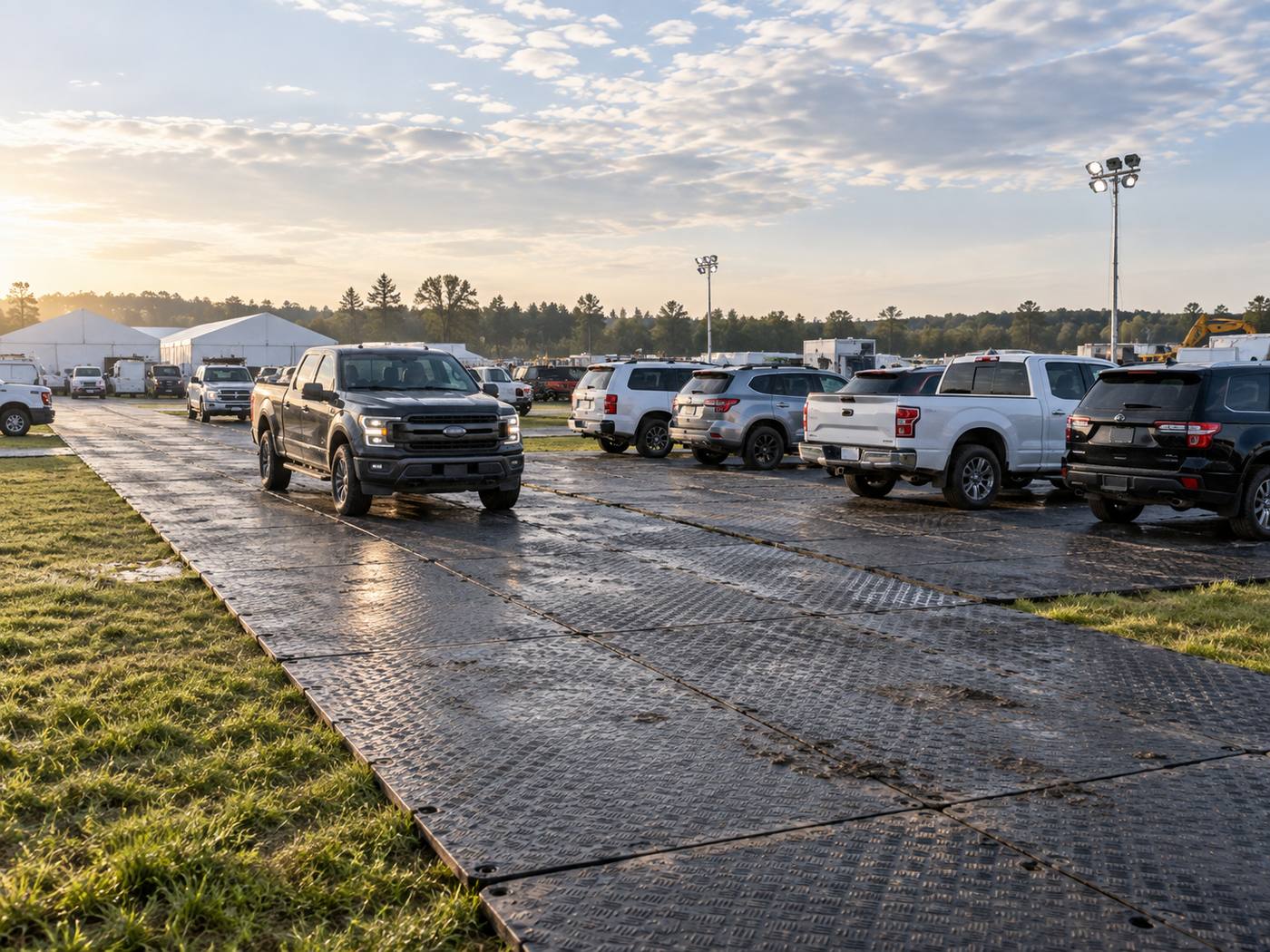
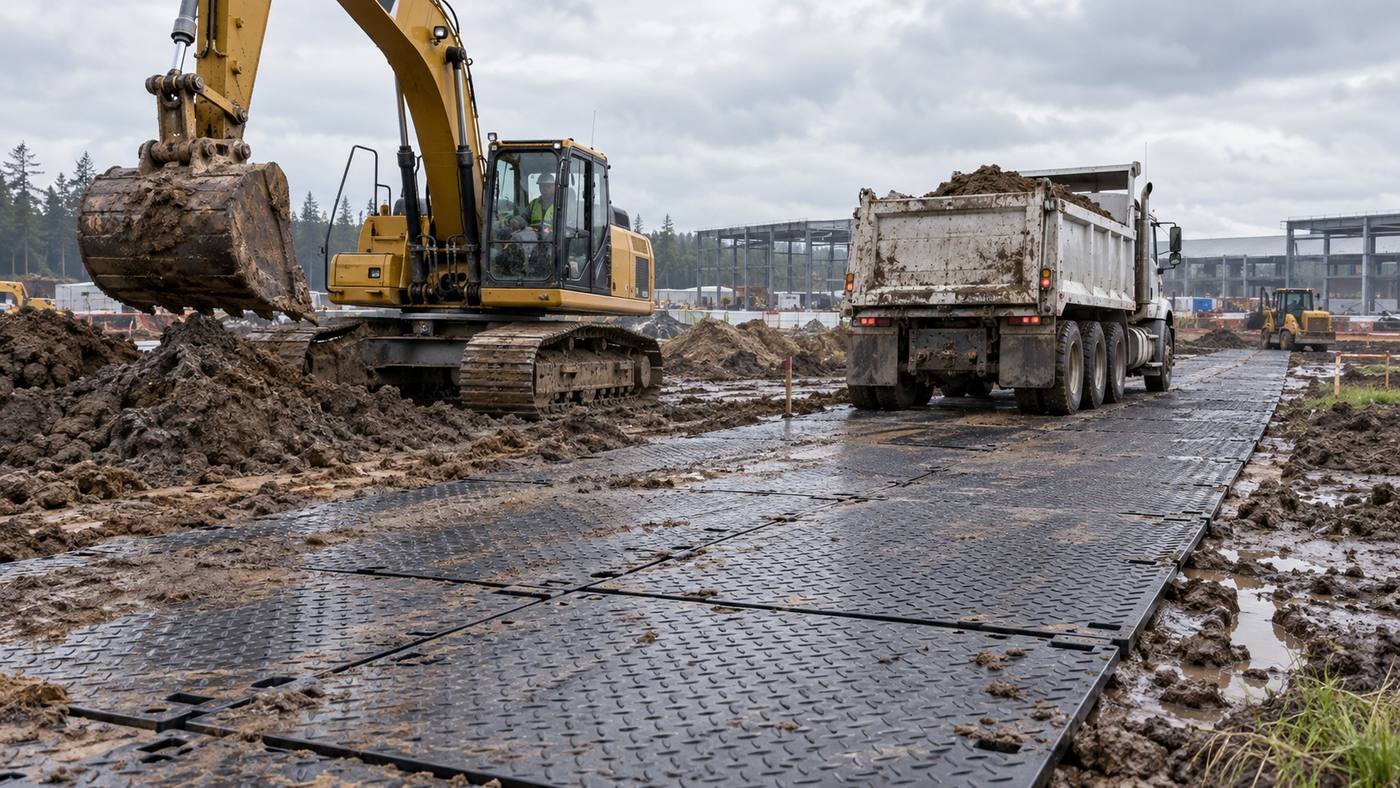
Figure: Emergency recovery site for electrical circuits following heavy rains, typhoons or floods, with a focus on “How to lay temporary parking areas for emergency power vehicles”
The site installation should be located with an approved drawing number, and the level, seam, edge and drainage should be inspected at each stage of completion. The speed of repairs cannot be a substitute for ground-based and traffic safety judgements, and the most critical rescue and equipment routes should be restored before heavy vehicles are opened on a segment basis. The test operation can first be carried out using a low-risk vehicle with a slow-speed straight-line and then gradually verify the turnover, parking and full-loading; it should be discontinued as soon as it is discovered that it continues to sink under the plate, pump mud or branch position. A test-painting record of the “how the temporary parking area of the emergency electric power vehicle will be paved” should indicate the location, condition and release conclusion of the vehicle for review as the construction conditions change.
Multi-shift or lease items can record water accumulation, pump mud, plume edges, vehicle congestion, leg deposition, lighting, public isolation and connection to road maps and product numbers. Continuous anomalies should trigger a review of the project, rather than a mere surface. Visible permanent deformation, deep mouth or postpoint damage to the leg cushions shall be judged by standard manufacturer ' s isolation. The “how to lay a temporary parking area for emergency electric power vehicles” is the subject of a separate inspection form with different test conditions, but a direct comparison of the nominal tonnage results in a miscalculation change, with an indication of the inspector and the time of return.
The full life-cycle costs include procurement or leasing, shipping, unloading, laying, inspection, cleaning, maintenance, warehousing and ground restoration. The project should compare the costs of stoppages or repairs caused by miscalculation of the nominal tonnage with the costs of implementation of the description of the condition, test basis and condition in the request and acceptance documents, which are different from the test conditions, and not be based solely on the price of a single block product. It should also answer whether the “how to lay a temporary parking area for emergency electric power vehicles” has been certified as an improvement through the identification of work conditions, test bases and restrictions in the request for and acceptance documents, avoiding a subjective description of the closing item.
This topic can be summarized as first confirming the boundary of the work, then configure the appropriate product, and then validate it with test run, inspection and project data. The formal programme should identify those responsible, the restrictions, the criteria for decommissioning, the means of recovery and the emergency route, so as to avoid the loss of critical information following changes in the class or contractor.
Need for further evaluation of the actual project?
Applications, sizes, quantities, site photographs or drawings and delivery destinations are sent, on which we can identify more suitable products and processing programmes.