
The need for on-site trial preparation prior to procurement should be judged first by separating vehicle traffic, equipment stop-over from support for cranes. The process of procurement of pavements and leg pads by energy contractors, leasers and distributors is concerned about the need for “site trial pavements prior to procurement” which usually follows multiple stages of entry, construction, overhaul and evacuation, and changes in ground water content and traffic. The issue is most likely to be ignored because the lack of information leads to a mismatch between specifications and quantities on the ground. The problem of grass-roots and drainage may have expanded if only ad hoc slabs were added after a vehicle has been trapped.
The technical communication shall first confirm vehicle and equipment data, ground conditions, route size, quantity, life cycle, product specifications, test basis, packaging, trade terms and the design of which of the conditions to control the port of destination. It is proposed that approved road maps, serial numbers and inspection records be used to manage on-site changes and that suppliers be asked to describe the materials for the pavement or leg pads, the grade of the finished product, the test method, the basis for application and the conditions of limitation. Reference data such as nominal 50 to 200 tonnes cannot be directly compared horizontally without the same test basis. In the case of “requirement of on-site trials prior to procurement”, the information review should also include a breakdown of net area, turnovers, back-up and wear and tear rates, and include missing information as items to be confirmed for quotations and construction programmes.
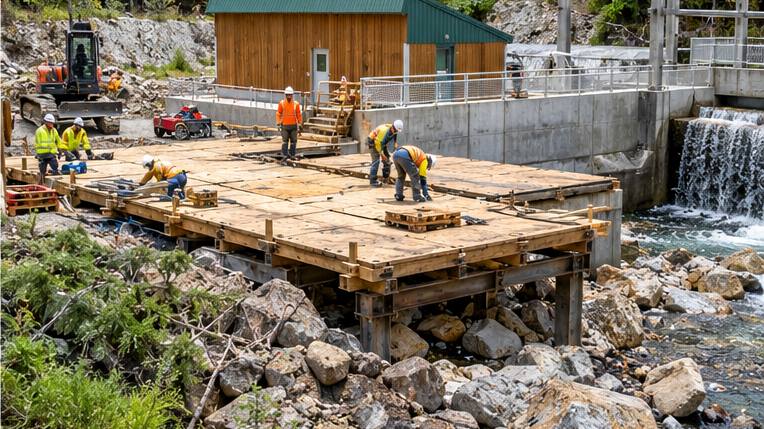
Figure: Processes for the procurement of pavements and leg mats by energy contractors, lessors and distributors, with a focus on the need for a site trial shop before procurement
In the absence of space on the ground, work cannot be undertaken by reducing the necessary cover or moving legs to the shoulder of the road. Stations and construction should be reordered to provide sufficient space for “managing on-site changes with approved road maps, numbers and inspection records”. The procurement comparison must use the same size, material, test conditions and delivery boundary, and the reference values of 50 to 200 tons cannot be understood in isolation from the support conditions. Any forced overlays of holes, temporary mats or uncounted should be returned to the technical manager for evaluation. The trial preparation record of “requirement of a site test bed prior to procurement” should indicate the starting and ending position, vehicle condition and release conclusions to facilitate review as construction conditions change.
Inspections should not only be “normal” and should be identified around sizes, thickness, weight, texture, connection holes, appearance, packaging, container manifests, batch information and arrival and acceptance items, and be divided into three levels of observation, restriction and decommissioning. For critical points resulting from approved road maps, numbering and inspection logs to manage on-site changes, fixed photo angles and measurement benchmarks should be established. A loose connection, a permanent deformation, a breach through or a deviation of a branch shall be immediately isolated. In the context of “the need for an on-site trial shop prior to procurement”, the inspection forms need to be separate from the changes in specifications, quantities and field conditions resulting from insufficient information, and to indicate the respondent and the time of return.
The offers from different suppliers should be compared under the same size, material, connection, packaging, delivery and test basis. Supplementation should be requested if the maximum load is given without a description of the ground, distance and load. Energy projects should also focus on batch consistency, port efficiency, repairability and container loading. It should also answer whether “the need for a site trial shop before the procurement” has been demonstrated to improve by managing on-site changes with approved road maps, numbers and inspection records, avoiding a subjective description of the closure.
The ultimate goal is to allow the process of procurement of pavement boards and leg pads by energy contractors, leasers and distributors, with a focus on the need for “on-site trial pavements prior to procurement” to operate with clear limits and acceptable risks and to successfully restore the ground after completion of work. As long as the design, product, operation, inspection and evacuation sites are linked, the lack of information leads to a mismatch between specifications and quantities and the situation on the ground so that they do not recur during the rush phase.
Need for further evaluation of the actual project?
Applications, sizes, quantities, site photographs or drawings and delivery destinations are sent, on which we can identify more suitable products and processing programmes.







