
When discussing how to select HDPE products in low-temperature and high-temperature environments, project leaders could not ask just how many tons the pavement could take. The process of procurement of pavements and leg pads by energy contractors, leasers and distributors focuses on the different effects of the “how to choose HDPE products” in “low-temperature and high-temperature environments” of tyre landings, axle loads, turnovers, brakes and static bearings, while the base loads fall after rainfall and pump muds or faults often occur in the most unfavourable positions. Reasonable coverage can be determined only if the routes, terminals and emergency exits must be secured.
If the project needs to be accompanied by a pavement and a mat, an optional table should be established. The former are dominated by continuous support on the route, axle and the grass-roots level, while the latter are dominated by maximum reversibility of the legs and allowing for ground bearing. A combination of vehicle and equipment data, ground conditions, route size, quantity, life cycle, product specifications, test basis, packaging, trade terms and port of destination to carry out reverse dismantling in the order in which the equipment was withdrawn and to retain the emergency route to the end could avoid using both products as alternative components. For “how HDPE products are selected in low-temperature and high-temperature environments”, the information review should also limit long-term static, in situ wheeling and unplanned vehicle queuing, and include missing information as an item to be confirmed for quotations and construction programmes.
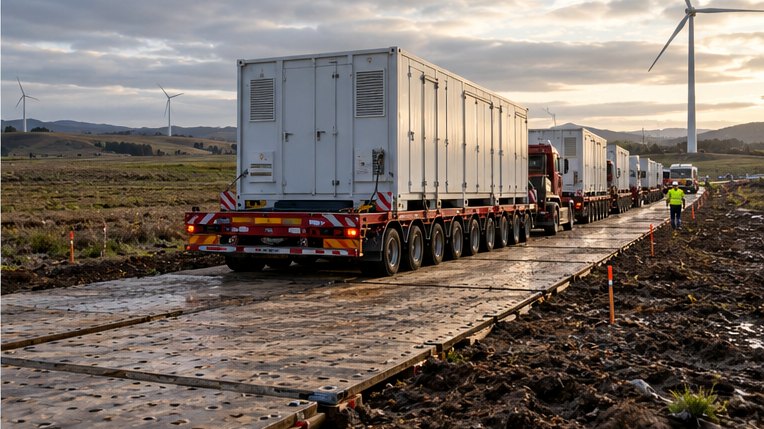
Figure: Processes for the procurement of pavements and leg mats by energy contractors, leasers and distributors, with a focus on “How to select HDPE products in low and high temperature environments”
The site installation should be located with an approved drawing number, and the level, seam, edge and drainage should be inspected at each stage of completion. The procurement comparison must use the same size, material, test conditions and delivery boundary, and the reference values of 50 to 200 tons cannot be understood in isolation from the support conditions. The test operation can first be carried out using a low-risk vehicle with a slow-speed straight-line and then gradually verify the turnover, parking and full-loading; it should be discontinued as soon as it is discovered that it continues to sink under the plate, pump mud or branch position. A trial-painted record of “how HDPE products are selected in low-temperature and high-temperature environments” should identify starting and ending locations, vehicle status and release conclusions to facilitate review as construction conditions change.
Inspections should not only be “normal” and should be identified around sizes, thickness, weight, texture, connection holes, appearance, packaging, container manifests, batch information and arrival and acceptance items, and be divided into three levels of observation, restriction and decommissioning. Fixed photo angles and measurement benchmarks should be set for the reverse removal of the equipment in the order of exit and the retention of the emergency route to the final critical point. A loose connection, a permanent deformation, a breach through or a deviation of a branch shall be immediately isolated. In the context of "How HDPE products are selected in low-temperature and high-temperature environments " , the inspection forms are to show a separate drop in ground-based loads following rainfall and changes in pump mud or wrong table, with an indication of the repeater and the time of return.
The offers from different suppliers should be compared under the same size, material, connection, packaging, delivery and test basis. Supplementation should be requested if the maximum load is given without a description of the ground, distance and load. Energy projects should also focus on batch consistency, port efficiency, repairability and container loading. It should also answer whether the “how HDPE products are selected in low-temperature and high-temperature environments” are improved by reverse removal and retention of the emergency route in the order in which the equipment exits, to be verified at the end, so as to avoid a subjective description of the final item.
This paper could serve as a technical discussion list for energy projects, but not as a separate construction permit. The project will also require a written programme of transport organization, temporary structures, electrical safety, fire protection, weather emergencies and site restoration systems, and a review of key carrying and stabilization conditions by authorized personnel.
Need for further evaluation of the actual project?
Applications, sizes, quantities, site photographs or drawings and delivery destinations are sent, on which we can identify more suitable products and processing programmes.







