Answering how the fixed number that did not leave the site was restored to the ground after the PV station was evacuated. The construction area of the light-volt stand, components, cables and reverse equipment, which focuses on “how the ground recovers after the PV plant”, is affected by weather, terrain, vehicle and organizational patterns, and the increase in secondary crushing and restoration costs as a result of the incorrect sequence of the evacuation site is only a visible result. The project should mark the soft spots, slopes, drainage, underground facilities and vehicle tracks on a single map to bring technology, construction, HSE and procurement data into line.
The technical communication shall first confirm the weight of the construction vehicle, the size of the tripod, the frequency of the component transport, the direction of the drainage, the thickness of the topsoil, the location of the underground cable and the design of which of the conditions to control the recovery requirements. It is proposed that continuous coverage be planned on the basis of the most disadvantaged vehicles, complete wheels and weather changes, and that suppliers be requested to describe the materials for the pavement or leg pads, the grade of finished products, the method of testing, the basis of application and the conditions of limitation. Reference data such as nominal 50 to 200 tonnes cannot be directly compared horizontally without the same test basis. For “how to restore the ground after the PV plant has been evacuated”, the information review should also include snow, ice, sand and tyre state in towed management at the same time and include missing information as an item to be confirmed in the quotation and construction programme.
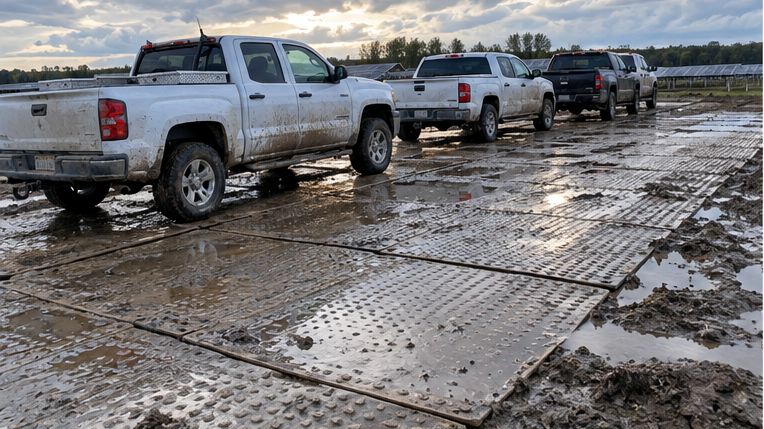
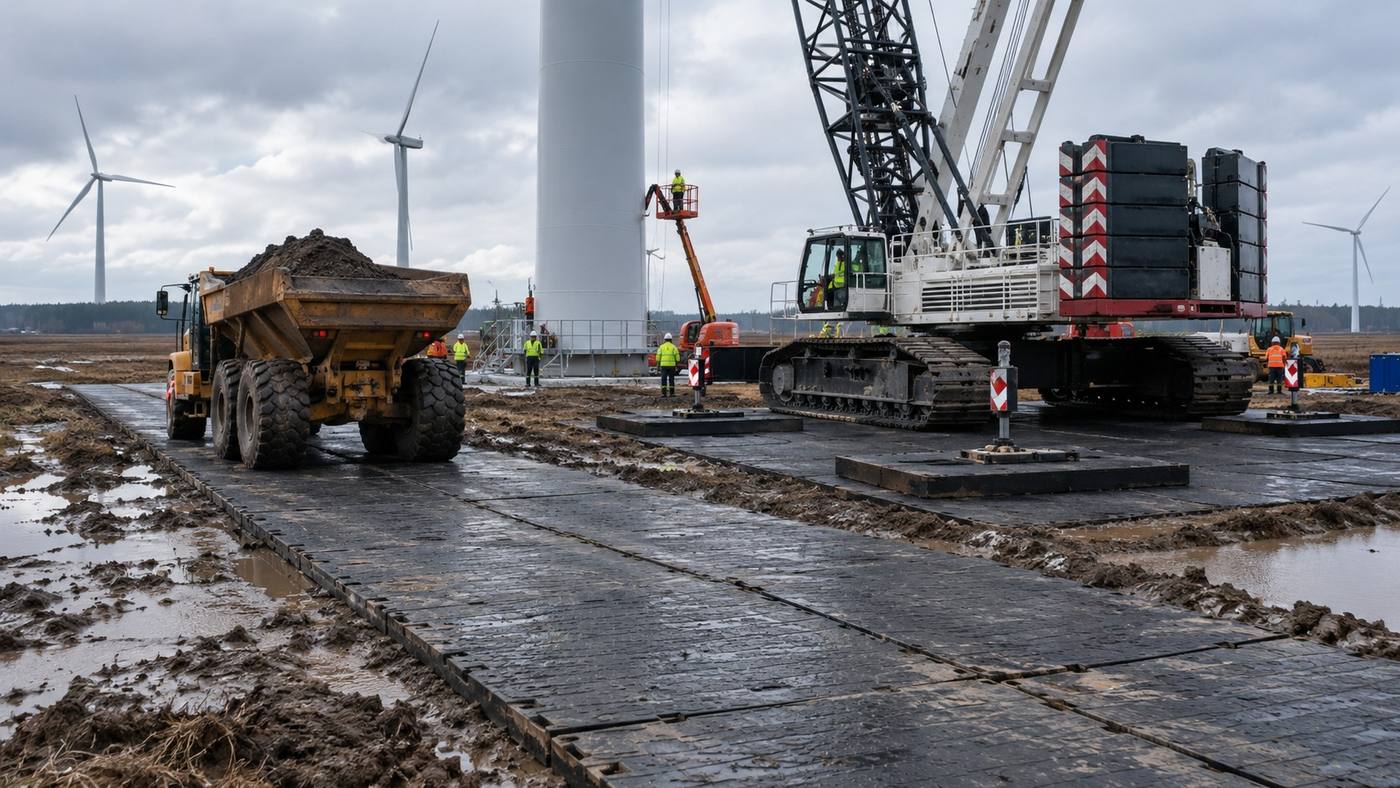
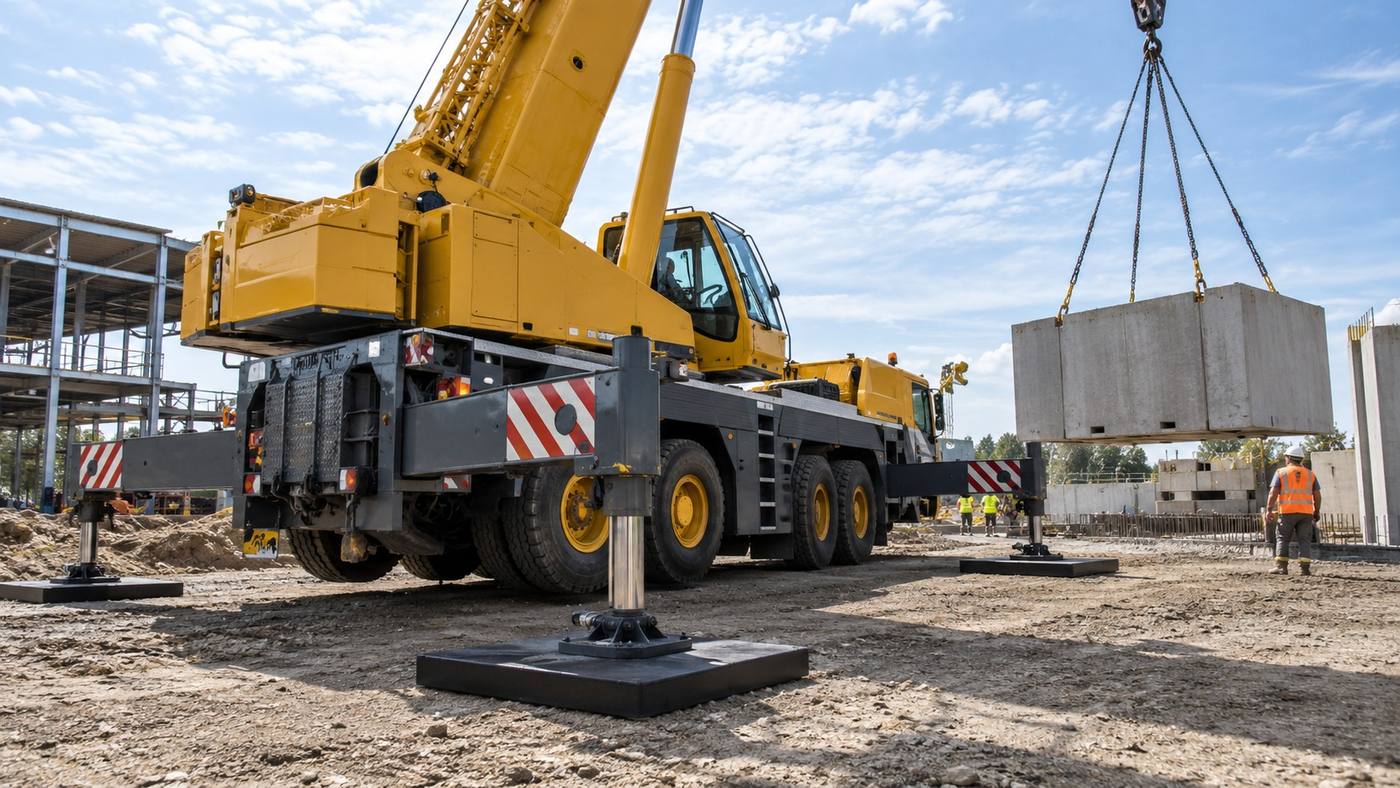
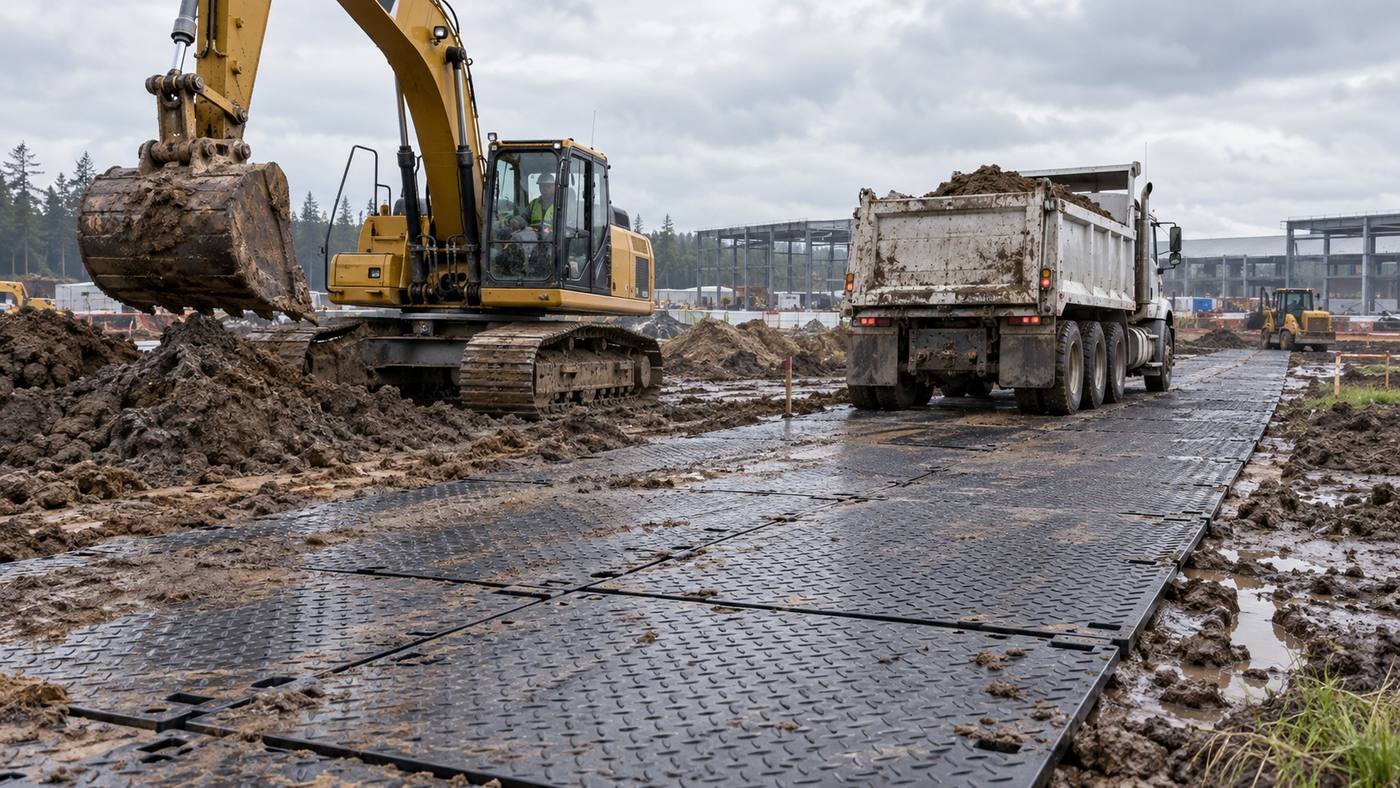
Figure: The construction area for light-volt stands, components, cables and reversible equipment, with a focus on “how to restore the ground after the PV plant has been evacuated”
A representative route or a feeder may be selected for a controlled trial pavement to cover the softest floor and the most heavy equipment condition. The light-voltage area, which is usually large and revolving, must first protect drainage and topsoil and then move pavements in accordance with the construction phase. The decision to increase width, improve drainage or reorient traffic is then taken by means of experimental observation of grass-roots, sewn, tyre tracks and operating space. The trial preparation records for the “Recovery of the ground following the evacuation of the PV plant” should indicate the starting and ending position, vehicle condition and release conclusions to facilitate review as construction conditions change.
Special inspections should be added after extreme weather, equipment anomalies or route adjustments. Underboard pump mud, surface pressure, drainage congestion, loose connection, underground cable marking, contamination and revegetation of vegetation using location markers and fixed view photographs to facilitate comparison of deposition and shift. Cleaning the surface of polymers avoids fire, sharp shovels and violent knocks, creating new cracks and stress concentrations. With regard to the recovery of the ground following the evacuation of the PV station, the patrol forms are to be accompanied by a single-ordered evacuation of the field, resulting in a change in the secondary crushing and restoration costs, as well as an indication of the inspector ' s return time.
The full life-cycle costs include procurement or leasing, shipping, unloading, laying, inspection, cleaning, maintenance, warehousing and ground restoration. The project should compare the cost of implementation of successive coverage based on the most disadvantaged vehicles, complete wheels and weather changes with the cost of stoppage or repair resulting from the error in the exit sequence that resulted in double crushing and higher restoration costs, and should not be determined solely on the basis of a single block product price. It should also answer whether the “how to restore the ground after the PV station has been evacuated” has been demonstrated to be improved by successive coverage according to the most adverse vehicle, complete wheel and weather change planning, avoiding a subjective description only.
This paper could serve as a technical discussion list for energy projects, but not as a separate construction permit. The project will also require a written programme of transport organization, temporary structures, electrical safety, fire protection, weather emergencies and site restoration systems, and a review of key carrying and stabilization conditions by authorized personnel.
Need for further evaluation of the actual project?
Applications, sizes, quantities, site photographs or drawings and delivery destinations are sent, on which we can identify more suitable products and processing programmes.