
The construction window for energy works is usually tight, but a complete business cycle analysis is still required on how desert energy project vehicles can avoid the fall. In the case of camps for wind, photovoltaic and other energy projects, which are far from hard roads, the topic is concerned with “how desert energy project vehicles can avoid falling in the sand”, for example, the conditions of control when vehicles enter, are loaded out or equipment is parked for long periods of time vary. The site should be located in such a way that it does not match the specifications, quantity and potential areas of the site ' s condition before deciding on the use of pavement panels, leg pads or approved combinations.
The product configuration cannot be determined by area or thickness alone. The project should verify transport distance, terrain, snow and snow seasons, maximum vehicles, camp layout, handling equipment, stock rotation, supply cycle and destination port, and then translate the lack of information into specifications, quantity and incompatibilities with field conditions, carrying, stabilization, surface pull and recovery requirements. When dealing with drainage and soft spots, then laying out and piloting the ICP from the stabilization end, consideration will also be given to handling tools, manual weights, spare quantities, cleaning and backfilling. The information review should also record changes in the water-bearing state and the scope of soft spots before and after rainfall and include missing information as an item to be confirmed for quotations and construction proposals.
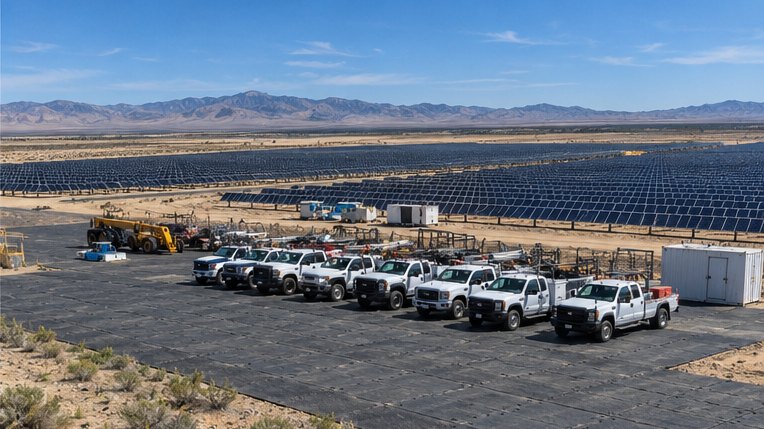
Figure: Camps for wind, photovoltaic and other energy projects, far from hard roads, with a focus on “How desert energy project vehicles can avoid falling into sand”
A smooth transition should be put in place at the different ground crossings to avoid the sudden impact of vehicles on temporary circuits from hard roads. The internal and external wheels and brake positions of the most heavy vehicles will also be reviewed following the first treatment of drainage and soft points and the laying from the end of the stabilization segment and the completion of the trial operation. Remote projects need to use roads, parking, stacks and emergency routes as a logistics system, and single-form product weights are as important as recovery efficiency. Physical segregation and clear rules for release are required in the vicinity of public areas. The trial-pail record of the Desert Energy Project vehicles on how to avoid a fall should indicate the starting point, the vehicle's condition and the release conclusion, so as to facilitate review as the construction conditions change.
Inspections should not only be “normal”, but should be identified on a case-by-case basis around stock levels, route continuity, drainage, shouldering, pollution, plate numbering, handling safety and emergency vehicle clean-up and classification of anomalies into three levels of observation, restriction and decommissioning. For the first treatment of drainage and soft points, and then for the key points created from the steady end segment and from the pilot operation, a fixed photo angle and a measurement baseline should be set. A loose connection, a permanent deformation, a breach through or a deviation of a branch shall be immediately isolated. A separate list of changes in specifications and quantities that do not match the conditions in the field, with a reference to the inspector and the time of return, would be required for the inspection form around how the desert energy project vehicle avoided the fall.
For energy projects that continue to be built or duplicated, a baseline may be established for each square metre of construction hours, vehicle cycle, cleaning time, damage rate and restoration costs. As a result, the next offer and inventory planning will no longer be based solely on experience, and it will be easier to identify whether or not the lack of sufficient information leads to a recurrence of specifications, quantities and on-site conditions. It should also answer whether the “how desert energy project vehicles avoid the fall” has been improved by first processing drainage and soft spots and then by laying and piloting at the stabilization end to avoid a subjective description only.
The construction, equipment, HSE and logistics team should confirm the use of the same version of data before the procurement is issued. The common dimensions, thickness or reference load range referred to in this paper are not on-site commitments and actual performance is influenced by materials, temperature, foundations, connections and installation patterns, and the recommended results should indicate assumptions and no application.
Need for further evaluation of the actual project?
Applications, sizes, quantities, site photographs or drawings and delivery destinations are sent, on which we can identify more suitable products and processing programmes.







