The construction window for energy works is usually tight, but the numbering and turnaround of the wind and power project pavements still requires a complete business cycle analysis. In the case of wind blades, pylons, cabin transport and wind hanger sites, the subject is concerned with “how the wind and power project pavements are numbered and rotated”, and the conditions of control are not the same when the vehicle enters, is loaded out or the equipment is put on hold for long periods of time. The site should be located in such a way that it does not match the specifications, quantity and potential areas of the site ' s condition before deciding on the use of pavement panels, leg pads or approved combinations.
The product configuration cannot be determined by area or thickness alone. The project shall verify the exterior of the van, the axle charge, the minimum turn radius, the road slope, the maximum reversibility of the leg, the earth's durability and the weather window of the main hanging, and then convert the specification, quantity and the non-matching of the field condition to drainage, carrying, stabilization, surface pull and restoration requirements due to insufficient information. Moving tools, manual weights, back-up quantities, cleaning and back-to-back stacking are also considered in connection with the presentation of work profiles, test bases and qualifications in the request and acceptance documents. With regard to the “numbering and revolving of wind and power project pavements”, the information review should also include snow, ice, sand and tyre state in tow management at the same time, and include missing information as items to be confirmed for quotations and construction programmes.
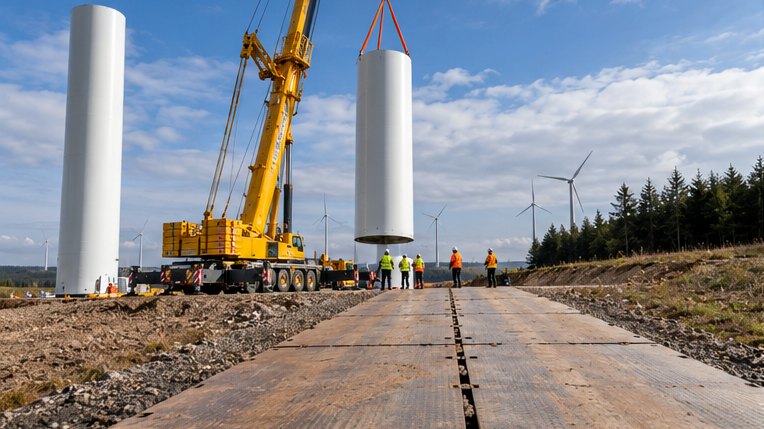
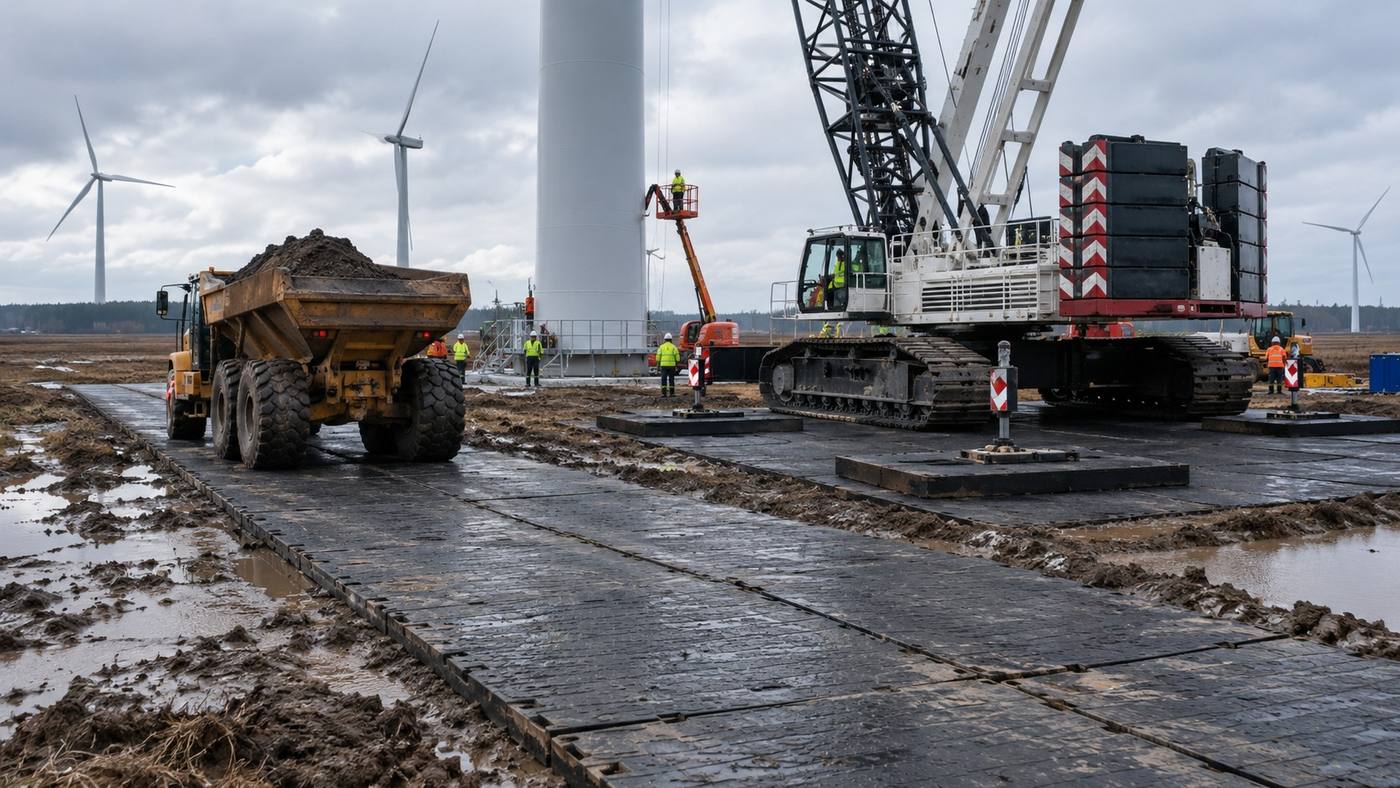
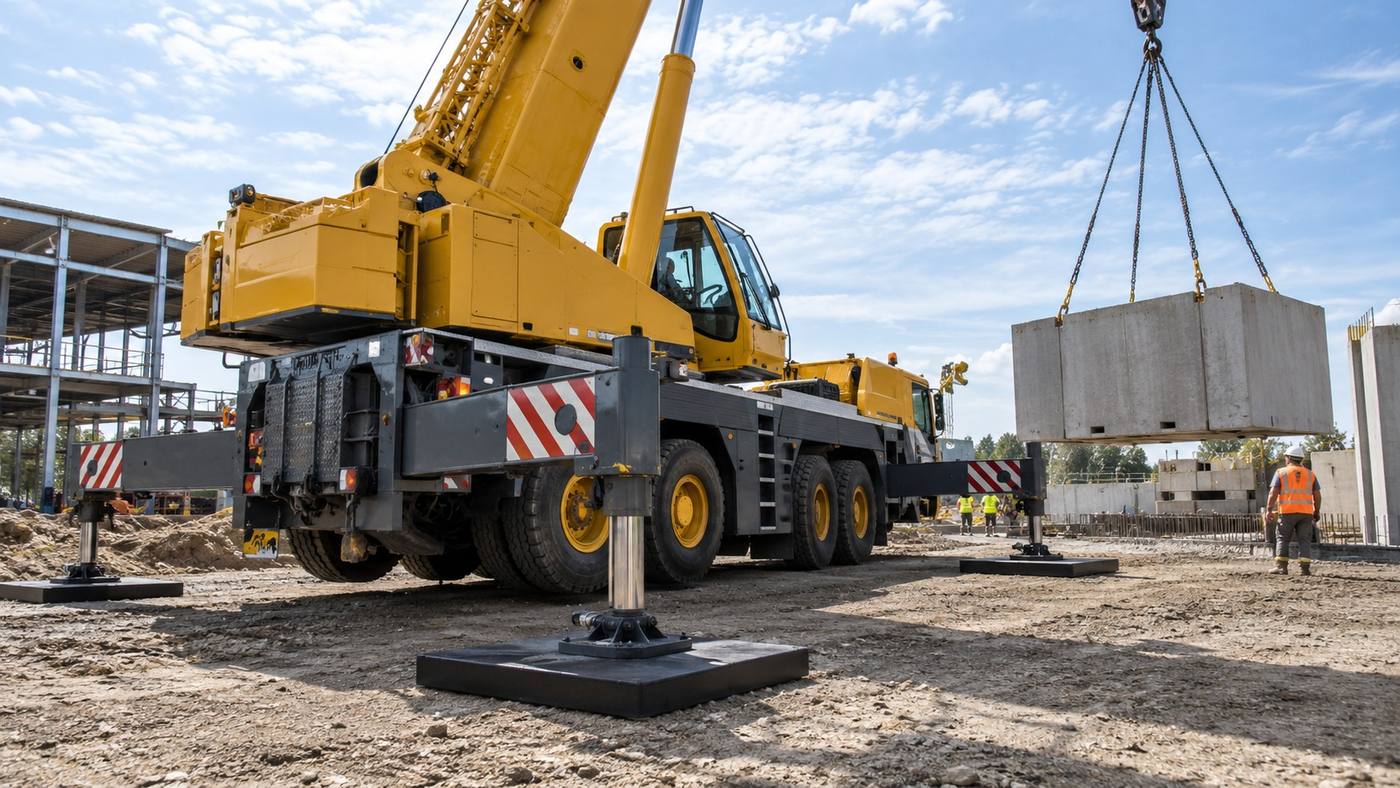
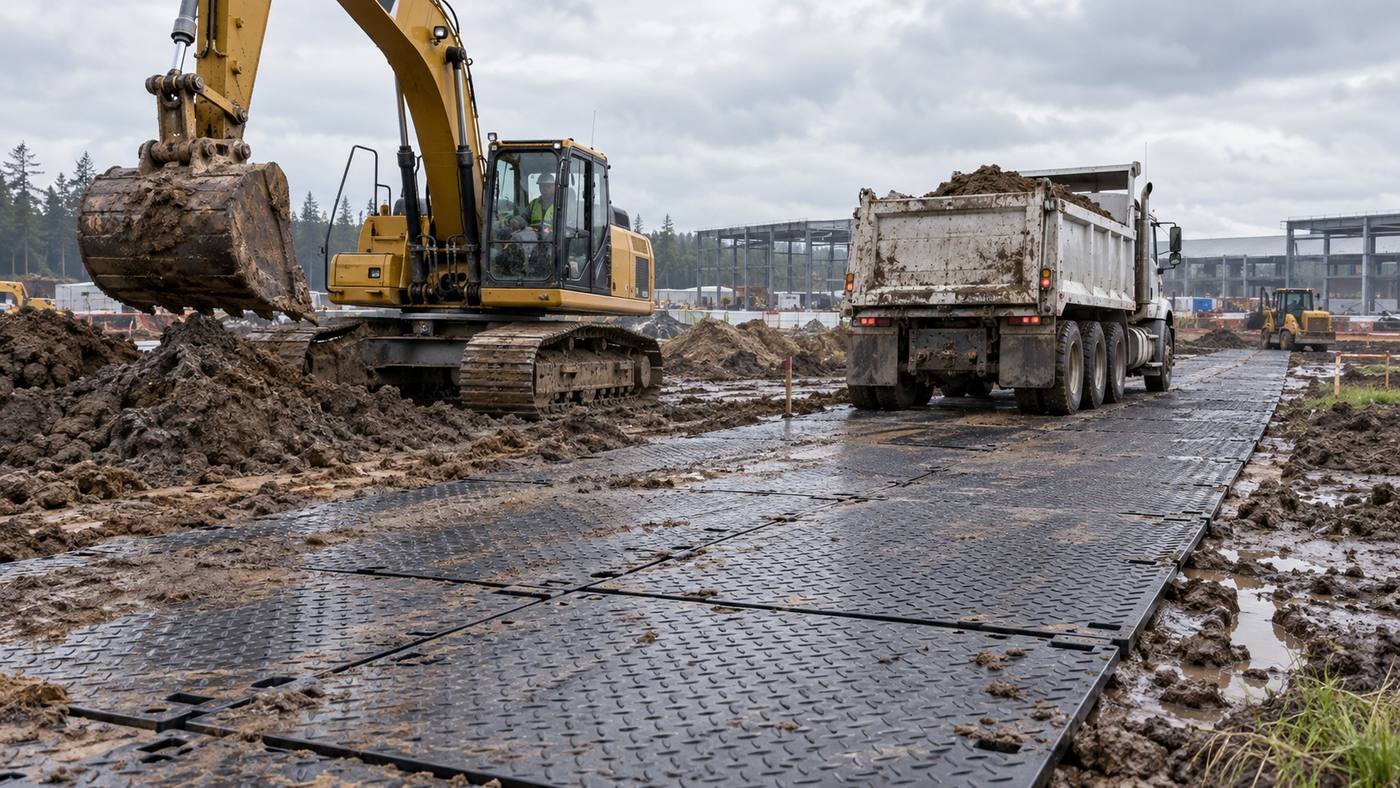
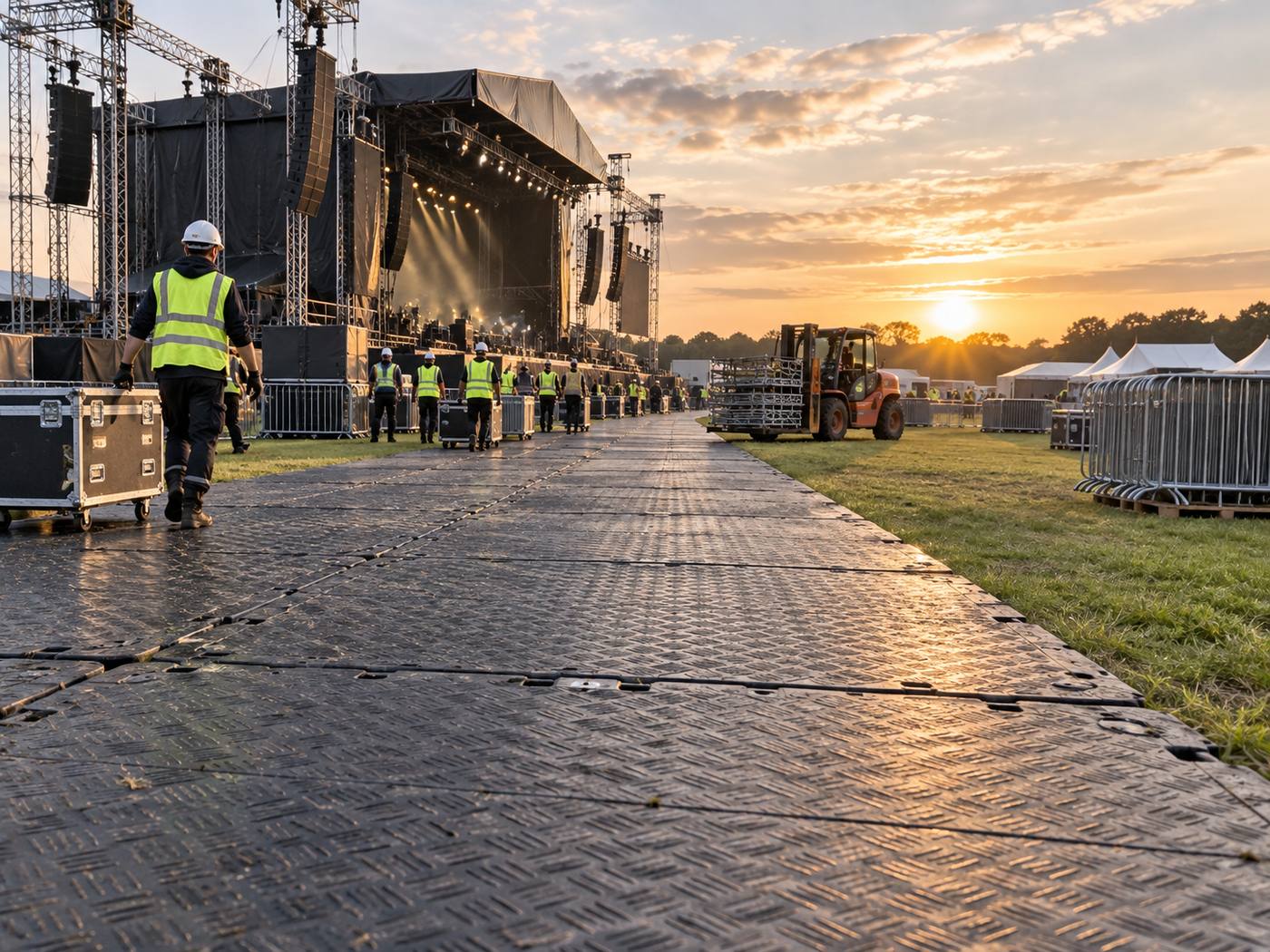
Figure: Wind blades, turrets, cabin transport and wind hanger sites, with a focus on “How the wind project pavements are numbered and rotated”
A representative route or a feeder may be selected for a controlled trial pavement to cover the softest floor and the most heavy equipment condition. Wind and electricity transport and suspension must control the continuity of the road and the carrying of the feeder, respectively, and any nominal tonnage must be returned to the ground and equipment condition. The decision to increase width, improve drainage or reorient traffic is then taken by means of experimental observation of grass-roots, sewn, tyre tracks and operating space. The test-paint record of “How and how the wind and power project pavements are numbered” should indicate the starting and ending position, vehicle status and release conclusion to facilitate review as construction conditions change.
It is recommended that the pavements and the mats be included in the asset desk account, numbering the relevant specifications, batches, pavements and hours of use. The scope of the inspection included the internal and external wheels of the bend, the faulty plate, the deformation of the road shoulder, the deposition of the legs, the horizontal level, the connectors and the accumulation of water. The removed components are to be cleaned, dried, flattened and placed in subdivisions that are qualified, subject to assessment, to repair and to end-of-life status, to prevent the re-entry of unqualified products. With regard to the “numbering and rotation of the circuit boards of the wind and electricity projects”, the inspection forms need to show changes in specifications and quantities that do not match the situation on the ground, and to indicate the inspector and the time of return.
A reset is to distinguish between product problems and changes in condition. The original programme may no longer be appropriate if the vehicle is heavy, routed, rainfall increases or cover periods are extended. These changes are recorded with the results of the implementation of the request for proposals and acceptance documents, the basis of the tests and the restrictions, and it is not until the next time that it is known whether the thickness, width, quantity or construction organization should be adjusted. It should also answer whether the “numbering and turnaround of the winding project pavement” has been verified as an improvement through the identification of work conditions, test bases and restrictions in the request for and acceptance documents, avoiding a subjective description of the closing item.
This topic can be summarized as first confirming the boundary of the work, then configure the appropriate product, and then validate it with test run, inspection and project data. The formal programme should identify those responsible, the restrictions, the criteria for decommissioning, the means of recovery and the emergency route, so as to avoid the loss of critical information following changes in the class or contractor.
Need for further evaluation of the actual project?
Applications, sizes, quantities, site photographs or drawings and delivery destinations are sent, on which we can identify more suitable products and processing programmes.