
Information on what needs to be provided for the energy project will first be judged separately from vehicle traffic, stationing of equipment and the support of the crane. The process of procurement of pavements and leg pads by energy contractors, leasers and distributors focuses on “what information needs to be provided on energy project requests” and usually goes through multiple stages of entry, construction, overhaul and evacuation, and changes in ground water content and traffic. The most easily neglected of this topic is the looseness of connections, drainage congestion or pollution that reduces actual use. The problem of grass-roots and drainage may have expanded if only ad hoc slabs were added after a vehicle has been trapped.
The product configuration cannot be determined by area or thickness alone. The project shall verify vehicle and equipment data, ground conditions, route size, quantity, life cycle, product specifications, test basis, packaging, terms of trade and port of destination, and then convert the connection loose, drainage congestion or pollution reduction to drainage, carrying, stabilization, surface pull and restoration requirements. In accounting for the minimum effective area of the leg pads on the basis of maximum retroactivity and durability, the handling tools, manual weights, back-up quantities, cleaning and back-stacking are also considered. In the case of “information to be provided for energy project requests”, the information review should also draw out the boundaries for the protection and restoration of topsoil, cropping layers or grasslands, and include missing information as an item for confirmation of offers and construction programmes.
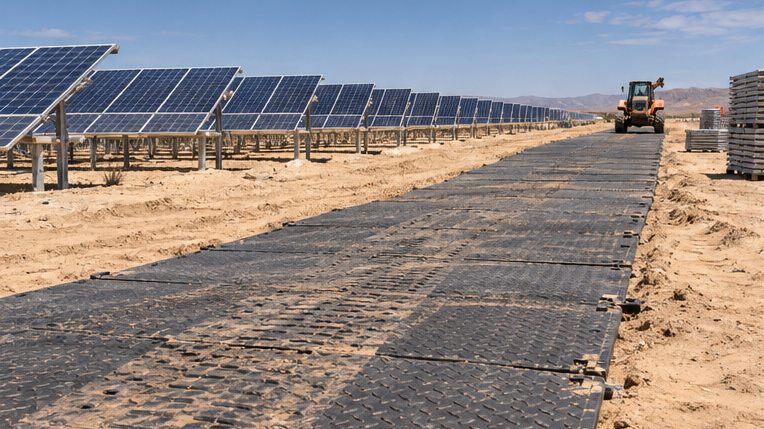
Figure: Road-painting boards and leg-matting procurement process for energy contractors, lessors and distributors, with a focus on “What information needs to be provided for energy project solicitation”
The site installation should be located with an approved drawing number, and the level, seam, edge and drainage should be inspected at each stage of completion. The procurement comparison must use the same size, material, test conditions and delivery boundary, and the reference values of 50 to 200 tons cannot be understood in isolation from the support conditions. The test operation can first be carried out using a low-risk vehicle with a slow-speed straight-line and then gradually verify the turnover, parking and full-loading; it should be discontinued as soon as it is discovered that it continues to sink under the plate, pump mud or branch position. The trial-scan record of “what information will be required for the energy project price request” should indicate the starting point, vehicle status and release conclusion to facilitate review as construction conditions change.
The inspection cycle can be shortened at an early stage of use and then stabilized before adjusting to vehicle cycles and weather. The maintenance staff focused on the size difference, thickness, weight, texture, connection holes, appearance, packaging, container manifest, batch information and arrival and inspection, as well as on the driver ' s compliance with speed limits and shift requirements. Any unconfirmed sub-board support, edge instability or foot contact should first be disabled. In the context of “what information needs to be provided in connection with the energy project request”, the inspection forms need to list separately changes in the state of physical use associated with the loose, drainage congestion or pollution, and to indicate the inspector and the time of return.
The offers from different suppliers should be compared under the same size, material, connection, packaging, delivery and test basis. Supplementation should be requested if the maximum load is given without a description of the ground, distance and load. Energy projects should also focus on batch consistency, port efficiency, repairability and container loading. It should also answer whether “what information is required to be provided in response to the energy project request” can be verified for improvement by accounting for the minimum effective area of the leg pads on the basis of maximum retroactivity and durability, avoiding a subjective description of the closing item.
The ultimate goal is to allow the process of procurement of pavements and stepping pads by energy contractors, leasers and distributors, with a focus on what information is required for the energy project request to operate on a continuous basis, with clear limitations and acceptable risks, and to successfully restore the ground after the completion of the work. It is only when the design, product, operation, inspection and evacuation sites are connected and the connection is loosed, drainage blocked or contaminated to reduce the actual operational status that will not be repeated during the rush phase.
Need for further evaluation of the actual project?
Applications, sizes, quantities, site photographs or drawings and delivery destinations are sent, on which we can identify more suitable products and processing programmes.







