
The way in which the refuelling lanes of remote projects reduce the risk of pollution begins with a judgement that separates vehicle traffic, stationing of equipment from the support of cranes. Wind, photovoltaic and other energy project camps, far from hard roads, focus on “How remote refuelling vehicle routes reduce the risk of pollution” usually follows multiple stages of entry, construction, overhaul and evacuation, and changes in ground water content and traffic. The most susceptible to neglect is the significant increase in local pressure caused by static, brakes and turnovers. The problem of grass-roots and drainage may have expanded if only ad hoc slabs were added after a vehicle has been trapped.
If the project needs to be accompanied by a pavement and a mat, an optional table should be established. The former are dominated by continuous support on the route, axle and the grass-roots level, while the latter are dominated by maximum reversibility of the legs and allowing for ground bearing. The implementation of approved road map, numbering and inspection log changes in conjunction with transport distance, terrain, snow and snow seasons, maximum vehicles, camp layout, handling equipment, stock rotation, supply cycle and destination port could avoid using the two products as alternative components. The information review should also measure the number of vehicle cycles and track the location of duplicate wheel formations and include missing information as items to be identified for quotations and construction programmes.
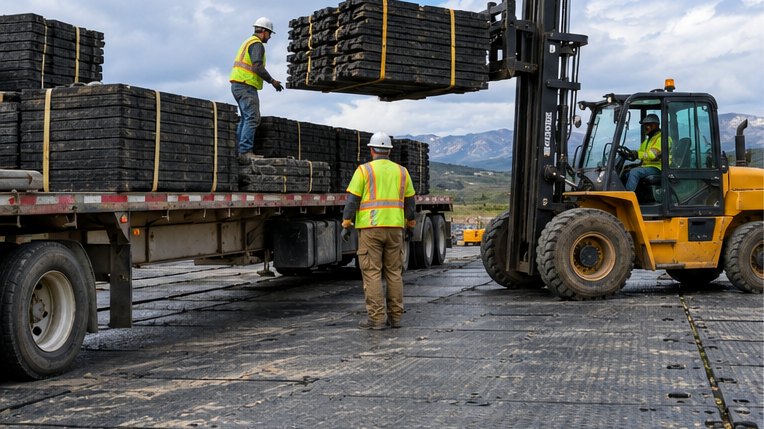
Figure: Camps for wind, photovoltaic and other energy projects, far from hard roads, with a focus on “How remote project refuelling routes reduce pollution risks”
A smooth transition should be put in place at the different ground crossings to avoid the sudden impact of vehicles on temporary circuits from hard roads. Management of site changes in accordance with approved road maps, serial numbers and inspection records will also review the internal and external wheels and brake locations of the most heavy vehicles once they are completed. Remote projects need to use roads, parking, stacks and emergency routes as a logistics system, and single-form product weights are as important as recovery efficiency. Physical segregation and clear rules for release are required in the vicinity of public areas. The trial-pave record of “How the refuelling corridor of a remote project reduces the risk of pollution” should indicate the starting point, the condition of the vehicle and the release conclusion, to facilitate review as the construction conditions change.
The shift involves reporting changes in stock levels, route continuity, drainage, shoulder, pollution, plate numbering, handling safety and the net emptying of emergency vehicles, rather than a description of the appearance. The sutures, shoulders or sub-points repaired in the previous class are reviewed in the next class. In the event that static, brake and rotation increase the local pressure significantly as traffic increases, the project shall immediately limit, reroute or suspend the equipment until such time as the re-examination passes. The inspection form, which revolves around “how to reduce pollution risks in the refuelling lanes of remote projects”, contains a separate column of changes in static, brakes and turnovers that significantly increase local stress, with an indication of the inspector and the time of return.
Construction, logistics, HSE, equipment, site and procurement could be jointly evaluated before the planned expansion. The parties confirmed the conditions of passage, suspension, inspection, restoration and delivery, respectively, to verify whether the approved road map, numbering and inspection logs were actually enforceable to manage on-site changes. The results of the review should be included in the programme rather than in oral communication. This retrodiscussion should also answer whether “how remote refuelling vehicle routes reduce the risk of pollution” have been validated for improvement by using approved road maps, numbers and inspection logs to manage on-site changes to avoid a subjective description of the closure.
Progress pressure cannot reduce the security floor. When static, brakeing and turnovers significantly increase local pressure, they should first isolate and identify the reasons before deciding on the repair, diversion or replacement of the product. Any measures should avoid introducing new risks of slide, overloading, tripping, electric area intrusion or human-car conflict.
Need for further evaluation of the actual project?
Applications, sizes, quantities, site photographs or drawings and delivery destinations are sent, on which we can identify more suitable products and processing programmes.







