
The answer to the question was that the thicker the leg mattress, the higher the load, the higher it must be? Heavy cranes and transport sites for transformers, wind turbines and large-scale electrical equipment focus on the issue of whether “the thickness of the leg pads is always higher” is influenced by weather, terrain, vehicle and organizational patterns, while the test conditions directly compare miscalculations caused by the nominal tonnage with only visible results. The project should mark the soft spots, slopes, drainage, underground facilities and vehicle tracks on a single map to bring technology, construction, HSE and procurement data into line.
The procurement staff shall submit the site map, the vehicle watch and equipment plant ' s maximum retrogressive leg, the position of the leg, the ground-based allowance for pressure, the distance from the gutter to the edge, the suspension radius, the transport axle and the change in rainfall to the request for quotation, and shall indicate a direct comparison of the position of the nominal tonnage under different test conditions, resulting in an error of position. The programme can be configured on the basis of the approved road map, numbering and inspection log management on-site changes. For the whole container procurement, the quantity of the container, the pallet or bundle, the offloading equipment, the destination port and the conditions of storage at the site should also be confirmed in advance. In the case of “the greater the thickness of the leg pads, the higher the load”, the information review should also record changes in the water-bearing state and the extent of the soft spot before and after the rainfall and include missing information as an item pending confirmation of the quotation and the construction programme.
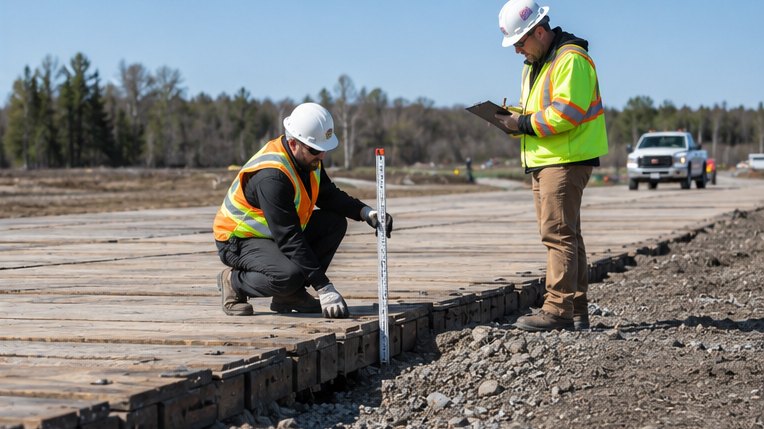
Figure: Heavy cranes and transport sites for transformers, wind and large-scale electrical equipment, with a focus on “The thicker the leg pad, the higher the load must be”
The site installation should be located with an approved drawing number, and the level, seam, edge and drainage should be inspected at each stage of completion. The area of the leg pad shall be determined by the maximum retroactivity in conjunction with the confirmed ground-based load, and the pavement shall not automatically replace the accounted hanger operating platform. The test operation can first be carried out using a low-risk vehicle with a slow-speed straight-line and then gradually verify the turnover, parking and full-loading; it should be discontinued as soon as it is discovered that it continues to sink under the plate, pump mud or branch position. The trial-pave record of the “higher the thickness of the leg cushion” should indicate the starting and ending position, vehicle condition and release conclusions to facilitate review following a change in construction conditions.
The maintenance plan should include responsibility for key sections and feeder points, frequency checks, decommissioning thresholds and spare parts locations. A review around the management of site changes with approved road maps, numbers and inspection records can be detected in a timely manner, with different test conditions but with a direct comparison of the nominal tonnage resulting in miscalculation. Backup panels, connectors and handling tools are also synchronized to avoid mismatches in specifications on site. The "heavyness of the leg pads is always higher" around which the inspection forms are to be shown under separate test conditions, but directly compared to the nominal tonnage, resulting in a miscalculation change and a reference to the inspector and the time of return.
For energy projects that continue to be built or duplicated, a baseline may be established for each square metre of construction hours, vehicle cycle, cleaning time, damage rate and restoration costs. This would make it easier to identify whether errors of judgement caused by a direct comparison of the nominal tonnage with different test conditions would recur during a given season, rather than relying on experience alone for the next quotation and inventory planning. It should also answer whether the “higher the thickness of the leg mat” is verified by managing on-site changes with approved road maps, numbers and inspection records, and avoid a subjective description of the closing item.
Progress pressure cannot reduce the security floor. When different test conditions occur and the miscalculation of the nominal tonnage is directly compared, the decision to repair, reroute or replace the product should be taken after isolation and identification of the cause. Any measures should avoid introducing new risks of slide, overloading, tripping, electric area intrusion or human-car conflict.
Need for further evaluation of the actual project?
Applications, sizes, quantities, site photographs or drawings and delivery destinations are sent, on which we can identify more suitable products and processing programmes.







