
The energy projects often place transport, parking and cranes in adjacent areas, so that damage to connectors increases the cost of ground rehabilitation? In the interim road demolition, cleaning, recovery and site delivery phase of the energy project, the topic is concerned with “Does damage connectors increase the cost of ground recovery” and, if quoted only in the total area, it is easy to miss out on the turns, legs and recovery routes. Different test conditions, but a direct comparison of the nominal tonnage results in miscalculation, which also invalidates the otherwise sufficient direct line segment at peak.
The input information can be organized in four columns: equipment, ground, route and time, with emphasis on pre-entry photographs, area of coverage, time of use, weather, vehicle cycle, order of demolition, cleaning conditions, damage rate and acceptance criteria. In response to errors caused by different test conditions, but directly comparing the nominal tonnage, it is recommended that drainage and soft spots be addressed, then laid and tested from the stabilization end. In the case of leg pads, the maximum repulsive force of the leg provided by the plant must be obtained, and in the case of passage roads, the total weight of the vehicle, the axle, the tyre and the complete turn track should be used. For “Does damage connectors increase the cost of ground restoration”, the information review should also check the continuity of lighting, reflective boundary and night-over records and include missing information as items to be confirmed for quotations and construction programmes.
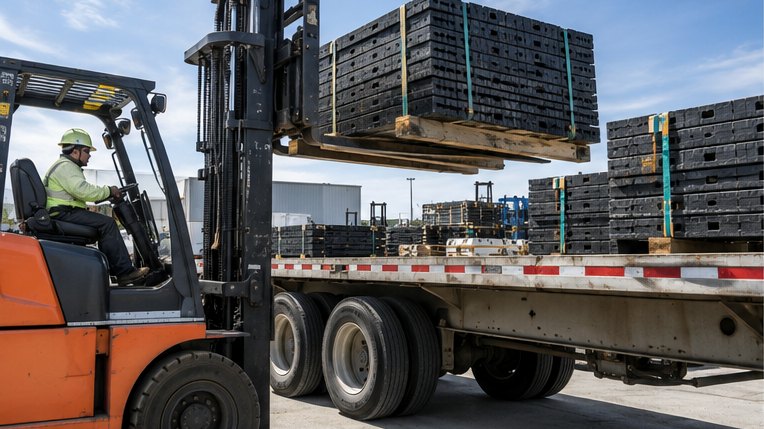
Figure: During the interim road demolition, cleaning, recovery and site delivery phase of the energy project, the theme concerns “Does damage connectors increase the cost of ground rehabilitation”
Pre-implementation should be preceded by the containment of routes, the removal of sharp stones, stakes and miscellaneous items that may form a spot load, the repair of deep-pit tracks and the removal of horizontal drainage. Reducing recovery costs relies on pre-entry baselines, life-cycle controls and reverse evacuation sites, rather than decoupling and concentrating on all issues. The plates should be prepared continuously at the stabilization end, with the bends, reverses and parking areas being expanded as appropriate; the leg mats should be flat, intermediated and in full contact, and it should not be allowed to be filled with random stacking. “Does the damage connector increase the cost of ground restoration” test-painting records should indicate the starting and ending position, vehicle condition and release conclusions to facilitate review as construction conditions change?
Car tracks, topsoil erosion, compaction, vegetation, sludge, cracks, permanent deformation, connections and storage should be checked before class, after peak traffic and after rainfall. Each record shall contain the date, location, vehicle, weather, unusual photographs and processing results. In the case of repeated tests in the same region with different conditions but with a direct comparison of the nominal tonnage resulting in miscalculation, it should go back to the grass-roots, drainage, transport organization and specification re-analysing rather than replacing only surface components. In the context of “damaging connectors add to the cost of ground restoration”, the inspection forms need to show a separate set of test conditions but directly compare the changes in the nominal tonnage to cause miscalculation, with an indication of the inspector and the time of return.
For energy projects that continue to be built or duplicated, a baseline may be established for each square metre of construction hours, vehicle cycle, cleaning time, damage rate and restoration costs. This would make it easier to identify whether errors of judgement caused by a direct comparison of the nominal tonnage with different test conditions would recur during a given season, rather than relying on experience alone for the next quotation and inventory planning. It should also answer whether “does damage connectors increase the cost of ground restoration” by first treating drainage and soft spots and then producing verifiable improvements from the stable end segment and from the test run, avoiding a subjective description of the end item.
This paper could serve as a technical discussion list for energy projects, but not as a separate construction permit. The project will also require a written programme of transport organization, temporary structures, electrical safety, fire protection, weather emergencies and site restoration systems, and a review of key carrying and stabilization conditions by authorized personnel.
Need for further evaluation of the actual project?
Applications, sizes, quantities, site photographs or drawings and delivery destinations are sent, on which we can identify more suitable products and processing programmes.







