
The breakdown between the repairable pavements and the scrapped board is based on the first judgement that separates vehicle traffic, stationing of equipment from the support of the crane. In the interim road demolition, cleaning, recycling and site delivery phase of the energy project, the topic focuses on how “maintainable pavements can be classified with scrap” usually go through multiple stages of entry, construction, overhaul and evacuation, with changes in surface water content and traffic. The most easily neglected of this topic is the looseness of connections, drainage congestion or pollution that reduces actual use. The problem of grass-roots and drainage may have expanded if only ad hoc slabs were added after a vehicle has been trapped.
The procurement staff shall submit the site map, vehicle schedule and pre-entry photographs, area of coverage, time of use, weather, vehicle cycle, demolition sequence, cleaning conditions, damage rate and acceptance criteria along with the request for quotations, and indicate the location where the connection is loose, drainage congestion or pollution may result in a reduction in actual use. The programme allows for zonal configurations based on the certification of panels, floors and vehicle operating space through representative trial workshops. For the whole container procurement, the quantity of the container, the pallet or bundle, the offloading equipment, the destination port and the conditions of storage at the site should also be confirmed in advance. The information review should also include snow, ice, sand and tyre state in tow management, and include missing information as an item to be confirmed for quotations and construction programmes.
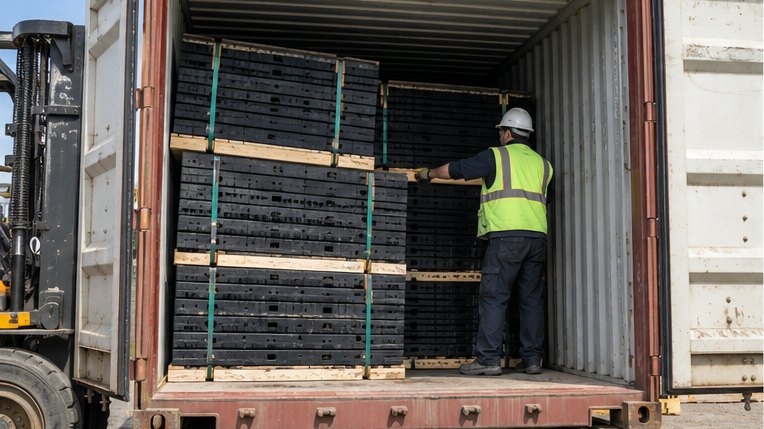
Figure: Interim road demolition, cleaning, recycling and site delivery phase of the energy project, with a focus on “how to classify repairable paved and scrapped”
A smooth transition should be put in place at the different ground crossings to avoid the sudden impact of vehicles on temporary circuits from hard roads. The internal and external wheels and brake positions of the most heavy vehicles will also be reviewed in accordance with the completion of the laying of sews, floors and vehicle operating spaces through representative trial workshops. Reducing recovery costs relies on pre-entry baselines, life-cycle controls and reverse evacuation sites, rather than decoupling and concentrating on all issues. Physical segregation and clear rules for release are required in the vicinity of public areas. Test-painted records of “how to classify repairable pavements and scrap plates” should indicate the starting and ending position, vehicle condition and release conclusions to facilitate review as construction conditions change.
Special inspections should be added after extreme weather, equipment anomalies or route adjustments. Use of location markings and fixed view photographs of tracks, topsoil erosion, compaction, vegetation, sludge, cracks, permanent deformation, connections and storage to facilitate comparison of sedimentation and placing. Cleaning the surface of polymers avoids fire, sharp shovels and violent knocks, creating new cracks and stress concentrations. The inspection forms around “how to classify repairable pavements and scrapping boards”, are to list separately changes in the actual use status of loosed connections, drainage congestion or pollution, and to indicate the repeater and the time of return.
The impact assessment cannot be based solely on the movement of vehicles on the same day. The project compares vehicle waiting, trapping, maintenance hours, cleaning time, loss of connection, site restoration area and evacuation cycle, and records weather and traffic simultaneously. Once data have been created around loose connections, drainage congestion or pollution to reduce actual use, it will be possible to determine whether the programme is suitable for replication in the next energy project. It should also answer whether the “Classibility of repairable pavements and scrap boards” have been validated for improvement by means of representative trial sheets to verify sutures, ground floors and vehicle operating space, and to avoid ending with subjective descriptions only.
This paper provides a selection and management approach and does not replace the equipment instructions, the suspension programme, ground-based evaluation or local regulations. Work involving lifting support, underground facilities, electrical areas, the edges of trenches and the entry of persons into dangerous areas shall be reviewed by persons with appropriate qualifications. The above parameters may be provided in the request for quotations to obtain recommendations for size, thickness, quantity, packaging and shipment.
Need for further evaluation of the actual project?
Applications, sizes, quantities, site photographs or drawings and delivery destinations are sent, on which we can identify more suitable products and processing programmes.







