
When many procurement staff see “50 to 200 tons”, this figure is directly compared with the total vehicle weight, but this understanding is incomplete. The safe use of pavements depends on the total weight of the vehicle, the single axle load, the area of the tyre, the wheel range, the size and thickness of the plate, as well as the water content, pressure level and carrying capacity of the surface below the plate. The same vehicle is able to pass smoothly on a solid rocky ground and, in the case of clay immersed by rain, the risk of plate bends and ground sinking increases significantly. Therefore, the carrying data can only be used as a product-level reference and cannot be used separately from field conditions.
In evaluating the project, the full load of the vehicle, the number of axes, the maximum axle charge, the size of the tyre or belt, the expected number of traffic, the speed of travel and the need to turn, brake or re-direct the vehicle. The effect of a low-speed straight-line passage is not the same as that of a heavy vehicle, which turns repeatedly in the same position; it may also put more pressure on local areas when the vehicle rises, brakes or falls. If cranes, pumps or loaders are to be operated on site, they should be accounted for separately, rather than covering the whole equipment with a “maximum tonnage”.
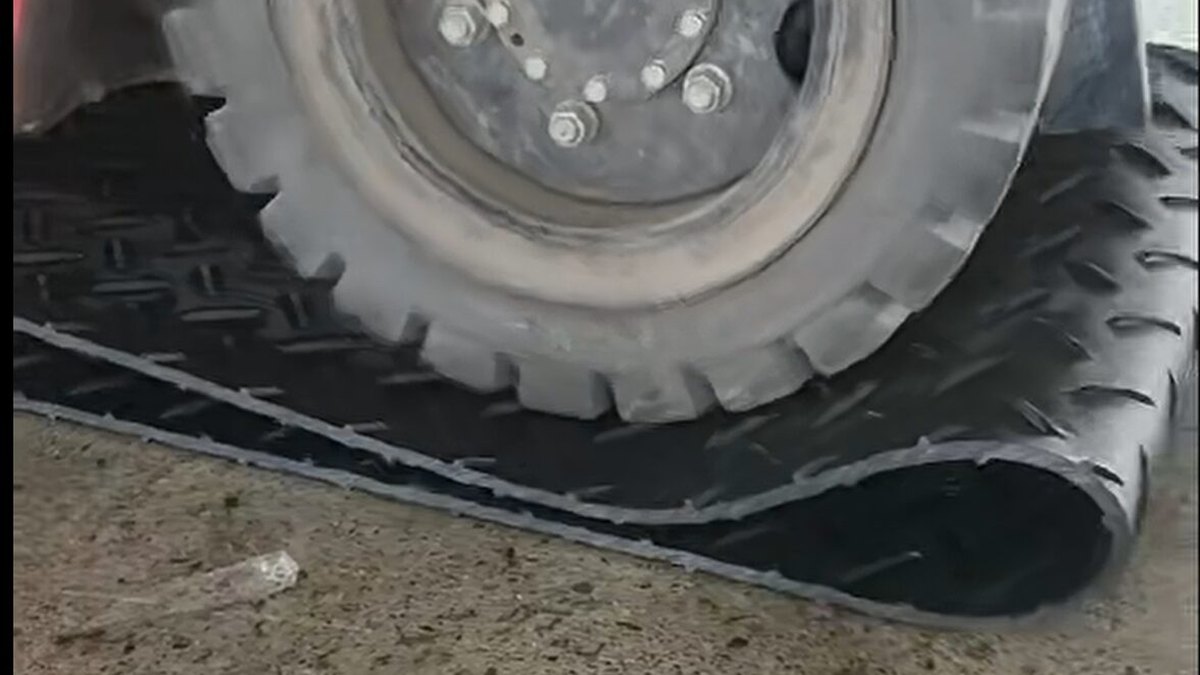
On-line video: Roadboard vehicle pressure and traffic tests
Ground surveys are equally important. At a minimum, the project party has to describe the type of ground, the depth of the soft layer, the slope, the drainage conditions, the recent weather and the presence of trenches, underground pipes, holes or backfill areas. The main role of the pavement is to increase the area of contact, spread the wheel and reduce the direct disturbance of the surface by wheels, which cannot automatically turn swamps, holes or untreated trenches without basic carrying capacity into safe roads. The temporary road programme shall, if necessary, be confirmed by the head of the on-site works, after drainage, grounding, preparation of grade or earthwork material.
The selection should not only increase the thickness, but also examine the raw materials of the plate, the contourity, the impact resistance, the smoothing path, the mode of connection and the effective connection between the plate and the plate. For high-frequency (HF) traffic, heavy-cargoing or long-cycle projects, small-scale trial workshops can be made to observe panel shifts, dots, edges and ground-based pump mud before expanding use. The test conditions, sample data and reference items provided by the supplier should be cross-referenced to the vehicle and ground conditions of the project and not only the maximum number on the leaflet.
A one-time list of vehicles, full-load parameters, live photographs or videos, length and width of roads, worst ground conditions, projected duration and port of destination are recommended for the request. This allows suppliers to judge the thickness of the sheet, the direction of the laying, the number of connectors and the back-up ratio. The final programme should also be confirmed on-site by project security personnel or qualified engineers; when there are significant changes in vehicle parameters or ground conditions, the original load conclusion should be reassessed rather than continued.
Need for further evaluation of the actual project?
Applications, sizes, quantities, site photographs or drawings and delivery destinations are sent, on which we can identify more suitable products and processing programmes.







