
All three types of products are in engineering plastics, but different locations of use and different priorities for cleaning and storage. The pavements are often recovered with mud, sand and plant residues; the mats may be oily and subject to a centralized pressure mark; and the liners are installed inside the vehicle, mainly to clean up the residues and check the tight system. The goal of maintenance is not to pursue surface-like new products, but rather to detect damage in a timely manner that could affect carrying, stabilizing, unloading or hygiene, and to prevent new permanent deformations from being stored.
The pavements should first remove large mudslides and then process the texture and connection holes with water and neutral cleaning agents suitable for the material. High pressure water guns should be kept at a reasonable distance, avoiding the spraying of pollutants to people or further stripping of damaged edges. Post-cleaning of cracks, porosity stretching, deep mouths, visible arcs and stripes, classified as “available, unmaintainable, isolated end-of-life”. Stacks are placed on flat trays or staves to control piles and to prevent chronic inequity at the bottom.
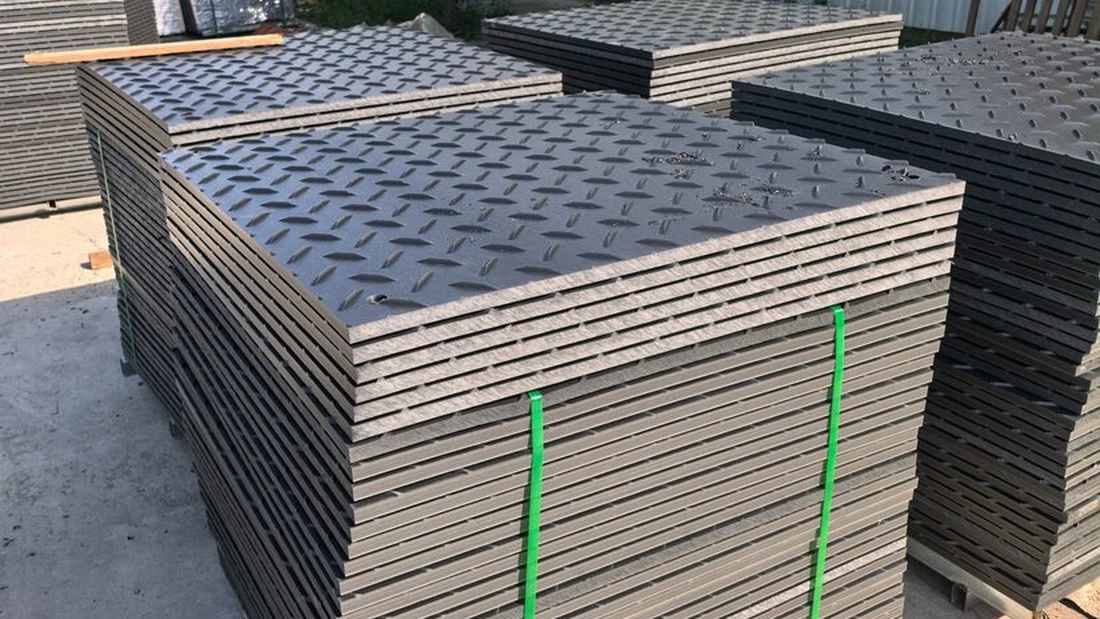
Offline: mass stacking of pavements and storage preparation
The leg mat shall focus on the pressure zone of the centre, the edge, the handle and any number. Oil, ice and fine sand reduce friction and should be removed before the next use. The pads should not be tilted against the wall for a long period of time in order to avoid bending or falling; different sizes should be stored in partitions, and larger-weight products should be moved mechanically. The use of a lifting hand as a crane is strictly prohibited unless the product is clearly designed and marked as a hangable. Each release and recovery of recorded equipment, project and inspection results helps track the number of cycles.
The vehicle must be parked in a secure position, its carriage completely lowered and the requirements for locking must be implemented before the plate is cleaned. Do not let personnel work under unsupported lift cars. The removal of residues is done by means that do not scratch the surface and avoid unrecognized strong solvents or high temperature flames. (b) Periodically check hard-stretch, bar, seam, drums and high-damaged areas; if a lining needs to be removed for storage, it should be flattened and sustained, and a scroll or fold may leave a deformation.
Outdoor storage should take into account ultraviolet light, temperature, wind and water accumulation, even if the product has a durable design, it should not be permanently placed on sharp ground or contaminated with incompatible chemicals. The establishment of simple asset numbers, photographs and checklists enables equipment leasing, mines and contractors to know the status of each product. Cleaning agents, disinfectants or maintenance methods should be identified first to the supplier; when structural cracks or unidentified chemical erosion are detected, they should be assessed in isolation and not carried on only by grinding or thermal repair.
Need for further evaluation of the actual project?
Applications, sizes, quantities, site photographs or drawings and delivery destinations are sent, on which we can identify more suitable products and processing programmes.







