
Car liner selection usually balances low friction, grinding, shock resistance, weight and cost. The UHMWPE is often used to improve offloading and protection of steel plates because of low friction, grinding and shock resistance; it can also be assessed in some lightweight or cost-sensitive applications. The name of the material is only the starting point and may differ from that of UHMWPE, depending on the molecular mass, filling, regenerative ratio and production process, and data on the range, density, grinding or impact of the card number shall be required and the amount of the release may be retroactive.
The thickness shall be determined on the basis of material characteristics and wear and tear distribution. The fine-wet clay primarily requires continuous low-wielding surfaces, and an excessive increase in thickness does not necessarily lead to a significant improvement in offloading; large-scale ore, high-loading and frequent cycles require greater resistance to shocks and grinding surpluses. The bottom, foreboard, corner and tail of the car are different and can be designed for partitions, but the transition of different thickness levels must follow the flow of material and avoid the formation of steps and hanger points.
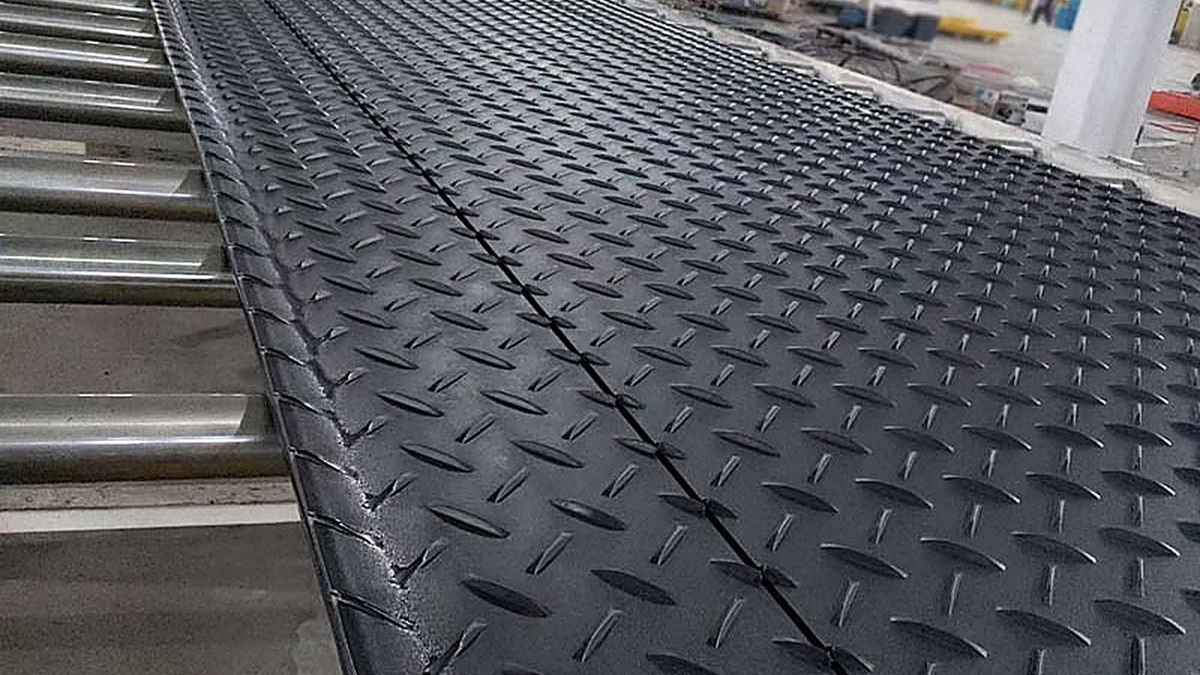
Photo by UHMWPE board surface and form status
The increase in thickness would increase the weight of the lining, thereby taking over the vehicle payload, and would also alter the bending, thermal swelling and stationary stress. It shall be designed to check the size of the vehicle, the state of the original steel plate, the position of the reinforcement, the lifting angle, the end door gap and the weight of the vehicle as a whole as permitted by statute. The long wagons need to provide for slides or stretching space for thermal expansion, and the tight holes and presses cannot completely lock the materials to death, otherwise temperature changes may cause drum packs or cracks.
Temperature is an easily missing factor. Temperature affects shock behaviour, which may reduce stylity and magnify thermal expansion; thermal asphalt, thermal ash, or high-temperature process materials usually require specialized materials and cannot be applied to general linings. Chemical media, oil and detergents should also be identified on a case-by-case basis. The most conservative method is to validate the sample or test vehicle with representative material and real temperature, and to record the rate of wear and unloading.
In procurement, please provide material data, loads per vehicle, frequency of circulation, material loads, maximum deviations, interior drawings of cars, existing wear and tear, ambient temperature and priority issues that are expected to be addressed. Vendors should give recommendations for material, thickness, partitioning, fixation, weight increase, installation and maintenance. It is difficult to follow up and accept the offer if it is written only as a “dryboard” without a card range, size differential and installation programme.
Need for further evaluation of the actual project?
Applications, sizes, quantities, site photographs or drawings and delivery destinations are sent, on which we can identify more suitable products and processing programmes.







