
The number of paved boards cannot be divided by a single area only by the area of the road, as the actual project also includes the direction of the sheeting, the seams, the bends, the entrance, the car area, the parking area and the loading and unloading area. The basic algorithm is to separate the functional areas on the plank and then set them by the effective size of the sheet. Effective coverage should take into account the means of connection, connection or suture, and not necessarily equal to the length of the product ' s common name multiplied by the width of the common name. Each region is calculated separately and aggregated so that the results are closer to the needs on the ground than by a rough division of the total area.
In the case of a straight-line segment of 60 metres long and 3 metres wide, if a 2-metre x 1-metre plate is used and the length of the road is paved by a 2-metre direction and the width of the road by a 1-metre direction, in theory, 3 blocks, 30 rows, or 90 blocks, per row. This figure does not yet include start-up platforms, vehicle rotations, road perimeter repairs and spare plates. If access requires a 6 m x 6 m reinforced area, en route seat belts or vehicles need to turn around at the end of the terminal, these areas should continue to be added according to the same layout method, instead of using the 90 block as the final purchase volume.
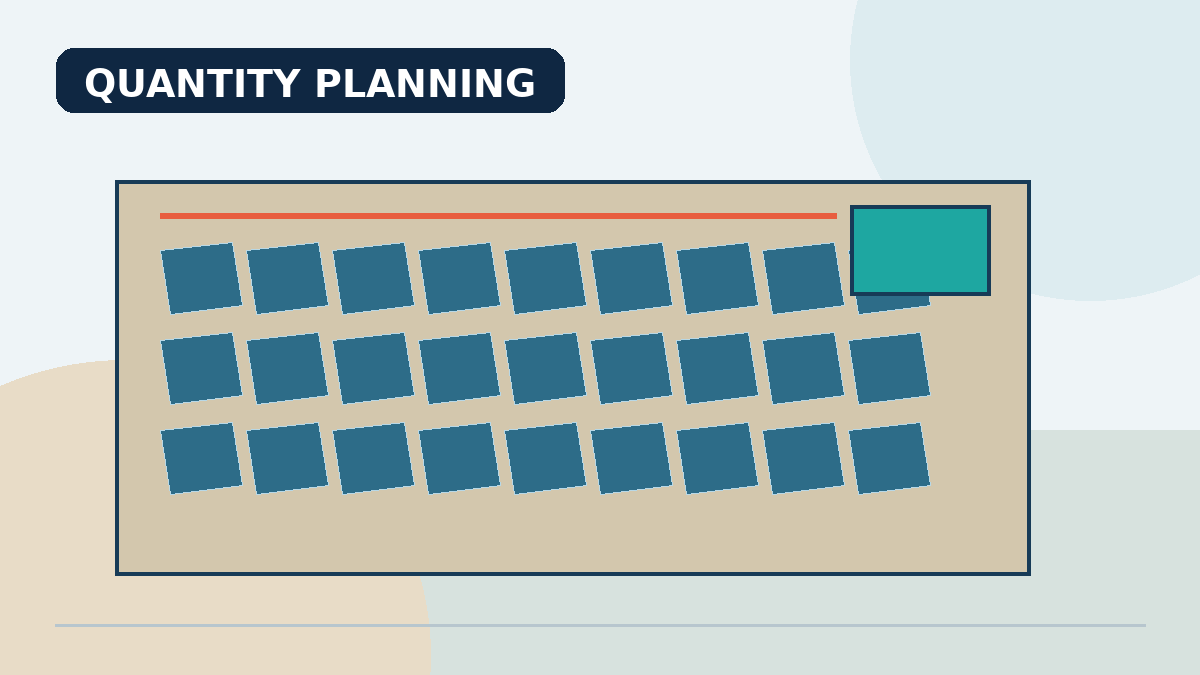
Scheduling of the number of temporary roads, car areas and spare plates
The width of the road shall be determined on the basis of the description of the vehicle, the length of the wheel, the error in driving and whether the car is allowed. While only two routing bands can save a lot of money, it is more difficult for vehicles to move away from their route, which is more suitable for multi-car type, high frequency or night traffic. For cranes and pumps, separate leg fields should be calculated in addition to the entry road. For activities, lawn and warehousing projects, access to personnel, fire escape and temporary stacking areas may be required.
There is no fixed answer to the reserve ratio. Short-term, well-grounded projects with a nearby stock complement, with a low reserve, and remote mining areas, rainy season works, high-frequency heavy loads or projects that cannot be quickly replenished, should leave additional residuals for damage, pollution, temporary rewiring and construction expansion. It is common practice to obtain theoretical quantities by layout, then to increase by about 5 to 10 per cent or to prepare a full back-up by a critical segment based on a risk assessment, subject to the project conditions. Connections, towed tools and storage trays are also synchronized.
In order to facilitate vendor review, it is advisable that the request for quotations be accompanied by a plan of size, a photograph of the starting and end of the road, the width of the road, the curve radius, the vehicle list, the construction phase and the expected manner of laying. The supplier should return the layout sketch, the theoretical quantity, the recommended backup, the number of connects, the single weight and the whole container loading programme. An additional confirmation based on measured sizes prior to the start of work on the site would avoid shortfalls or significant surpluses due to discrepancies between the design plans and the actual road.
Need for further evaluation of the actual project?
Applications, sizes, quantities, site photographs or drawings and delivery destinations are sent, on which we can identify more suitable products and processing programmes.







