
HDPE is high-density polyethylene and UHMWPE is ultra-high molecular polyethylene. Both are polyethylene systems with characteristics that are resistant to water, resistant to multiple corrosive environments and easy to process, but the molecular mass, processing and final performance are different. HDPE is more often used for large-scale ground protection panels and temporary road boards because of the easier balance between formation efficiency, rigidity, weight and cost; and UHMWPE is long in terms of grinding, shock resistance and lower friction characteristics, more common in car boards, slide parts and high-required leg pads.
When comparing pavements, it cannot be simply concluded that “UHMWPE must be better than HDPE”. Temporary roads require more than surface grinding. They also include sufficient overall rigidity, size stability, the strength of connections, smooth-lined road retention and acceptable single weights. Some of the UHMWPE formulations are prominent in impact and cryogenic environments, but the cost of materials and processing is higher; some HDPE plates can also satisfy a large number of conventional construction, activities and agricultural passage projects through reasonable thickness, banding and feedstock control. It is the complete product design that is decisive, not the material abbreviation itself.
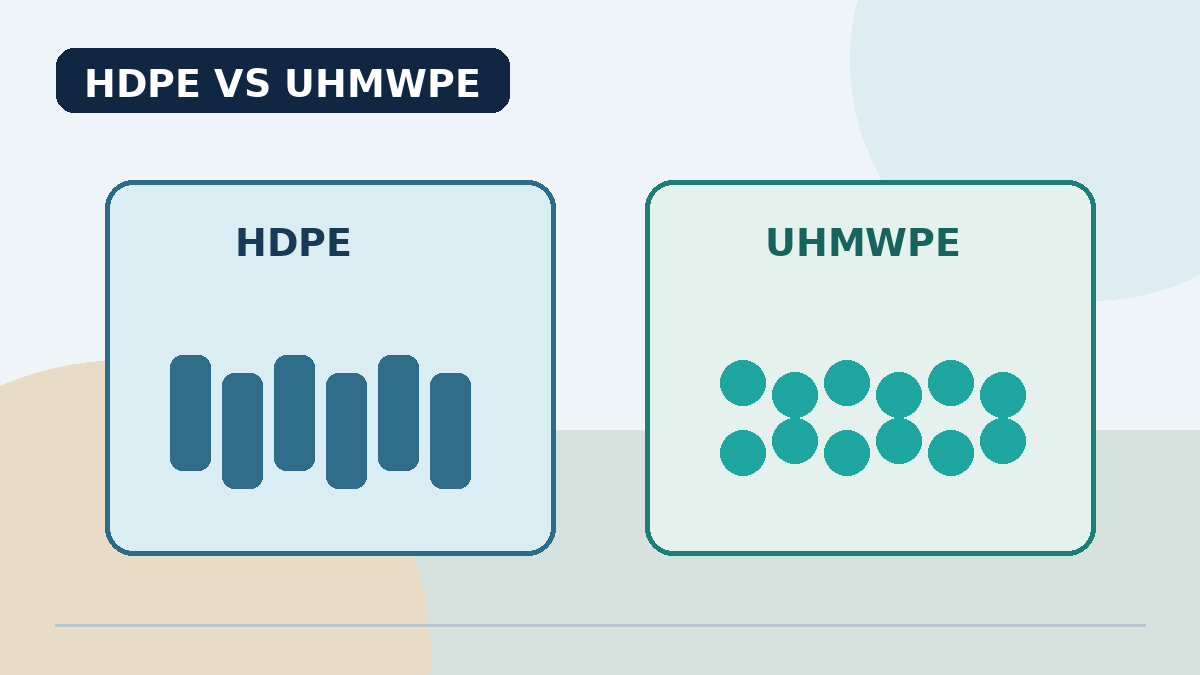
Comparison of HDPE and UHMWPE material structure and typical direction of use
The use of the scene should be removed from the procurement: if the main objective is to protect the lawn, mud or hard surfaces and requires extensive, fast-painted preparation, the HDPE programme will normally be evaluated first; if there are strong erosion, repeated shocks, very low temperatures or special slide requirements on the ground, further comparisons can be made between UHMWPE or modified materials. It is also necessary to confirm whether the plates use recycled material, whether the recovery ratio is stable, whether there are UV stabilization designs, and whether colour and batch changes affect mechanical performance. The material level cannot be reliably judged solely on the basis that the sample surface is smooth or taping.
Both materials have boundaries for temperature and media. The history of different brands, fillings, pigments and processing changes heat-resistant, low-temperature shocks and chemical compatibility and therefore cannot be used as a guarantee for all products. In case of heat, solvent, oil or long-term outdoor tan, the medium name, concentration, exposure time, maximum and minimum temperature should be provided to the supplier and confirmed through material data, sample immersion or actual performance tests. Compliance requirements also need to be checked separately for food, drinking water or other regulated uses.
The final comparison recommends the use of the same set of indicators: size and thickness of the product, single weight, bending and impact data, surface friction design, connectivity, repairability, expected number of cycles, number of containers and full life-cycle costs. It would be more meaningful to assess different suppliers under the same test conditions than to read only the name “HDPE” or “UHMWPE”. If the supplier is unable to indicate the test method, the scope of the raw material and the applicable limits, the buyer should request additional information or make a small verification first.
Need for further evaluation of the actual project?
Applications, sizes, quantities, site photographs or drawings and delivery destinations are sent, on which we can identify more suitable products and processing programmes.







