
The pavements can be used in mud, grass, sand and snow, but the four surfaces fail in a different way and cannot be laid in the same way. The main problems in the mud are high water-bearing rates, falling wheels and grass-roots pumping mud; grassland attention to surface pressure injuries, oxygen deficiency and restoration costs; pine sands that can easily move under the plate and create local gaps; and snow and ice-free areas with low temperature, invisible pits and tyre slides. The functioning of the product depends on grass-roots continuity, drainage, vehicle parameters and on on-site management, not just the plate itself.
In the mud, the depth of the mosaic and the source of the water should be identified first, with drainage ditches set up where necessary, surface slurry cleared and additional layers found. The laying should move from a stable area to a soft area, so that construction personnel and vehicles do not break the unprotected entrance first. Grassland projects should reduce long-term closed coverage, control vehicle turnovers and in situ brakes and arrange for zoning and timely recovery according to the activity cycle. High-value lawns should also be identified with the field to allow loads, irrigation pipes and restoration requirements.
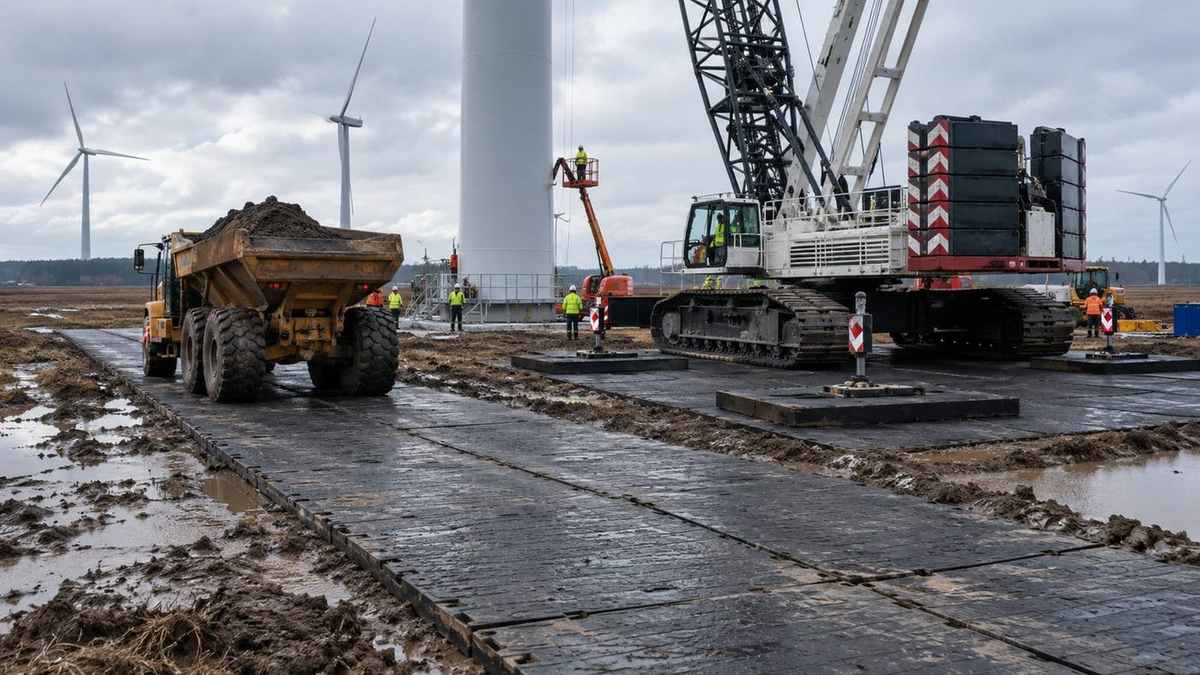
Web site mapping: construction site heavy equipment and temporary road applications
The sand will require a larger, continuous area and reliable connection to reduce the number of plates pushed by wheels or sunk on the edges. If the sand layer is deep, the slopes are large or the vehicle's wheel is concentrated, it may also require a earthpaper, a grid or a graded floor. Before snow is used, loose and heavy snow should be removed, and gutters and holes under the ice should be identified; even though there are textures on the surface, there is no substitute for tire-resistant, low-speed and winter operating procedures. The foundations of the ground will quickly become soft as snow melts, and the frequency of inspections must be increased.
In any case, clear road boundaries, direction, speed limits and vehicle types should be established. The bends, car areas, ramps, ramps and loading points are usually more complex than the straight-line sections and should be more wide or more grass-roots. It is laid to check how well the panels are spread, connectors, edged ups, mud piles and tracks develop; if the vehicle starts to move significantly, the plate continues to move or the ground is sewn out, the use should be suspended and repaired instead of continuing to press.
The request should include a near-ground and panorama photograph, information on the rainy and snow season, the depth of the mosaic, slopes, length of the road, full load weight of the vehicle, type of tyre or belt and the expected frequency of traffic. The vendor may recommend the thickness of the sheet, the texture, the mode of connection and the spare quantity. For high-risk projects such as rescue, oil and gas, and mines, the interim road programme should be integrated into on-site engineering and security clearances; pavement boards are part of the system and should not be used as a panacea without ground-based judgement.
Need for further evaluation of the actual project?
Applications, sizes, quantities, site photographs or drawings and delivery destinations are sent, on which we can identify more suitable products and processing programmes.







