
2 m x 1 m is a commonly used specification for road planning, cabinets and field combinations and does not imply that all projects must be of the same size. Plants can normally be customised to assess length, width, thickness, colour, surface-lined road, connection holes, handholes and brand markings based on the width of the equipment, manual porting capacity, road turn radius and container loading. Any change in size, however, affects single-block weights, bending spans, edge stress and laying efficiency, so customization is first, and secondly, a project choice.
When the size is customized, it should be specified in terms of common sizes, allowable travel and measurement methods. Larger panels can reduce seams and increase the speed at which they are laid, but they require more personnel or mechanical handling and are more difficult to adjust on soft ground; and smaller plates allow manual laying and adaptation to bends, while increasing the number of seams and connectors. The change in thickness affects the weight, rigidity and number of containers. In cases where an orangutan corner, round corner or hole is required, site drawings should be provided to avoid processing on oral descriptions alone.
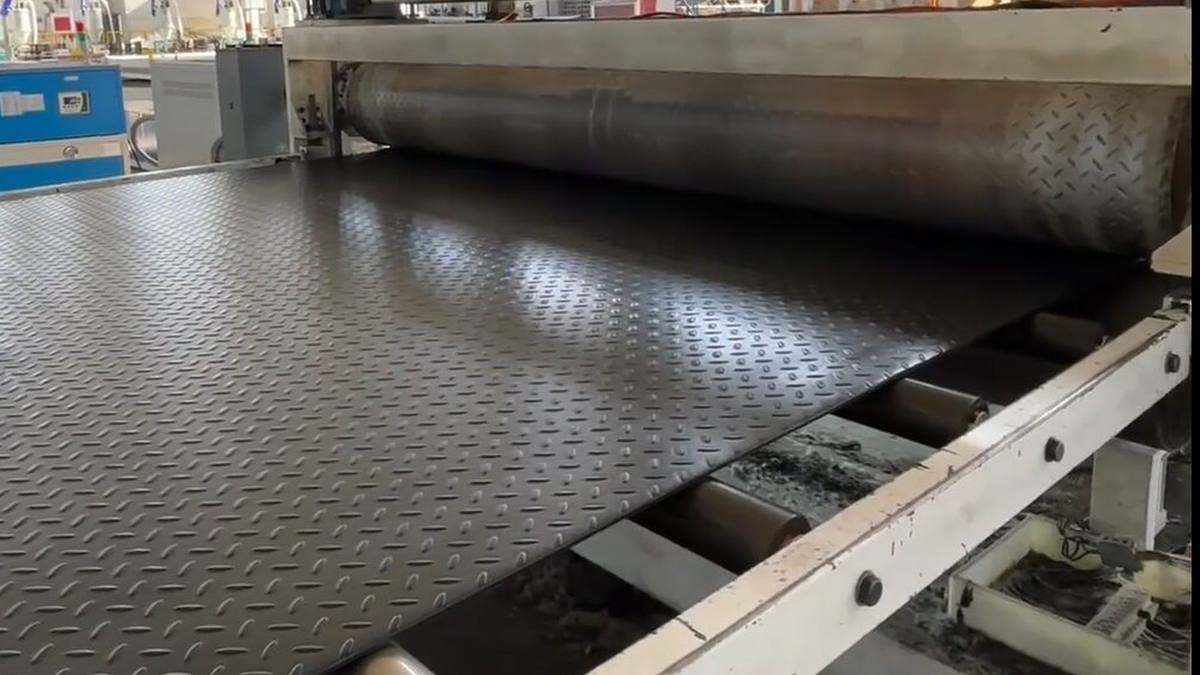
Photo taken on the Internet: pavement of pavements and production
There are also technical boundaries in colour and texture. The dark colour is usually easy to control batch differentials and suitable for the engineering landscape, and bright colours help partitioning, brand identification or increased visibility, but different pigments and additions need to verify their impact on durability, shock and production stability. New routes are often associated with the cost of molds or knives, as well as the identification of their direction, vehicle tugs, cleaning difficulties, and pressure marks on the ground. Logo may use mosaics, carvings or other means, and its position cannot weaken critical stress areas.
The recommended process is to provide a two-dimensional map, a scene of use and an annual demand, with the plant completing a manufacturing evaluation and then confirming the technical drawings, colours, graphs and packaging methods. For new sizes or new structures, samples should be made and the actual weight, holes, leveling, assembly and vehicle testing should be checked; the sample confirmation should be followed by a lock-in on the version and volume test. The procurement contract shall include materials, size differences, colour acceptance range, identification location, test items and change control.
Customized products usually involve a minimum production volume, moulds, sample time and longer preparation cycles. The request for quotations should be accompanied by a single number, a full-year projection, the port of destination, the need to combine other specifications and the restrictions on moving on site. If the demand is small, using standard 2 m x 1 m plates and resolving them through a configuration, it may be more economical than developing new moulds; if the project is duplicative over time, the dedicated dimensions may reduce the time and loss of laying.
Need for further evaluation of the actual project?
Applications, sizes, quantities, site photographs or drawings and delivery destinations are sent, on which we can identify more suitable products and processing programmes.







