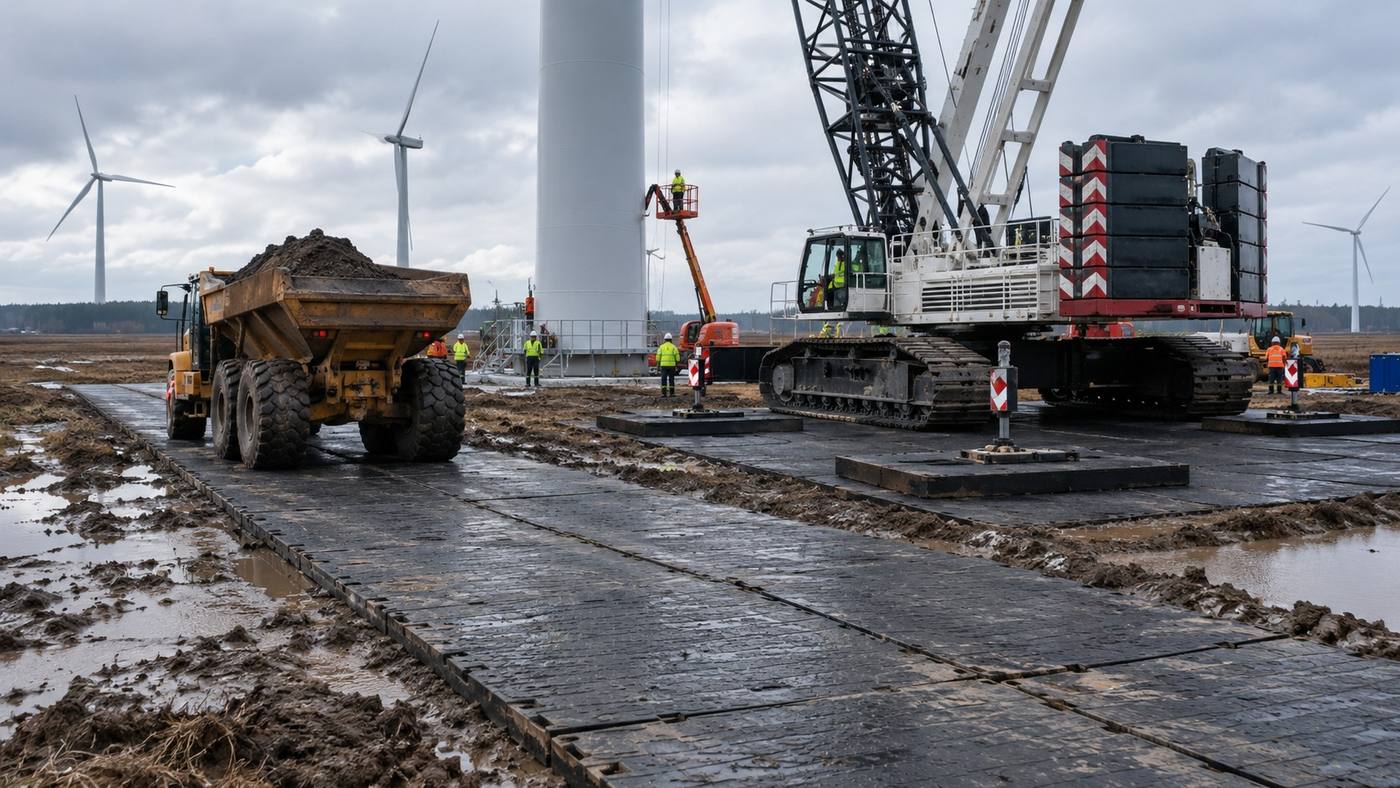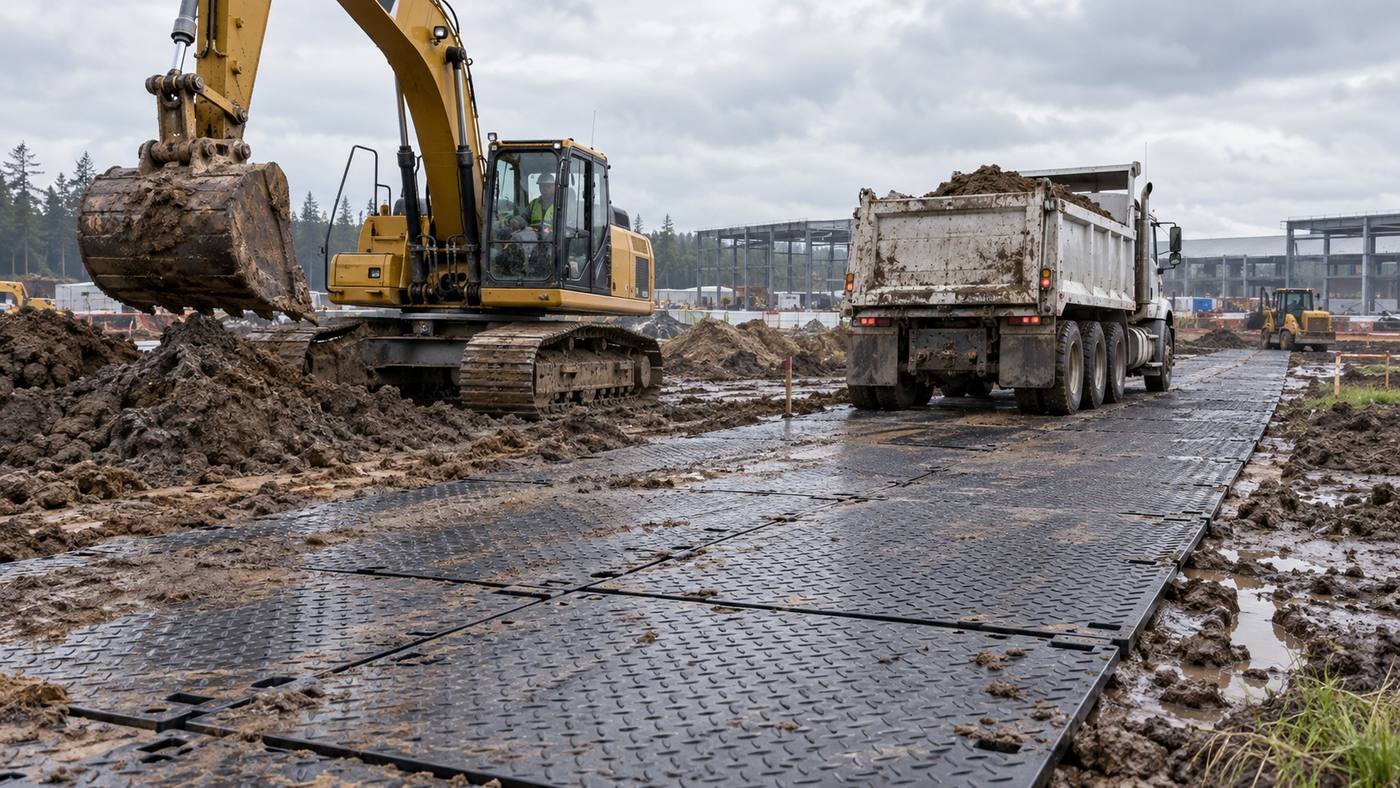
The soft and mud project selects the pavement, first to distinguish surface mud from deep loads. The thin layer of mud formed after the rain can be improved by drainage, clean-up and flatting; if a vehicle is already in deep infested, road-based pump mud or long-term sedimentation, this means that the slabs need to be used in conjunction with the silos, graded floors and even ground-based treatments. The purchaser provided only “mud” and vehicle tonnage, and the vendor could not judge the required thickness and laying structure.
Field information should include the approximate depth of the molluscs, water-bearing changes, sources of groundwater or water accumulation, end-to-end depth, vertical slope and drainage direction. It would be desirable to provide photographs or short videos of before, after and after rain, and after the vehicle, and to mark the trenches, backfill areas, underground pipes and shoulder borders. Data on ground surveys or field carrying tests should be provided together; where data are not available, the actual performance of foot-stepping, light vehicles and full-load vehicles on the ground should also be indicated.
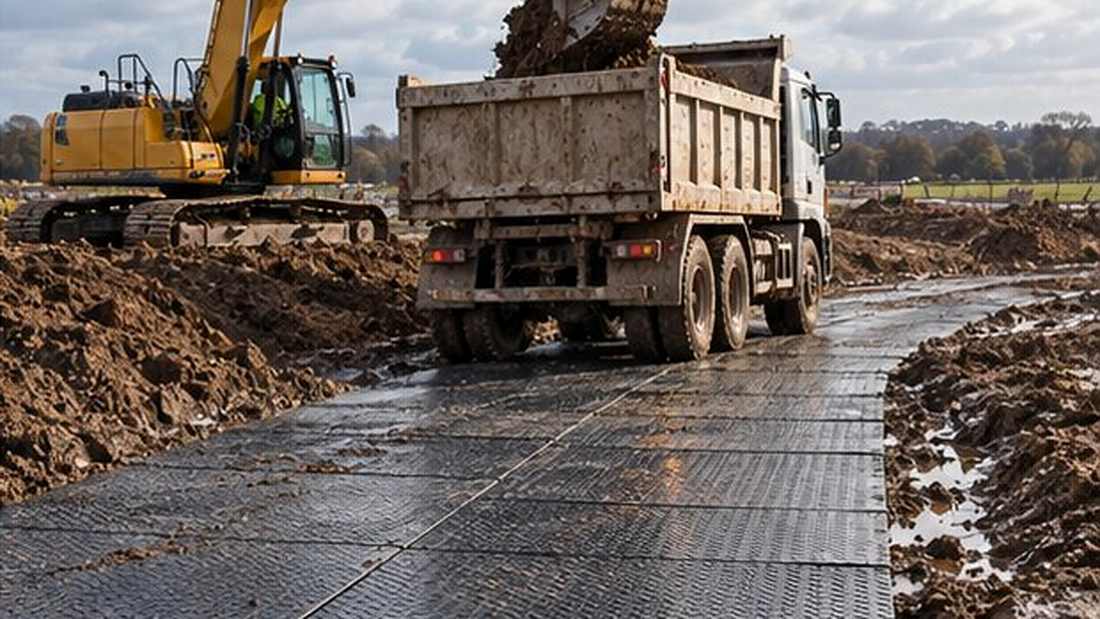
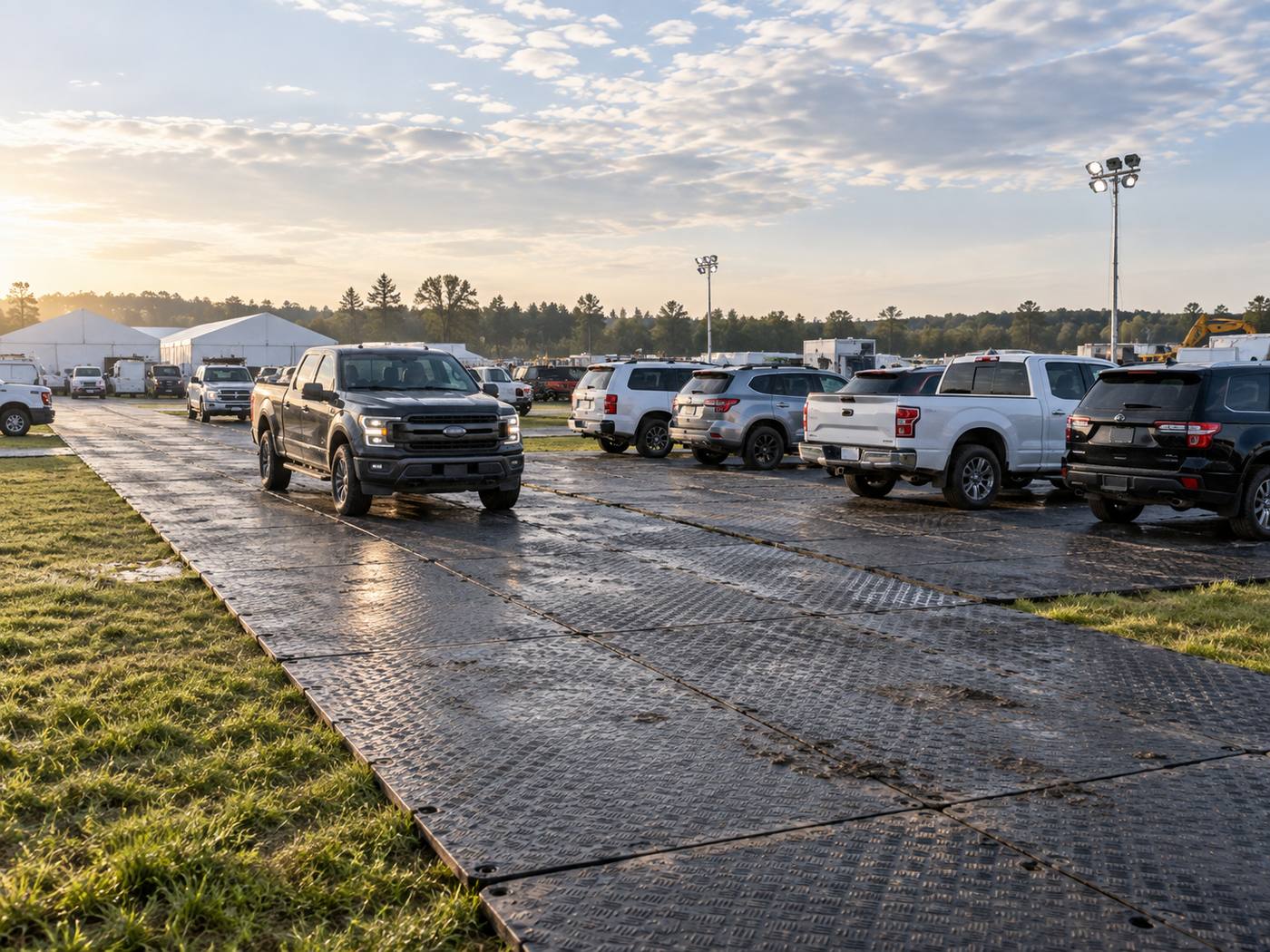
Temporary roadways on mudslides and soft floors (inventory material for the plastic network).
Parameters are selected in conjunction with transport organization. The one-way low-speed route requires different widths than the two-way road, and frequent bends, brakes and parkings increase under-board disturbances. Daily vehicle lengths, months of continuous use, maximum axle loads and the duration of the rainy season affect the rigidity of the plate, the number of connections and the reserve ratio. For HF transport lines, priority should be given to specifications that facilitate inspection, rapid replacement and mechanical handling.
The supplier ' s recommendation should indicate that the sheeting is only a load-dispersed layer and that no commitment can be made to completely eliminate deposition on unknown soft soil. The thick panels are more capable of crossing the local dims, but may still lose their support after long periods of water. Purchasing parties should compare material resilience, cryogenic performance, smooth-lined roads, connector resistance and edge structures, and require clear maintenance conditions and exclusions.
Prior to comparing offers, different suppliers could be provided with a programme based on the same field information, listing grass-roots proposals, size thickness, number of connectors, width laid, back-up panels and trial-pail steps. If the programme gives only one weight figure and no ground conditions, it should continue to follow up. The reasonable procurement result of the soft soil project is that the specifications of the sheeting match drainage, grass-roots and traffic management.
Need for further evaluation of the actual project?
Applications, sizes, quantities, site photographs or drawings and delivery destinations are sent, on which we can identify more suitable products and processing programmes.