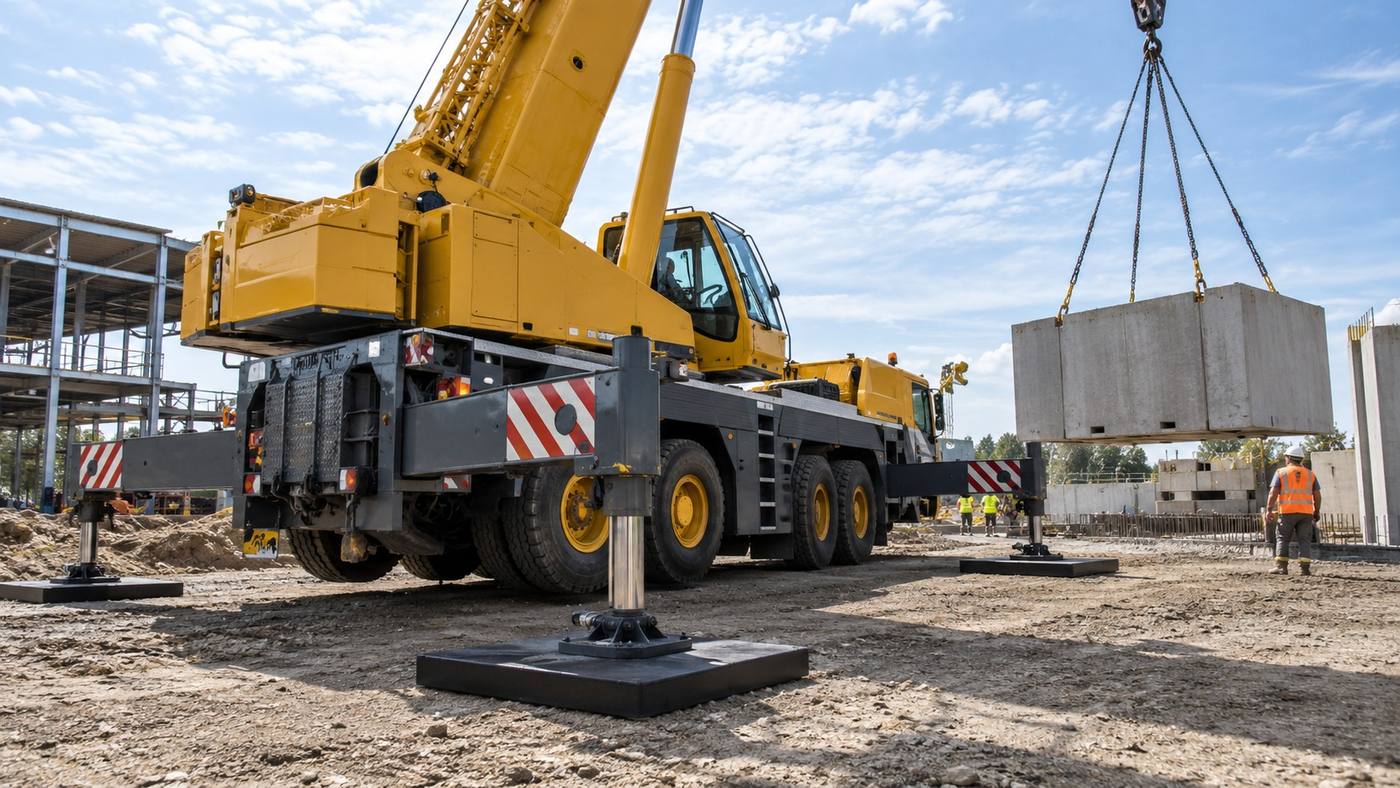
The basic objective of the area of the leg mattress is to spread the retrogressive force of the leg of the equipment to an acceptable ground level. A preliminary estimate of the minimum exposure area can be obtained by dividing the maximum retroactivity of the leg by the permitted ground-based load pressure, but this result is only the starting point. The actual programme also takes into account the rigidity of the pads themselves, the size of the footpad, the balance of the ground, the equipment level requirements, the slopes and underground facilities, and the specifications of the equipment manufacturer for foot support.
The purchaser must obtain the maximum retroactivity of the equipment under the target condition. The reversibility of the crane will vary with the length, range, direction, weight and load of the arm, and it will not be possible to divide the whole weight of the machine to an average of four legs; the concrete pump will also have an uneven load due to the arm-frame attitude. Priority is given to the use of manufacturer ' s load maps, leg strength calculations or approved suspension programme data, and the values used are confirmed by competent personnel.
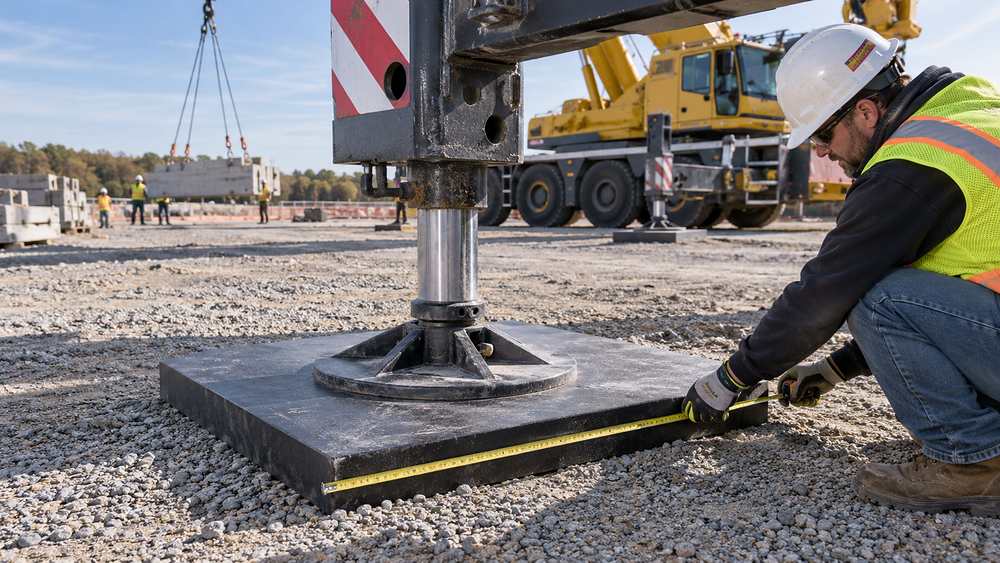
Measurement of the pressure area and position of the leg cushion at the suspension site (new procurement scene)
Ground-based parameters should be derived from on-site investigations or engineering judgements. The permitted loads of concrete, crushing gravel, backfilling, wet clay and grassland vary widely, and the edges of well covers, ditches, underground pipes and ground pits change the range of stress. Larger pads can reduce average pressure, but if they cross empty or soft and hard borders, they may bend and the ground may fall unevenly.
The determination of the size also requires a nuclear shape and thickness. The footpad shall be located in the area of the effective bearing of the pad, normally to the extent possible, and shall ensure that the whole pad is flat and flat. Square mats are suitable for rule setting and stacking, and round pads do not highlight the angles, but both require sufficient contourness. No sufficient area shall be used as a justification for any random stacking, tilting or emptying.
The request shall provide the type of equipment, maximum retroactivity of the legs, the size of the footpad, the number of legs, the type of foundation, the data allowed to be carried, the operational plane and the photographs of the site. The supplier may recommend the size, shape, thickness, handle and unit weight of the pads, provided that the final size and placement is subject to confirmation by the equipment description, approved suspension or pumping programme and capable personnel on site.
Need for further evaluation of the actual project?
Applications, sizes, quantities, site photographs or drawings and delivery destinations are sent, on which we can identify more suitable products and processing programmes.