
The arrival and inspection criteria should be established before the next order and should be consistent with the drawings, signatures and quotations. The first check is the container sealing, volume of packaging, product type, plate number, connector and spare parts, and records the break-up, tide, migration or perforation. The weight of each bundle and the conditions of the forklift are determined before unloading and unsafe handling is avoided for inspection purposes.
The size test shall specify the number of samples, the location of the measurements, the tools and the permitted deviations. The length, flatness, texture, handles and connection holes of the pavement, the exterior, thickness, hole, rope and bearing surface of the leg pad, and the number of the plate, the point, the edge of the suture and the installation chart of the slab. The thickness cannot be measured only at one angle, and the larger sheet should be measured at multiple points in the agreed position.
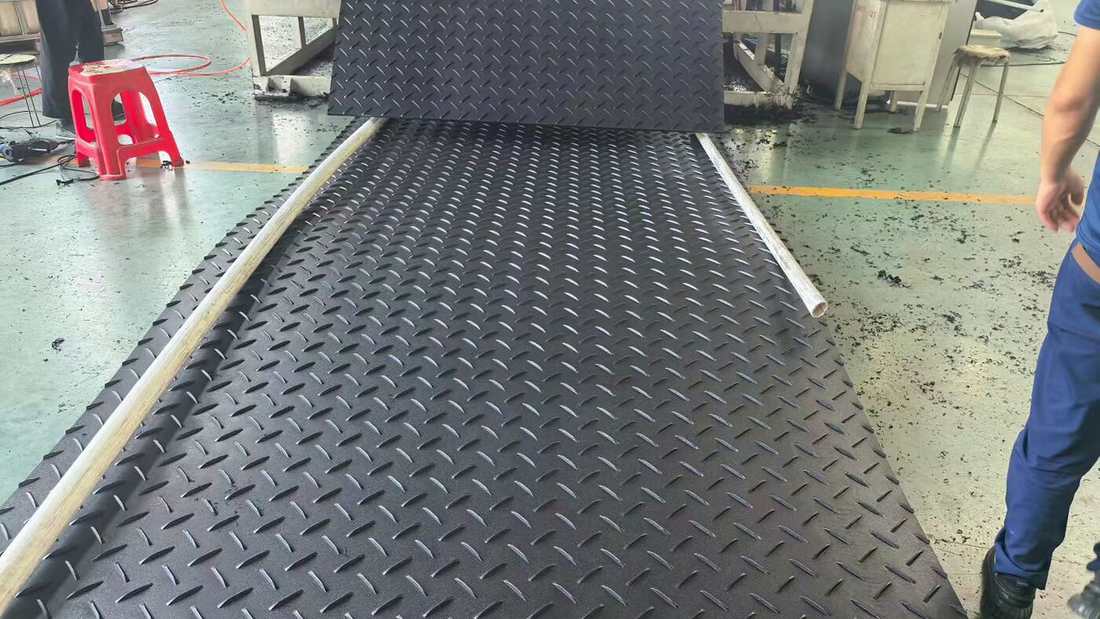
Plant inspection and stacking of mass products on pavement boards (inventory material for the plastic network).
Appearance criteria should distinguish between minor process traces not affecting use and structural defects. Fragments, layers, visible air holes, severe warp, perforation and contamination need to be recorded separately. Colours and texture lines are cross-referenced and cannot be judged by mobile phone photographs in environments where the light is very different. If necessary, be weighed to detect size or material anomalies.
Document acceptance and acceptance includes packing lists, confirmation charts, batch information, materials or inspection records and installation instructions. Customized products should check the drawing versions and avoid receiving old-version holes. Problems were identified by segregating the relevant batches, taking photographs with the ruler and keeping packing labels and not cutting or installing large areas before they were identified, without which liability would be difficult to define.
Acceptance and inspection findings can be divided into receipt, condition, return and rejection, with a time frame for feedback. A reasonable sample is more efficient than a block-by-block break for a whole container product, but a critical customization or initial order may increase the percentage of the sample. Clear criteria allow suppliers to conduct self-checks on the same scale prior to shipment and reduce them to post-port disputes.
Need for further evaluation of the actual project?
Applications, sizes, quantities, site photographs or drawings and delivery destinations are sent, on which we can identify more suitable products and processing programmes.