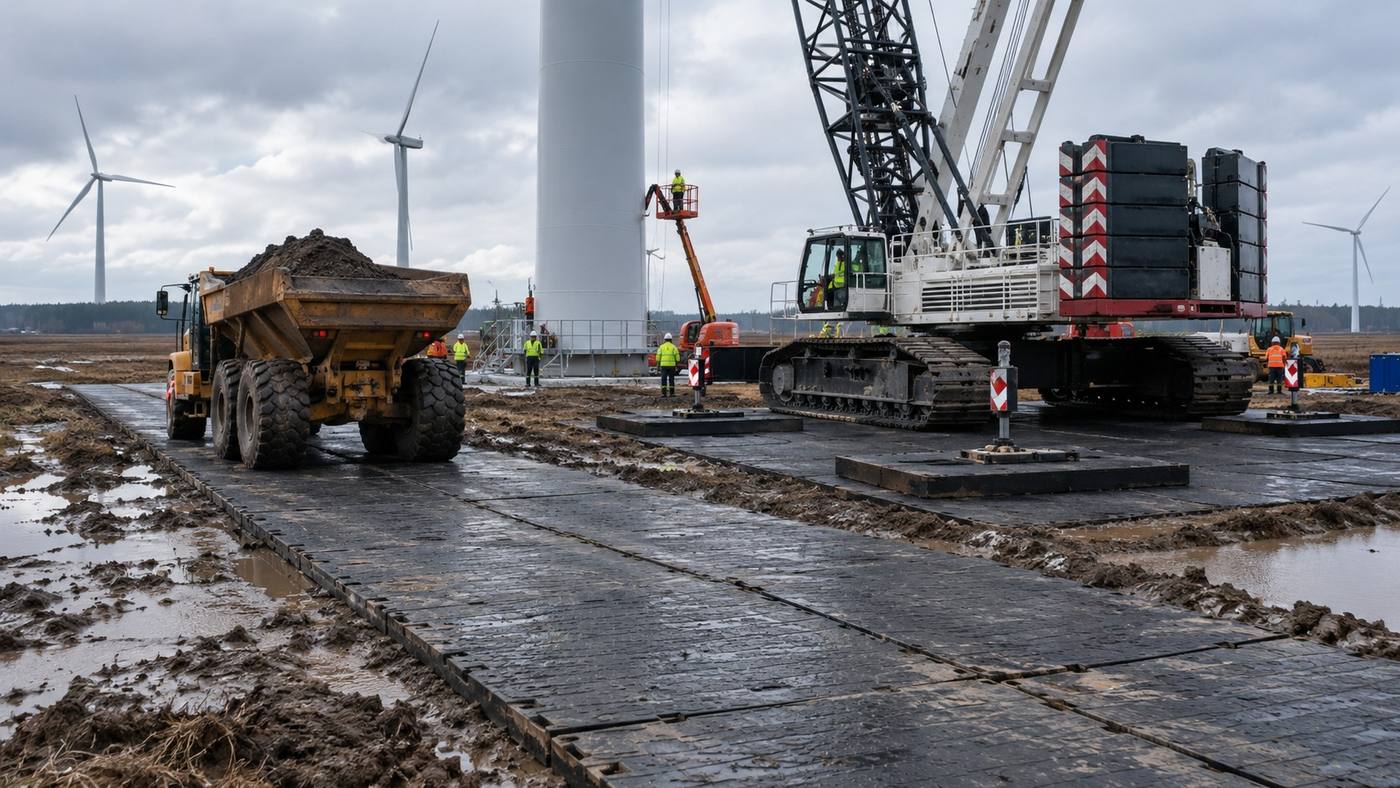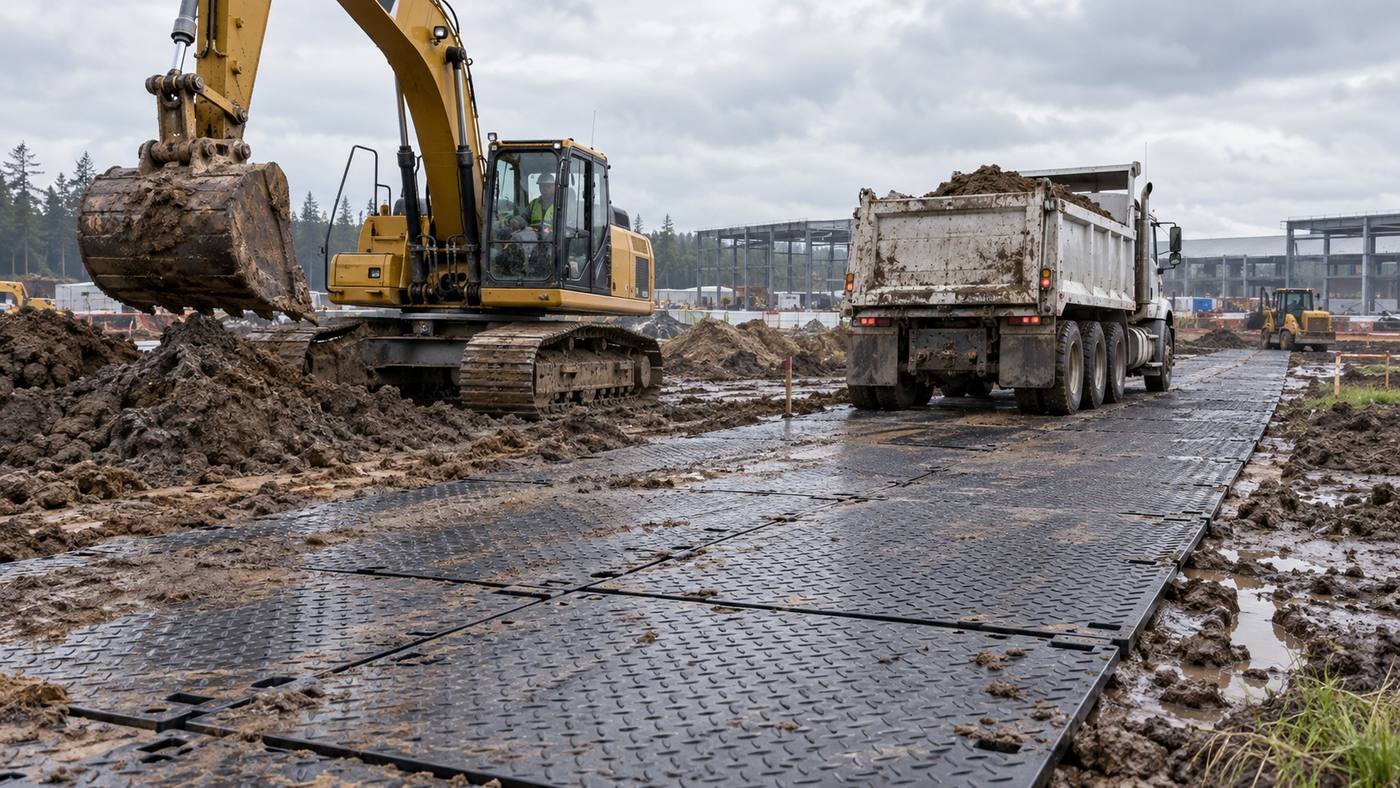
A leg cushion requires the transfer of concentrated reaction to continuous, flat ground. The flatting of the floors with bricks, short wood squares, fractals or slabs of different sizes would turn the original large area support into a few dots or lines, which could be partly bent and the foot of the leg might be partial. If there is mud, water or vibration between materials, there may also be slide. The apparent level does not mean that the force path is stable.
The right approach is to deal with the ground first. Clear loose clay, ice, pebbles and miscellaneous, level, drain and form continuous grass-roots levels within the scope of project approval. If a high difference cannot be resolved by a simple flattening, it shall be determined by the suspension or equipment programme by the design of a beam, steel plate, wooden pad or assembly system, specifying the size, direction and load of each layer. The polymer leg pads are only parts of a sub-carrying unit and cannot be ad hoc with unknown material.
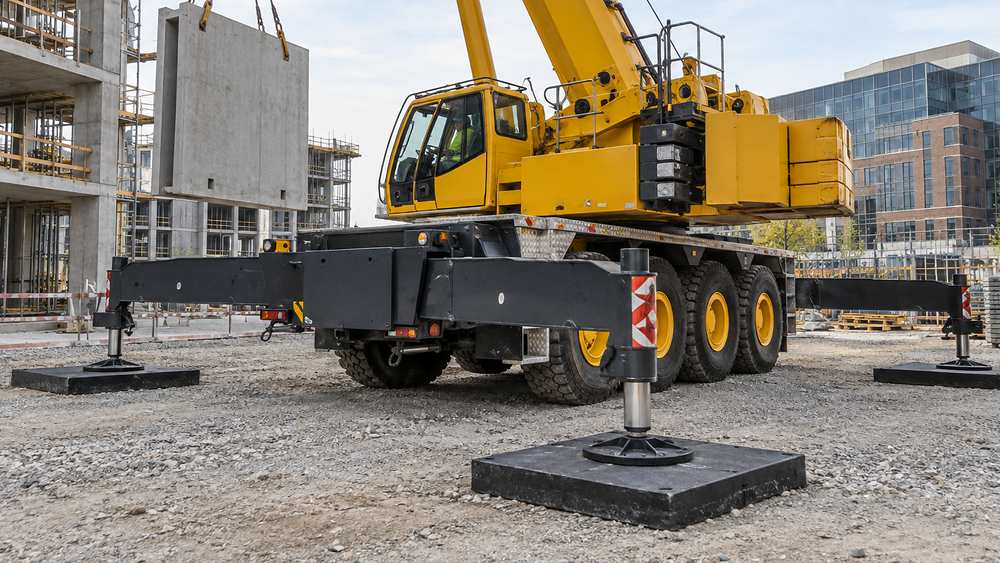
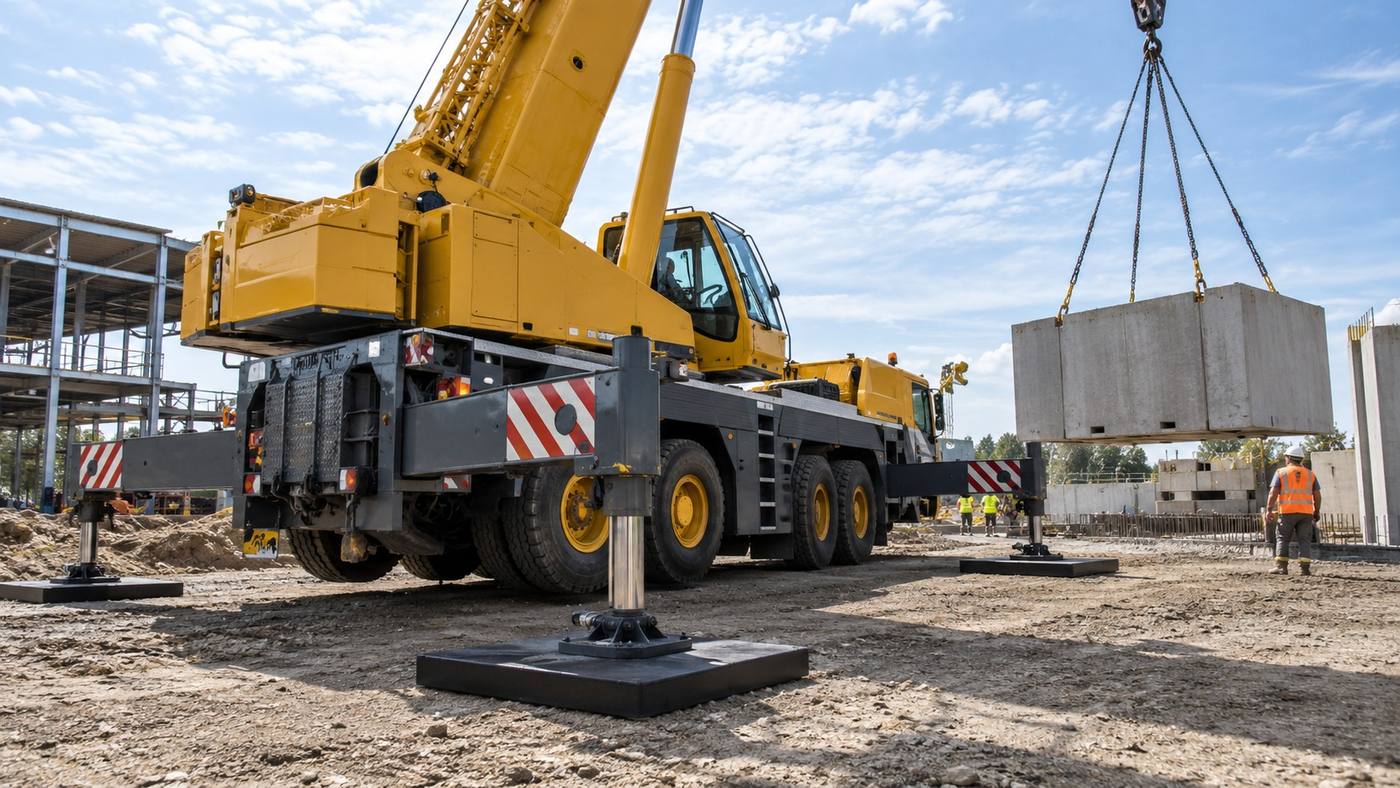
The foot centre of the leg, which acts as a smooth, continuous polymer leg pad (new construction site map)
When the mat is placed, the foot of the leg shall be kept in the middle as far as possible, with sufficient margins around it. Laying a leg on the side of the mat would reduce the effective area allocated and increase the bend; and holding a small mat on one side of the mat would also tend to reverse the other side. The flattening of the equipment shall be carried out according to the manufacturer ' s procedures and cannot be modified by plugging the material in a load. If there is a slope on the ground, the equipment permit conditions and special programmes need to be confirmed.
Before the operation, check if all layers fit, whether the material has cracks and decays, whether the mat is contaminated and deformed. During the test load and rotation, the deposition, tilt and inter-story shifts were observed and the abnormalities were immediately stopped by the procedure. Rainwater may wash away the finer surrounding the small mats, and cryogenic ice will cause surfaces to appear hard but unstable after warming, so that each shift and weather changes are re-examined.
The request shall provide the retroactivity of the leg, the ground-based permissible pressure, the foot size of the leg, the site slope and the size of the target pad. The supplier may choose the appropriate polymer material and thickness, but the engineering design for the ground-based flat-packing mattress is the responsibility of the project. To avoid the core of loose pads is to give each layer a clear, continuous and verifiable receptor.
Need for further evaluation of the actual project?
Applications, sizes, quantities, site photographs or drawings and delivery destinations are sent, on which we can identify more suitable products and processing programmes.